India's Security Laws Under Scrutiny Amid Rising Concerns Over Dissent
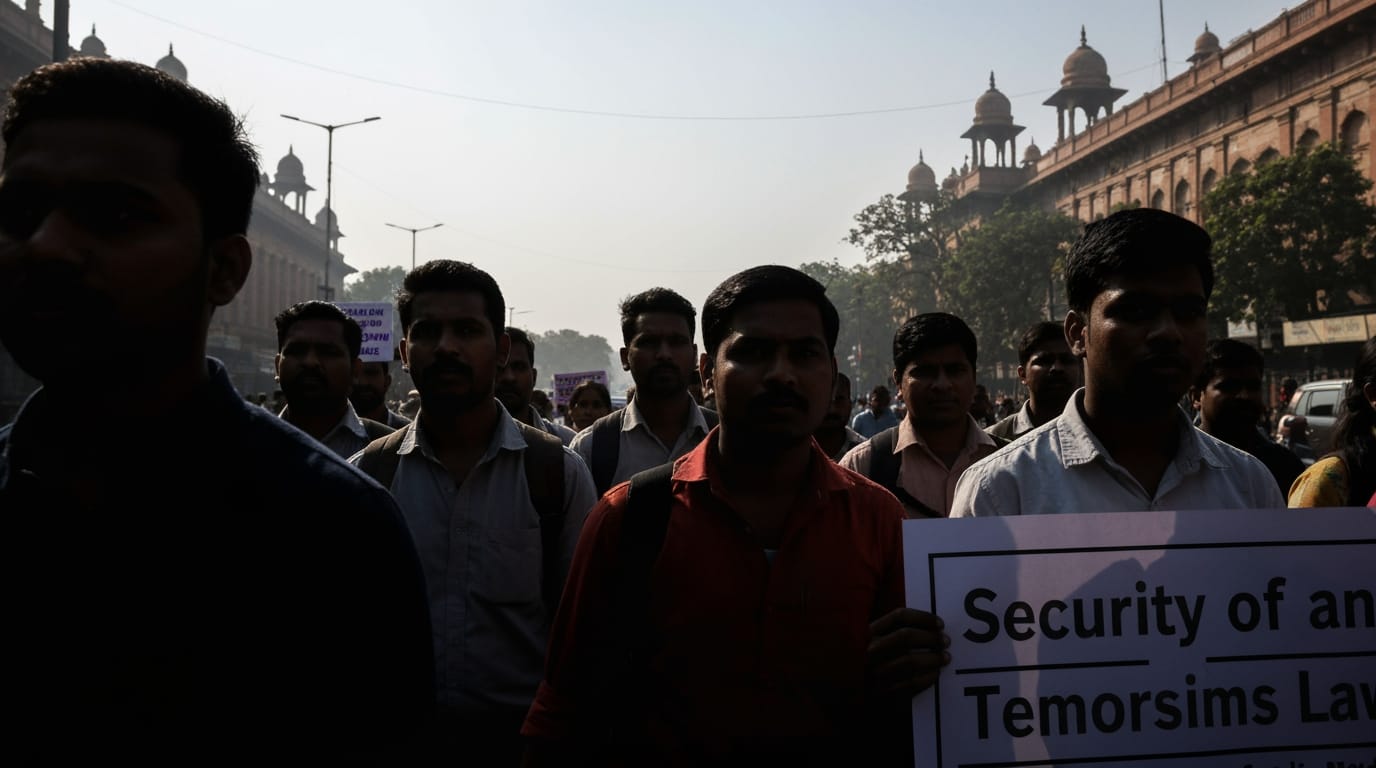
NEW DELHI – India, the world's most populous democracy, faces increasing international and domestic criticism over its application of security and anti-terrorism laws, which critics contend are being weaponized to stifle dissent and silence government critics. Human rights organizations, legal experts, and civil society actors argue that these statutes, primarily the Unlawful Activities (Prevention) Act (UAPA) and the colonial-era sedition law, are undermining fundamental freedoms and due process rights, leading to prolonged incarceration and a chilling effect on free speech.
The Expanding Reach of Legal Instruments
At the heart of the controversy are two principal legal frameworks: the Unlawful Activities (Prevention) Act (UAPA) and Section 124A of the Indian Penal Code, which defines sedition. The UAPA, initially enacted in 1967 to prevent unlawful activities and associations, has undergone significant amendments, particularly in 2004, 2008, 2012, and 2019, which substantially broadened its scope and powers. These changes introduced an overbroad definition of what constitutes a "terrorist act" and empowered authorities with sweeping abilities, including prolonged detention without charge for up to 180 days and the designation of individuals as terrorists without requiring solid evidence. This expansion of power has raised serious human rights concerns globally, as it often conflicts with India's obligations under international human rights law, especially regarding freedom of expression and the right to a fair trial.
The sedition law, a remnant of British colonial rule, dates back to 1870 and punishes acts, words, or signs that bring or attempt to bring "hatred," "contempt," or "disaffection" towards the government. Designed by Thomas Babington Macaulay in 1833 to suppress nationalist dissent, it has been a tool to curb criticism since its inception. Despite India's transition to a democracy, this law has remained on the statute books and has been widely used by successive governments to "silence" dissenters. The United Kingdom, ironically, abolished its own sedition law in 2010 following recommendations from its Law Commission.
A Pattern of Suppression: Targets and Statistics
The application of these laws has increasingly focused on human rights defenders, journalists, activists, students, lawyers, and academics critical of government policies. The Unlawful Activities (Prevention) Act has been routinely used to detain those deemed critical of the government, including civil society members and Kashmiri civilians. Prominent cases illustrating this trend include Khurram Parvez, a Kashmiri human rights defender detained since November 2021 under UAPA charges, which human rights organizations contest as retaliatory measures against his documentation of abuses in Jammu and Kashmir. His detention without trial for over four years exemplifies the law's punitive impact.
Another widely cited case is that of Father Stan Swamy, an 84-year-old Jesuit priest with Parkinson's disease, who died in custody in 2021 after being repeatedly denied bail despite his ailing health. Similarly, journalist Siddique Kappan was held under UAPA for more than a year without bail after being arrested while reporting. Student activists like Umar Khalid and Sharjeel Imam have also faced charges under the UAPA in connection with the 2020 Delhi riots, with critics arguing their speeches and activism were construed as part of a "conspiracy" despite a lack of direct evidence linking them to violence.
Statistics reveal a troubling pattern. A new database indicates a 28% increase in the number of sedition cases filed each year between 2014 and 2020, compared to the yearly average between 2010 and 2014. For the UAPA, between 2014 and 2020, 10,552 people were arrested under the act. From 2015 to 2022, over 6,000 individuals were arrested under UAPA, with Muslims, Dalits, and activists disproportionately targeted. Despite the increased use of the UAPA, conviction rates remain remarkably low, with only 2.2% of cases registered from 2016 to 2019 ending in a court conviction. Some reports even cite a conviction rate as low as 2%. This disjuncture between accusations and convictions has led to concerns that the legal process itself becomes the punishment, with accused individuals facing prolonged incarceration for years without proof of wrongdoing.
Erosion of Democratic Freedoms and International Alarm
The broad and vague language of these anti-terrorism laws has been criticized for stifling freedom of speech and association, creating a "chilling effect" that discourages legitimate criticism and public discourse. Civil society actors warn that this sustained use of counter-terror legislation against dissenters corrodes public trust in democratic institutions and signals a broader erosion of constitutional protections. India's civic space is currently rated as "repressed" by the CIVICUS Monitor.
International bodies and human rights groups have repeatedly condemned the misuse of the UAPA. UN human rights experts in May 2020 highlighted concerns about several UAPA provisions that contravene international norms, including the power to detain a person for up to 180 days without evidence and the reversal of the presumption of innocence. Human Rights Watch has stated that authorities are "increasingly using the counter-terrorism law against activists, journalists, peaceful protesters and critics to silence dissent". The UN Office of the High Commissioner (OHCHR) has also expressed serious concerns regarding due process and fair trial rights. Amnesty International, among others, argues that Indian authorities have "weaponized laws to crack down on the human rights work by HRDs, activists and non-profit organizations" under the guise of countering terrorism and even misusing recommendations from the Financial Action Task Force (FATF) related to terror financing to target civil society.
Government Stance and the Future of Dissent
The Indian government has largely defended its use of these laws, with India's foreign ministry spokesperson accusing the OHCHR of making "baseless and unfounded allegations" and asserting that arrests are conducted "entirely as per provisions of law". The government maintains that these laws are necessary to combat genuine security threats and maintain national integrity and sovereignty.
However, there have been some developments signaling potential shifts. In May 2022, the Supreme Court of India temporarily suspended the enforcement of the sedition law (Section 124A of the Indian Penal Code) and called for its re-examination, acknowledging that the law has been misused to quash dissent. Home Minister Amit Shah introduced new criminal laws in December 2023, stating that sedition would be re-termed as treason, with the promise that criticism of the government would be permissible unless it directly intended to undermine the integrity, sovereignty, and unity of the nation.
Despite these discussions, the fundamental tension between national security imperatives and the protection of civil liberties remains a critical challenge for India. The continued application of laws like UAPA, with its broad definitions, stringent bail conditions, and low conviction rates, raises significant questions about the long-term health of democratic freedoms and the space for dissent in the country.


