International Judo Federation Reinstates Russian Athletes Under National Flag, Igniting Global Controversy
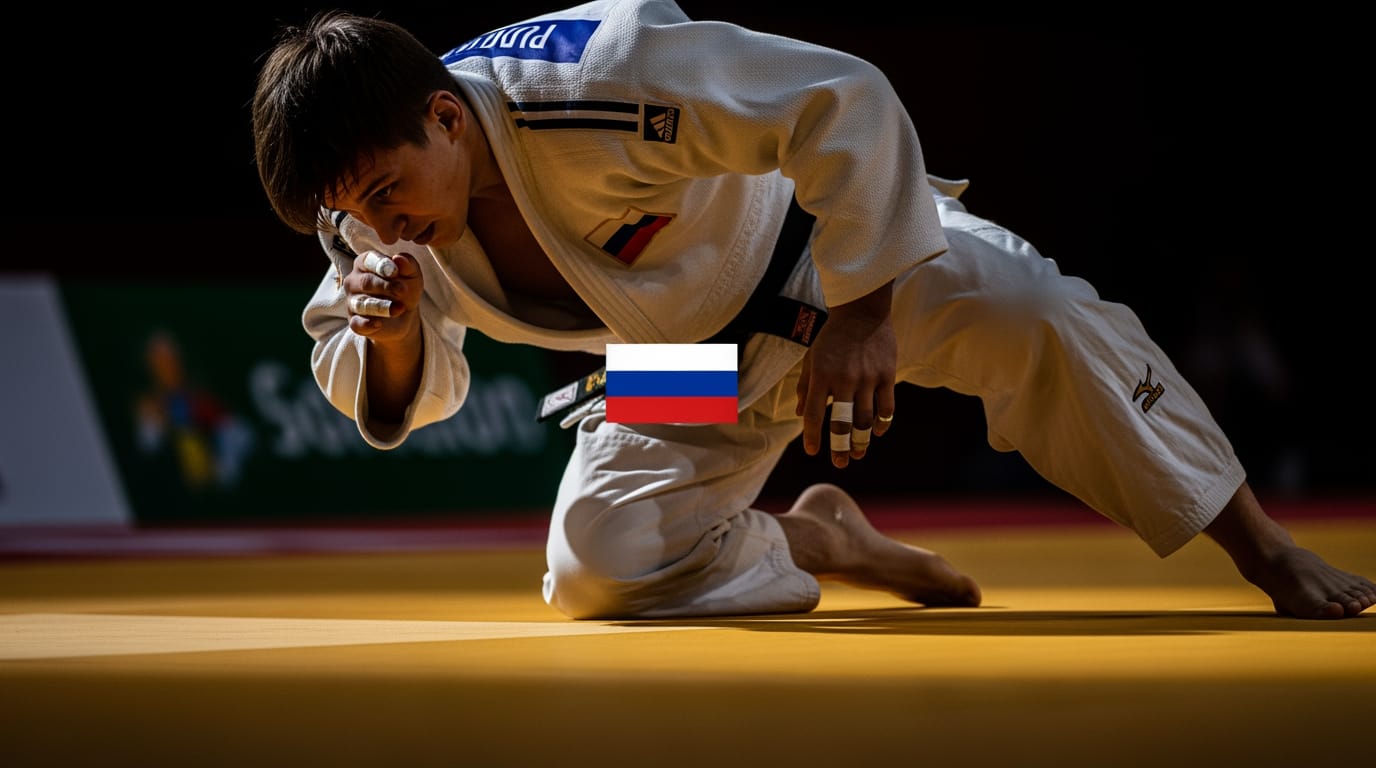
Abu Dhabi, UAE – In a significant and contentious reversal of policy, the International Judo Federation (IJF) has decided to allow Russian athletes to compete under their national flag, complete with anthems and symbols, effective immediately. This move, announced on Thursday, November 27, 2025, marks a stark departure from the neutral status imposed on Russian competitors across most international sports since the 2022 invasion of Ukraine, and it has already sparked sharp condemnation from Ukrainian and European sports authorities. Russian officials, however, have lauded the decision as "historic," signaling a deepening divide within the global sporting landscape.
A Swift Reinstatement and the IJF's Rationale
The IJF Executive Committee voted to "reinstate full national representation" for Russian athletes, a decision that took effect with the 2025 Abu Dhabi Grand Slam, held from November 28 to 30. This means Russian judokas who achieve victory can now stand on the podium as their national anthem plays, a symbolic return that has been absent for nearly three years. The federation justified its decision by stating that "athletes have no responsibility for the decisions of governments or other national institutions," and that it is the IJF's "duty to protect the sport and our athletes." They further asserted that "sport must remain neutral, independent, and free from political influence," and should not become a "platform for geopolitical agendas," instead serving as "the last bridge that unites people and nations." This reinstatement for Russian athletes follows a similar decision in May 2025, which saw Belarusian athletes also cleared to compete under their national flag starting June 1, 2025.
Background: From Sanctions to Neutrality
Following Russia's full-scale invasion of Ukraine in February 2022, the International Olympic Committee (IOC) recommended "protective measures" to keep Russian and Belarusian athletes and teams out of international competitions. Most International Federations, including the IJF, initially accommodated this request, with Russian judokas first banned outright until January 2023, then permitted to compete as "individual neutral athletes" (AIN) without national symbols, flags, or anthems. This neutral status was maintained for events like the 2023 World Judo Championships in Doha, where rigorous background checks were conducted on athletes to prevent the participation of those affiliated with military or security agencies or who had actively supported the war. However, the IJF has now moved beyond this, contrasting sharply with the IOC's continued stance. For instance, Russians will still only be allowed to compete as individual, neutral athletes at the upcoming 2026 Milan-Cortina Winter Games, maintaining the system used at the 2024 Paris Olympics. The IOC's guidelines explicitly forbid the display of symbols of aggressor states.
Widespread Condemnation and Ukrainian Protest
The IJF's decision has been met with immediate and fierce criticism from Ukraine and its allies. The Ukrainian Judo Federation (UJF) "expressed its strong protest and categorically condemned" the move, describing it as a "blatant violation of the recommendations of the International Olympic Committee" and making judo the first sport to "openly disregard them." The UJF questioned how "bridges can be built with a state that kills Ukrainians every day, destroys their homes, and wipes cities and civilian infrastructure off the face of the earth." They announced intentions to "explore every possible measure to prevent the policy from taking effect." Ukraine had previously boycotted the 2023 World Judo Championships in protest of the IJF allowing Russian and Belarusian athletes to compete as neutrals. EU Sports Commissioner Glenn Micallef also "strongly condemned" the IJF's decision, calling it "regrettable and deeply concerning" and warning that it risks "normalising the actions of states engaged in aggression."
Russian Acclaim and the Sport's Unique Political Context
Conversely, Russian sports officials have enthusiastically welcomed the IJF's policy reversal. Sergey Soloveychik, president of the Russian Judo Federation, praised it as an "historic decision," thanking the IJF for its "long-awaited, fair and courageous decision." Russia's Minister of Sport, Mikhail Degtyarev, highlighted judo's significance in Russia, calling it a "presidential sport" and noting that around half a million citizens regularly participate.
The sport of judo holds a unique political significance within Russia due to its deep connection with President Vladimir Putin, a black belt holder and a keen judoka. While Putin was stripped of his honorary IJF titles and ambassadorship shortly after the 2022 invasion, his public association has historically given judo an elevated status in Russian media. This background adds a layer of symbolic weight to the IJF's decision, fueling the argument from critics that it inadvertently lends legitimacy to the Russian government amidst the ongoing conflict. The IJF, however, maintains that Russia has historically been a leading nation in world judo, and their full return is expected to "enrich competition at all levels."
A Precarious Balance in Global Sports
The International Judo Federation's decision underscores the complex and often contradictory approaches taken by various international sports bodies in response to geopolitical conflicts. While some federations, such as World Athletics, maintain blanket bans on Russian athletes, and the IOC adheres to a strict neutral status for the Olympics, the IJF has chosen a path of full reinstatement. This divergence reflects an ongoing global debate about the appropriate balance between upholding athletic rights to compete, maintaining the neutrality of sport, and imposing sanctions for state actions. The IJF's move, while celebrated by Moscow, has opened new fault lines in the sports world, leaving many to question the long-term implications for judo's unity and its role on the international stage amidst persistent global tensions. The immediate return of Russian national representation in judo tournaments highlights the precarious tightrope walk sports federations face in navigating the intricate intersection of sports, politics, and human rights.