International Law Challenged as Maduro's Capture Ignites Global Debate Over Legality and Sovereignty
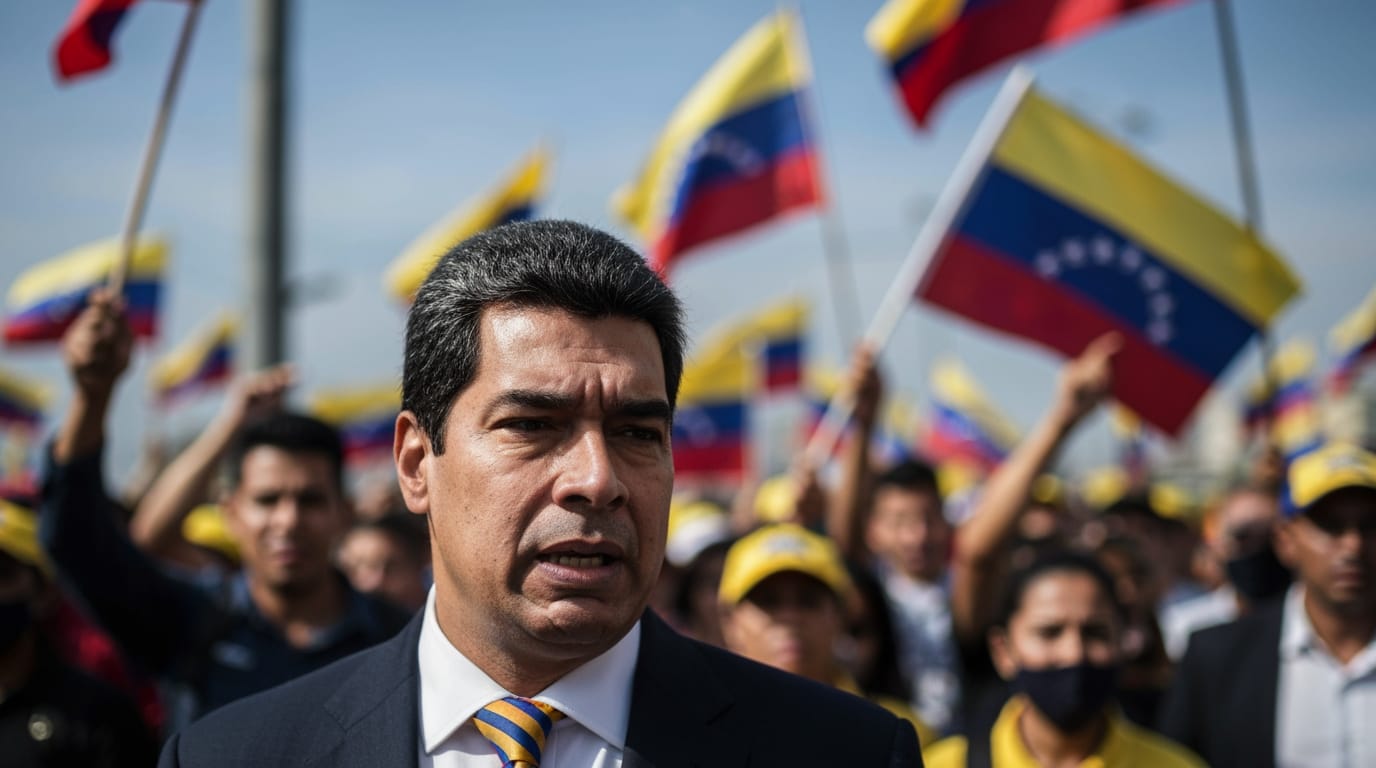
The early hours of January 4, 2026, witnessed an unprecedented military operation in Caracas, Venezuela, as United States forces reportedly captured Nicolás Maduro, the nation's leader, and his wife, Cilia Flores, subsequently transferring them to New York to face charges. This dramatic development has not only plunged Venezuela into further uncertainty but has also triggered an intense global debate regarding the legality of the operation under international law, raising fundamental questions about state sovereignty, the use of force, and the prerogatives of national jurisdiction over foreign heads of state.
The audacious intervention, which saw military strikes across the Venezuelan capital, has been described by Washington as a law enforcement operation aimed at apprehending an individual indicted on narco-terrorism charges. However, a chorus of international legal experts and global bodies has swiftly condemned the action, asserting that it appears to contravene core tenets of international law and the United Nations Charter. The incident marks a severe escalation in the long-strained relationship between the U.S. and Venezuela, bringing to the forefront unresolved legal disputes and potentially reshaping international norms governing state conduct.
The Midnight Operation and Washington's Justification
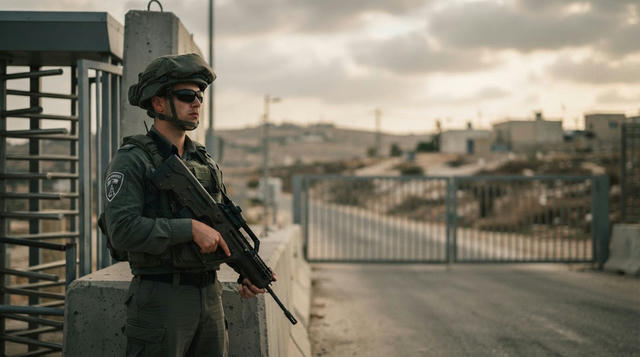
Reports indicate that the operation, dubbed "Operation Absolute Resolve," involved U.S. special forces and significant military assets, targeting locations in and around Caracas, including military installations. Maduro and his wife were reportedly apprehended and transported on a U.S. warship to New York. The U.S. Justice Department presented a superseding indictment, asserting that Maduro was at the head of a "corrupt, illegitimate government" that had leveraged state power to facilitate drug trafficking, enriching himself and his inner circle, and contributing to a flow of cocaine into the United States. The administration maintained that the capture was a law enforcement function, with the Department of War supporting the Department of Justice in apprehending an individual described as a "fugitive of American justice" with a substantial bounty on his head.
This action comes after years of a sustained pressure campaign by the Trump administration against the Maduro government, which included economic sanctions and accusations of human rights abuses and drug trafficking. U.S. officials had previously indicated a determination to pursue charges against Maduro and other high-ranking Venezuelan officials. While celebrating the capture, President Donald Trump also stated that the U.S. would "run" Venezuela until a "safe, proper and judicious transition" could be achieved, a declaration that further fueled international alarm.
International Law Under Intense Scrutiny
The legality of the U.S. operation has been immediately and widely challenged by international legal scholars and several nations. Critics point to several core principles of international law potentially violated by the extraterritorial use of force and the apprehension of a sitting head of state.
A primary concern is the violation of Article 2(4) of the UN Charter, which prohibits the threat or use of force against the territorial integrity or political independence of any state. Experts argue that self-defense, a recognized exception to this prohibition, typically requires an imminent armed attack, a condition not overtly met in this scenario. The U.S. linking drug trafficking to an "armed attack" justifying a forceful response lacks established support in customary international law or state practice.
Furthermore, the principle of state sovereignty, which dictates that each state has exclusive jurisdiction over its own territory, appears to have been contravened. The forcible apprehension of individuals within another sovereign state's borders, without its consent, is generally regarded as an unlawful exercise of enforcement jurisdiction.
The issue of head of state immunity also presents a complex legal hurdle. Under customary international law, a sitting head of state enjoys personal immunity (ratione personae) from the criminal jurisdiction of foreign domestic courts. While the U.S. and many other countries do not recognize Maduro as Venezuela's legitimate president, international legal opinion suggests that this lack of recognition does not nullify the immunities that apply to an individual who exercises effective control over a state, irrespective of the legitimacy of their rule. Legal experts have noted that while U.S. courts might apply doctrines like the Ker-Frisbie doctrine (which allows jurisdiction regardless of how a defendant is brought to trial), this does not negate the underlying international law violations inherent in the capture.
The United Nations expressed "deep alarm" over the escalation, warning that such actions could have "concerning implications for the region" and constitute a "dangerous precedent." The Organization of American States (OAS) urged restraint and a peaceful resolution, emphasizing adherence to international law and the UN Charter, though its statement faced criticism for being perceived as "timid, ambiguous, and complacent" towards the U.S. European Union leaders reiterated that Maduro lacked legitimacy but stressed the importance of respecting international law and calling for restraint, reflecting a delicate diplomatic position.
The Long Shadow of Disputed Legitimacy
The current crisis unfolds against a backdrop of years of political turmoil and a deeply contested presidency for Nicolás Maduro. His re-election in May 2018 was widely condemned internationally, with numerous countries and international organizations, including the United States, the Lima Group, and the European Union, refusing to recognize its legitimacy. These bodies cited a lack of participation from all Venezuelan political actors, failure to meet international standards for free and fair elections, and the exclusion of key opposition figures.
The U.S. and allies, alongside Venezuela's National Assembly, recognized opposition leader Juan Guaidó as the interim president, arguing that the Venezuelan constitution justified his claim due to Maduro's alleged fraudulent election. However, Maduro maintained control over state institutions and the military, leading to a prolonged political standoff. More recently, the 2024 presidential election results, which declared Maduro the winner, also faced widespread accusations of irregularities and fraud, further deepening concerns about his legitimacy. This history of disputed legitimacy provided the U.S. with a rationale for its stance that Maduro was not a legitimate head of state, which it cited as justification for its actions, despite international law typically separating de facto control from de jure recognition for immunity purposes.
Geopolitical Repercussions and Future Uncertainties
The capture of Maduro has sent shockwaves through the international community, prompting diverse reactions. While some U.S. lawmakers and Venezuelan exiles celebrated the move as a victory against an autocratic regime, others voiced strong concerns about the precedent it sets. Critics warned that such actions could embolden other powerful nations, like China or Russia, to undertake similar interventions in the name of national interest, further destabilizing international relations and undermining the global rule of law. Both China and Russia have swiftly condemned the U.S. operation, expressing alarm and calling for Maduro's immediate release.
The long-term implications for Venezuela remain highly uncertain. While the U.S. asserts its intention to facilitate a democratic transition, the country faces a power vacuum, potentially leading to increased instability, internal conflict, or a prolonged period of external administration. The humanitarian crisis, economic collapse, and mass migration that have plagued Venezuela for years are likely to be exacerbated in the immediate aftermath.
The audacious capture of Nicolás Maduro represents a watershed moment, challenging the very foundations of international law and state sovereignty. The coming weeks and months will likely see intense diplomatic maneuvering, legal battles, and continued debate over the implications of this unprecedented "seizure" for the future of international relations and the established order. The world watches to see how this dramatic episode will ultimately shape the principles governing the conduct of nations.