Iran Faces Digital Divide as International Calls Resume Amid Persistent Internet Blackout
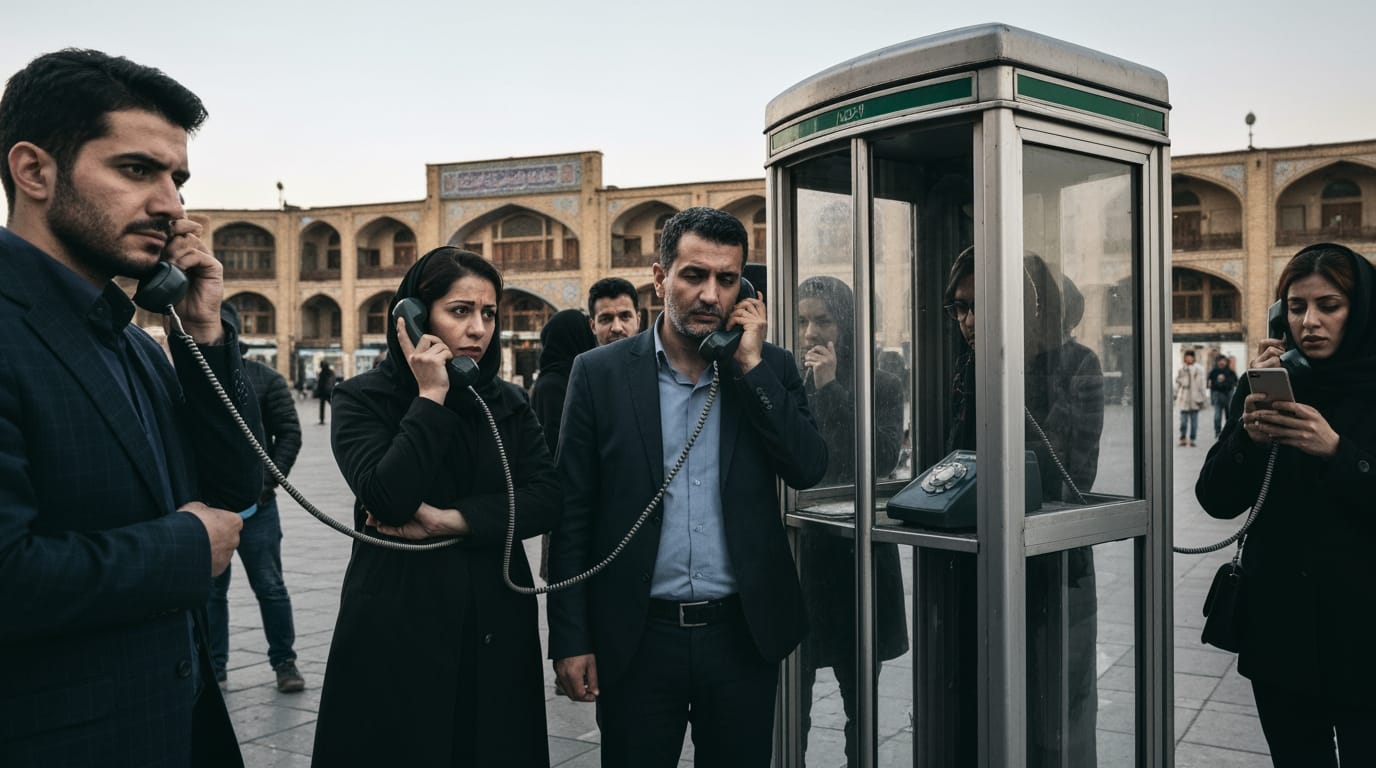
DUBAI – In a nation gripped by widespread protests, Iran has seen a partial restoration of international telephone calls, offering a narrow channel for communication after days of near-total digital isolation. However, the respite remains limited, with global internet access and text messaging largely curtailed, leaving millions of Iranians cut off from the outside world as authorities maintain a firm grip on information flow amidst a deepening internal crisis. The communication blackout, initiated on Thursday, January 8, 2026, underscores the Iranian government’s escalating efforts to suppress a wave of anti-establishment demonstrations that have swept across the country.
The Digital Iron Curtain Descends
The latest digital blockade began abruptly on January 8, 2026, plunging Iran into a severe communications crisis. As protests intensified across numerous cities and towns, the Iranian government ordered a nationwide shutdown of internet services and international telephone calls. Cybersecurity experts and monitoring groups, including NetBlocks, described the event as a "near-total internet blackout," with connectivity reportedly plummeting to approximately one percent of normal levels. This drastic measure effectively isolated the country of 85 million people, hindering their ability to communicate internally and with the global community. Even sophisticated virtual private networks (VPNs), often used by Iranians to circumvent state censorship, were rendered ineffective against the comprehensive shutdown.
The government's stated rationale for the blackout has been to maintain national security and counter what it describes as foreign-instigated unrest. The move coincided with calls from exiled opposition figures for increased demonstrations, which Iranian authorities have often blamed on external influence. This strategy is not new; Iran has a documented history of deploying internet shutdowns as a tool to control information and stifle dissent during periods of civil unrest.
A Glimmer of Connection, A Persistent Blockade
As of Tuesday, January 13, 2026, a slight easing of restrictions allowed mobile phone users in Iran to make international calls, providing a momentary and fragile link to relatives and contacts abroad. Despite this limited restoration, the broader digital landscape within Iran remains severely restricted. Text messaging services continue to be largely inoperative, and access to the global internet remains blocked. While some local connections to government-approved websites are reportedly available, the vast majority of online content from beyond Iran's borders is inaccessible.
Witnesses inside Tehran described the partial resumption of international calls as a small window in an otherwise closed communication environment. However, the inability for individuals outside Iran to call into the country underscored the persistent asymmetry of access, highlighting that control over incoming information remains paramount for the authorities. This selective and controlled relaxation of communication channels suggests a calculated effort to manage the flow of information without fully restoring the free exchange that could further fuel the ongoing protests.
The Economic and Human Toll
The prolonged internet blackout has exacted a heavy toll on the Iranian populace, disrupting daily life, stifling economic activity, and isolating citizens. For ordinary Iranians, the inability to access vital online services has created immense hardship. Communication with family members abroad, essential for many in the large Iranian diaspora, was severed for days. Businesses, particularly those reliant on digital platforms and international transactions, have faced severe operational challenges. Banks struggled to process transactions, and ATMs were reported to be smashed or malfunctioning, reflecting the paralyzing effect of the internet cutoff on the financial sector.
The economic ramifications of such extensive digital shutdowns are substantial and well-documented from previous incidents. The 2019 internet blackout, for instance, cost the Iranian economy an estimated $1 billion to $1.5 billion. More recently, a 12-day shutdown in June 2025 resulted in a staggering 30% contraction of Iran's digital economy within a single month, causing losses estimated at $170 million and jeopardizing the livelihoods of approximately 10 million Iranians dependent on the digital sector. Experts warn that the current, even more comprehensive, shutdown is likely inflicting comparable, if not greater, economic damage, further exacerbating the economic grievances that initially fueled the protests.
Beyond the financial impact, the blackout serves to obscure the scale and severity of the government's response to the protests. Human rights activists and organizations have warned that the communication void is being exploited to conceal lethal crackdowns and prevent documentation of state violence. With little to no access to independent reporting from inside Iran, verifying the true extent of casualties and detentions becomes exceedingly difficult. Reports indicate that at least 646 people have been killed in the current wave of demonstrations, a figure that is challenging to confirm independently due to the communication restrictions.
International Alarm and Mounting Pressure
The Iranian government's tactics have drawn sharp condemnation from the international community. Human rights organizations, the United Nations, and several Western governments have voiced grave concerns over the internet blackout and the use of lethal force against protesters. Volker Türk, the UN High Commissioner for Human Rights, expressed deep disturbance over reports of violence and called for independent investigations into alleged abuses, alongside an immediate restoration of communications.
The European Union has condemned any excessive use of force and is reportedly considering new, more severe sanctions in response to the violent crackdown. France, Britain, and Germany issued a joint statement urging Iranian authorities to protect peaceful assembly and ensure fundamental freedoms. U.S. President Donald Trump has warned Iran against killing protesters and indicated that Washington is closely monitoring the situation. Despite public condemnations, the U.S. administration also acknowledged receiving private messages from Tehran, indicating a complex diplomatic undercurrent amidst the public standoff. These international pressures aim to highlight the violations of human rights and the detrimental impact of digital censorship on a global scale.
A Recurring Tactic in a Deepening Crisis
The current internet shutdown is not an isolated incident but part of a broader, long-standing strategy by the Iranian government to control information and suppress dissent. Historically, Iran has implemented internet blackouts during significant periods of unrest, such as the "Bloody November" protests of 2019 and during the widespread demonstrations following the death of Mahsa Amini in 2022-2024. These actions are indicative of the regime's view of the internet as an "enemy" to be controlled and suppressed.
The protests themselves are rooted in profound economic hardship, including the sharp depreciation of the Iranian rial, soaring inflation nearing 40%, and increased prices for essential goods following cuts to subsidies. These economic grievances have merged with long-simmering anger over political repression and a lack of freedoms, transforming the demonstrations into a significant challenge to the clerical establishment, with many protesters openly calling for regime change. The widespread nature of the current unrest, spanning over 280 locations in 27 of Iran's 31 provinces, signals a deep-seated dissatisfaction that even stringent communication blackouts struggle to contain.
Navigating the Digital Darkness
As Iran attempts to navigate this turbulent period, the partial resumption of international calls offers little solace to a populace largely deprived of digital connectivity. The government's continued reliance on severe internet restrictions highlights its determination to control the narrative and quell dissent by severing communication ties. This approach, while effective in the short term for limiting coordination and obscuring events, inflicts substantial economic damage and further erodes trust between the state and its citizens. The ongoing protests, fueled by deeply rooted economic and political grievances, demonstrate a persistent challenge to the Iranian leadership, even as it seeks to maintain its digital iron curtain against the free flow of information. The international community watches closely, balancing diplomatic efforts with calls for fundamental human rights, including access to an open internet.


