Iran Faces Unprecedented Transition After Khamenei's Death Amid Regional Tensions
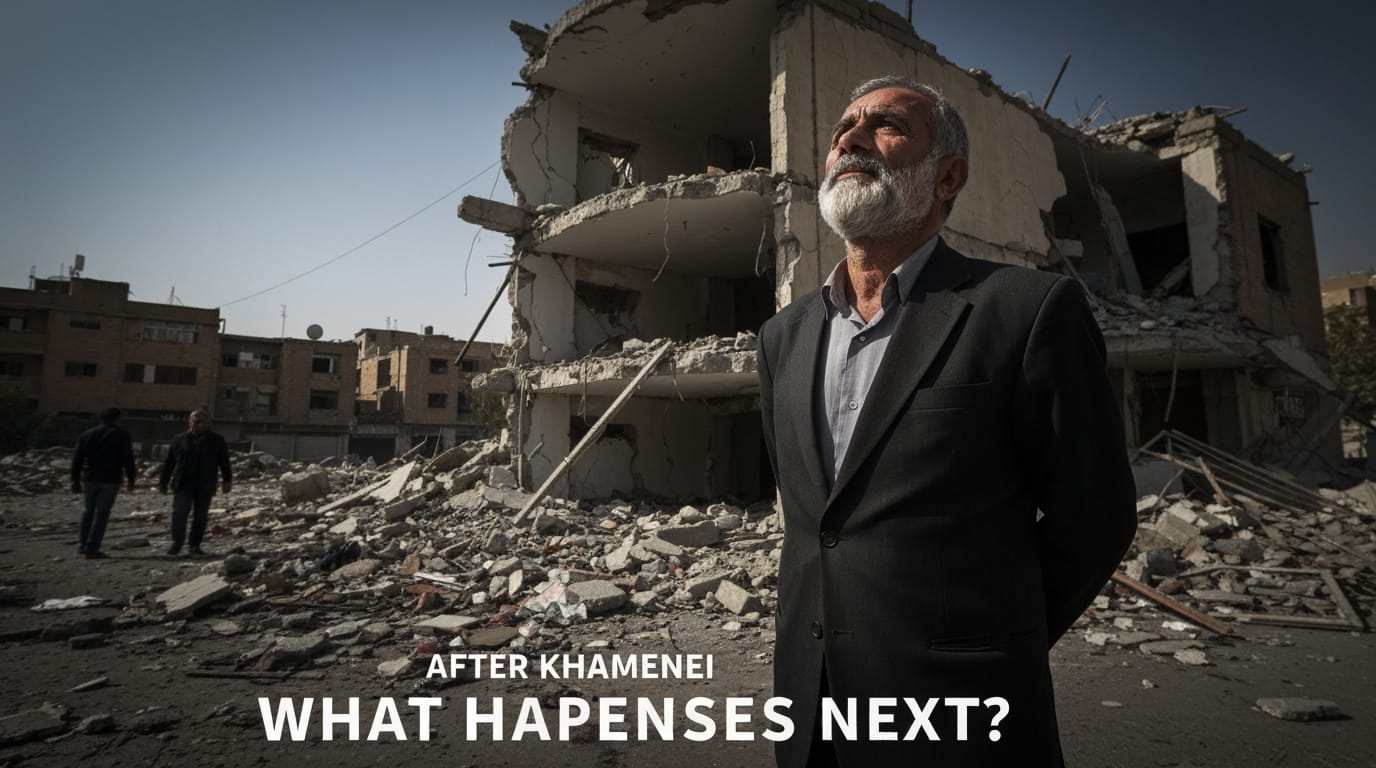
Tehran, Iran – Iran has been plunged into its most critical leadership transition since the 1979 Islamic Revolution following the death of Supreme Leader Ayatollah Ali Khamenei. His passing on Saturday, March 1, 2026, in a joint US-Israeli strike on his Tehran compound, has ignited a swift constitutional process to name his successor while the nation grapples with escalated regional conflicts and profound internal uncertainty. This pivotal moment comes after nearly 37 years of Khamenei's dominant rule, during which he shaped the Islamic Republic's trajectory and consolidated immense power. The sudden vacuum at the apex of Iran's political and religious hierarchy raises urgent questions about the country's future direction, its stability, and the potential for shifts in both domestic policy and its confrontational stance on the international stage.
The Immediate Succession Mechanism and Interim Governance
Following Khamenei's death, Iran's constitution mandates a carefully defined, though often opaque, succession process. A Provisional Leadership Council (PLC) has been established to temporarily assume the Supreme Leader's duties and govern the country. This interim council comprises the sitting president, the head of the judiciary, and a cleric from the Guardian Council chosen by the Expediency Discernment Council. Currently, reformist President Masoud Pezeshkian and hardline judiciary chief Gholamhossein Mohseni Ejei are among the members of this temporary leadership body. While the PLC manages day-to-day affairs, the ultimate responsibility for selecting a new Supreme Leader lies with the Assembly of Experts.
The Assembly of Experts, an influential body of 88 senior Islamic jurists and clerics, is tasked with appointing the Islamic Republic's highest political and religious authority. Its members are popularly elected every eight years, with the most recent elections held in 2024, and the current session is scheduled to sit until 2032. All candidates for the Assembly must first be vetted and approved by the Guardian Council, a powerful constitutional watchdog. The Assembly of Experts is constitutionally empowered not only to appoint a new leader but also to supervise their performance and even dismiss them if they fail to fulfill their duties. This body has only presided over one leadership transition in its history, in 1989, when Khamenei was chosen to succeed Ayatollah Ruhollah Khomeini. Analysts suggest that a swift decision is expected to prevent instability, particularly given the current volatile regional situation.
The Field of Potential Successors
The selection of a new Supreme Leader is a complex process, conducted largely behind closed doors, making it challenging to definitively identify a frontrunner. Unlike in 1989, when Khamenei was chosen, there is no single dominant figure widely seen as possessing comparable political authority and religious standing. The new leader must be a male cleric with political skill, moral credibility, and unwavering loyalty to the Islamic Republic. While the constitution previously required the leader to be a Grand Ayatollah, this religious threshold was lowered in 1989, facilitating Khamenei's own ascension. The Assembly of Experts has the option to appoint an individual or a temporary leadership council of clerics, though the latter has never been exercised.
Several names have been circulating as potential successors. Ayatollah Ali Khamenei had not officially named a successor, but the Assembly of Experts had reportedly been examining potential candidates in secrecy. Former President Ebrahim Raisi had been widely considered a leading contender before his death in a helicopter crash in May 2024. With Raisi's unexpected demise, attention has increasingly turned to Mojtaba Khamenei, the 56-year-old son of the late Supreme Leader. Mojtaba Khamenei wields significant influence through his close ties to the powerful Islamic Revolutionary Guard Corps (IRGC) and the Basij paramilitary force. However, his candidacy is viewed as controversial, primarily because he has never held formal government office and lacks the senior religious credentials typically expected for the role. A father-to-son transfer could be criticized as dynastic succession, undermining the revolutionary principles of the system.
Other figures mentioned include Alireza Arafi, deputy chairman of the Assembly of Experts and a member of the Guardian Council, known for his experience and trust by the late Khamenei. Hassan Khomeini, grandson of the Islamic Republic's founder, Ayatollah Ruhollah Khomeini, possesses revolutionary legitimacy but has limited political experience and appears to have less influence with the security apparatus. Ali Larijani, a former parliament speaker and ex-IRGC commander, is considered a pragmatic conservative with deep establishment ties, potentially emerging as a consensus political figure if stability is prioritized over strict clerical hierarchy. The influence of the IRGC in this selection process is deemed decisive, and any successor will likely need its backing to govern effectively, regardless of formal religious credentials.
Internal Challenges and Public Sentiment
The transition comes at a time when Iran faces significant internal pressures. Khamenei's tenure was marked by mounting domestic discontent, including major protests in 1999, 2009, 2022, and January 2026. Economic hardship, exacerbated by international sanctions and structural issues, remains a persistent challenge. The Supreme Leader himself acknowledged in January 2026 that the country faces economic pressure from its enemies, noting that the uncontrolled rise in foreign currency against the rial was "not natural" and the actions of an enemy that must be stopped. These economic woes have fueled public dissatisfaction, with protests by small businesses in Tehran erupting over currency fluctuations and the instability of the business environment.
The death of Khamenei, especially under the circumstances of a foreign strike, is likely to further amplify these internal dynamics. While the regime has demonstrated institutional resilience, the absence of a unifying figure like Khamenei could strain the balance between ideological authority and military power. Some observers suggest that the public, which has repeatedly demonstrated its desire for change, might be emboldened by Khamenei's killing. The succession process will need to navigate these deep-seated grievances and the potential for renewed social unrest, which could be met with increased internal repression by the new leadership.
Regional and International Implications
The leadership change has immediate and far-reaching implications for Iran's foreign policy and its standing in a volatile region. Khamenei held ultimate authority over foreign policy, including the nuclear program and relations with the United States. His successor will inherit a nation locked in confrontation with Israel and the United States, with tensions recently heightened by the US-Israeli strikes that killed Khamenei and other senior officials. There is speculation that the new leadership will likely continue to view the US, Israel, and the West as ideological and military adversaries.
Iran's foreign policy is largely dictated by the Supreme Leader and the Supreme National Security Council, meaning that a fundamental shift in direction is considered unlikely in the short term. Experts anticipate a continuity in approach, including support for regional proxy militias, continued development of its nuclear program, and efforts to strengthen ties with Russia and China to counter Western pressure. The IRGC, which plays a pivotal role in shaping and implementing foreign policy, is expected to continue its influence. The recent strikes have also created significant voids in Iran's military leadership, with Israel claiming to have killed numerous senior Iranian leaders and commanders, including the head of the IRGC. This could lead to a temporary period of uncertainty or even automatic, retaliatory actions by Iran's established military architecture.
The unexpected death of Khamenei during an active conflict with the US and Israel introduces an unprecedented layer of complexity. The world will be watching closely to see how the new leadership consolidates power and whether it opts for a more confrontational or pragmatic approach in its regional and international engagements.
Conclusion
The death of Ayatollah Ali Khamenei marks a profound turning point for the Islamic Republic, ushering in an era of uncertainty and potential transformation. The intricate process of selecting a new Supreme Leader by the Assembly of Experts, influenced heavily by the powerful Islamic Revolutionary Guard Corps, will unfold under intense internal and external scrutiny. The challenges facing the new leadership are immense, encompassing a restive populace demanding economic and social change, and an escalating regional conflict with long-standing adversaries. While the constitutional mechanisms for succession are in place, the actual transition will be shaped by the internal power struggles among clerical elites and military commanders, determining not only who leads Iran but also its future trajectory in a profoundly reshaped Middle East.


