Iran Plunged into Uncertainty as Supreme Leader Ali Khamenei Dies in US-Israeli Strike
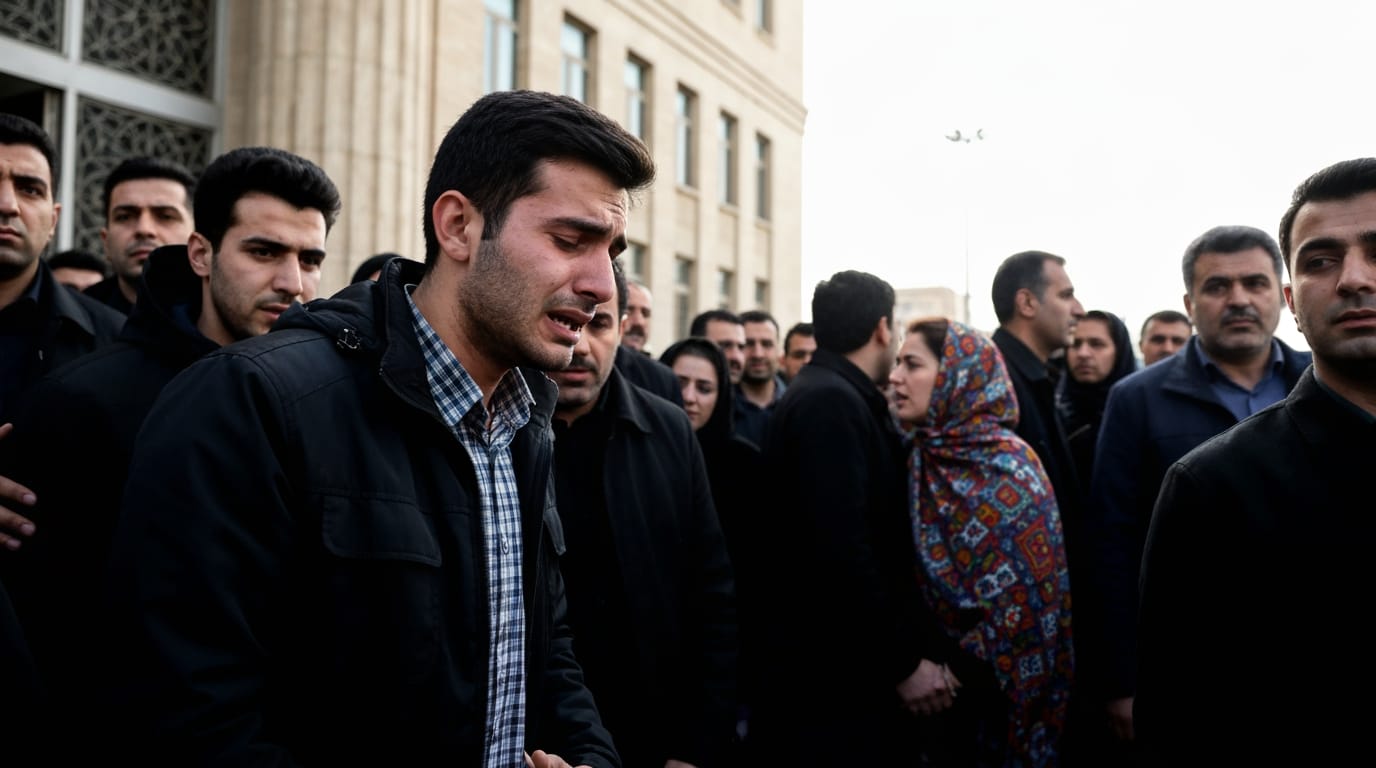
TEHRAN — Ayatollah Ali Khamenei, Iran's Supreme Leader for nearly four decades and a central figure in the Islamic Republic, has died at the age of 86 following a joint U.S.-Israeli military operation on Saturday. The unprecedented strike, which targeted his residential compound in central Tehran, marks the end of an era for Iran and plunges the nation into a fraught period of transition amid heightened regional tensions. The news has triggered widespread reactions globally, with some observers noting, "Never thought I would see this day," reflecting the seismic shift his departure represents.
The strike, which reportedly also claimed the lives of several of Khamenei's family members, including his daughter, son-in-law, daughter-in-law, and a grandchild, occurred after a period of escalating tensions and failed nuclear talks between Tehran and Washington. While Iranian officials initially refuted early reports of his death as "psychological warfare," state media later confirmed the Supreme Leader's passing. The confirmation followed statements from U.S. President Donald Trump and Israeli Prime Minister Benjamin Netanyahu, who had hinted at or outright confirmed the development. The operation is described by U.S. and Israeli leaders as an "unprecedented military operation designed to carry out regime change."
Immediate Aftermath and the Succession Challenge
In the immediate wake of Khamenei's death, Iran's constitutional mechanisms for succession have been activated. A temporary leadership council was formed on Sunday to assume the Supreme Leader's duties until a permanent replacement is selected. This interim body comprises Iran's sitting President Masoud Pezeshkian, hard-line judiciary chief Gholam-Hossein Mohseni-Ejei, and a cleric from the Guardian Council.
The crucial task of selecting the next Supreme Leader falls to the Assembly of Experts, an 88-member deliberative body composed of senior Islamic jurists and clerics, elected by popular vote to eight-year terms. The Assembly is constitutionally mandated to choose a new leader "as soon as possible." The selection criteria require the Supreme Leader to be a qualified Islamic jurist, just, pious, well-versed in political and social affairs, and capable of leadership and sound judgment. Notably, a constitutional amendment from 1989 removed the requirement for the leader to hold the highest religious rank of Grand Ayatollah, a change that facilitated Khamenei's own ascension.
This transition marks only the second time in the Islamic Republic's history that a Supreme Leader has been replaced since its founding in 1979. Given the immense power concentrated in the Supreme Leader's office—encompassing ultimate authority over the military, judiciary, intelligence services, and key economic institutions—the selection process is fraught with political maneuvering. The Islamic Revolutionary Guard Corps (IRGC), a powerful paramilitary force significantly empowered during Khamenei's tenure, is expected to wield decisive influence in determining the next leader. All candidates for the Assembly of Experts, and implicitly for the Supreme Leader, must first be vetted and approved by the Guardian Council, a body known for disqualifying numerous contenders.
Potential Successors and Internal Dynamics
Unlike the relatively clearer path for Khamenei after Ayatollah Ruhollah Khomeini's death in 1989, there is no single dominant figure widely seen as possessing Khamenei's combined political authority and religious standing. While Khamenei himself reportedly named three clerics—Gholam-Hossein Mohseni-Eje'i, Asghar Hejazi, and Hassan Khomeini—as potential successors prior to his death, the field remains open.
Among the frequently discussed names, Mojtaba Khamenei, the late leader's second son, is considered a potential contender, though his lack of senior religious credentials and government experience, combined with the potential for public backlash against a dynastic succession, could complicate his path. His strong ties to the IRGC, however, are a significant factor. Other figures mentioned include Hojjat-ol-Eslam Mohsen Qomi, a close adviser to Khamenei; Ayatollah Alireza Arafi, a senior cleric and head of Iran's seminary system; Ayatollah Mohsen Araki, a long-time member of the Assembly of Experts; Ayatollah Gholam Hossein Mohseni Ejei, the current head of the judiciary; and Ayatollah Hashem Hosseini Bushehri, the Qom Friday prayer leader. Former President Ebrahim Raisi, who was widely viewed as a potential successor, was removed from consideration following his death in a helicopter crash in May 2024. The opaque nature of the deliberations within the clerical establishment means that unexpected candidates could emerge.
Khamenei's Enduring Legacy and Future Implications
Ayatollah Ali Khamenei's 37-year rule profoundly shaped modern Iran. He was instrumental in transforming the Islamic Republic into a "tightly controlled theocratic state" and a "de facto military dictatorship." His legacy is marked by a foreign policy of "Strategic Patience" and "Maximum Resistance," through which he championed the "Axis of Resistance" – a network of allied militias like Hezbollah, Shiite militias in Iraq, and the Houthis in Yemen – to project Iranian influence across the region and counter U.S. and Israeli interests.
Domestically, Khamenei exerted tight control over the political system, suppressed dissent—including major protests in 1999, 2009, 2017, 2019, and the 2022 "Woman, Life, Freedom" uprising—and significantly expanded the security state. His era saw the empowerment of the IRGC into a formidable military, economic, and ideological force, often at the expense of other state institutions. Years of international sanctions and economic hardship under his leadership fueled widespread domestic frustration, which was often met with lethal force.
The death of Khamenei creates a significant power vacuum and ushers in one of the most critical and uncertain political transitions in Iran's post-revolutionary history. Regional and international reactions have been mixed, with some perceiving his death as an opportunity for Iranians to chart a new course, potentially away from repression and destabilizing foreign policies. Others, including Pakistani Prime Minister Shehbaz Sharif, expressed concern over the violation of international law. Russian President Vladimir Putin condemned the killing as a "cynical violation of all norms of human morality and international law."
The immediate aftermath has already seen Iran launch retaliatory strikes against targets in Israel and several Gulf cities, indicating a high risk of broader regional escalation. The coming weeks and months will reveal whether Iran moves toward an orderly transition under a new leadership, whether hardline military figures consolidate control, or if internal dissent and external pressures lead to a more profound systemic shift. The nation stands at a dangerous crossroads, with the world watching to see how the Islamic Republic navigates this unprecedented challenge without its long-serving Supreme Leader.


