Iran's Supreme Leader Ali Khamenei, "Unusual Sort of Dictator," Killed at 86, Leaving Tumultuous Legacy
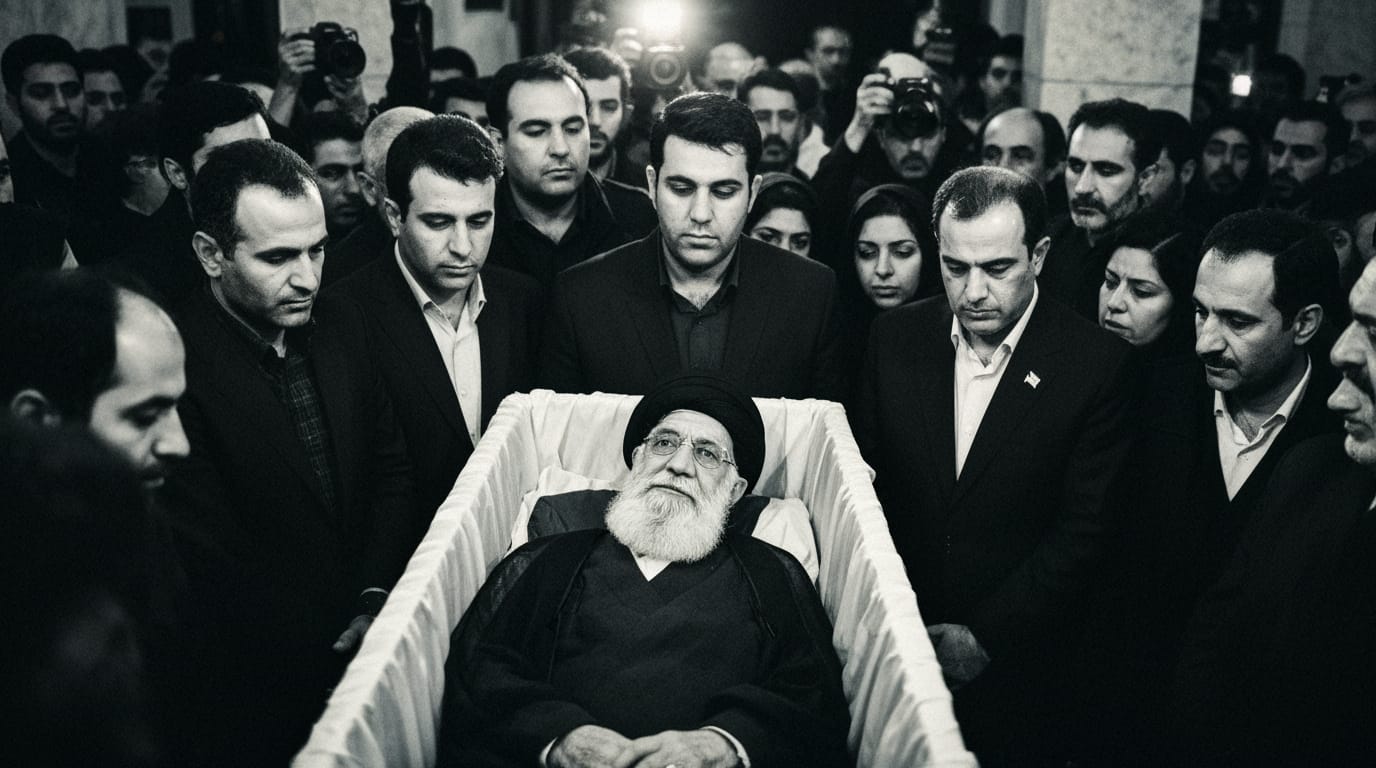
Ayatollah Ali Khamenei, Iran’s Supreme Leader for 36 years and a figure who shaped the Islamic Republic's trajectory for nearly its entire existence, was killed on February 28, 2026, at the age of 86, in a series of targeted U.S.-Israeli strikes on Iranian soil. His death marks a pivotal moment for a nation he ruled with an iron fist, yet whose leadership style was paradoxically described as that of an "unusual sort of dictator." Khamenei's passing leaves a profound power vacuum and casts a long shadow of uncertainty over Iran's future, as well as the volatile Middle East region that felt the continuous ripple effects of his policies.
The End of an Era: Assassination Amid Escalating Tensions
The announcement of Ayatollah Ali Khamenei's death at 86 came from U.S. President Donald Trump, who posted on social media that "Khamenei, one of the most evil people in history, is dead". This revelation followed a massive wave of United States and Israeli strikes targeting key sites across Iran, including the Supreme Leader's Tehran compound. While Iranian state media and the Foreign Ministry initially refrained from official confirmation, multiple international outlets reported the supreme leader's demise, citing U.S. and Israeli sources. His assassination occurred amidst escalating regional conflicts, fueled in part by Iran's consistent support for armed groups and its advanced nuclear program, which had long been a point of contention with Western powers. The strikes that ultimately claimed his life were reportedly a culmination of these long-standing tensions and Iran's deeply entrenched role in the Middle East's geopolitical landscape.
Khamenei's death at 86 brought an abrupt end to a 36-year tenure as Supreme Leader, a period that saw him become the longest-serving head of state in the Middle East and the longest-serving Iranian leader since Shah Mohammad Reza Pahlavi. His leadership had been characterized by an unwavering commitment to the principles of the 1979 Islamic Revolution, resisting external pressures, and consolidating power within the theological framework of the Islamic Republic. The circumstances of his death underscore the perilous state of regional affairs and the direct consequences of Iran's confrontational foreign policy, setting the stage for an unpredictable succession and potentially further destabilization.
The Enigma of Authority: An "Unusual Sort of Dictator"
Despite wielding near-absolute authority, Ali Khamenei was often described by observers as an "unusual sort of dictator". This paradoxical characterization stemmed from several factors that set him apart from traditional authoritarian rulers. Unlike many leaders known for opulent displays of wealth, Khamenei maintained a reputation for an austere and down-to-earth lifestyle, which stood in stark contrast to the perceived corruption and ostentatious riches of some other Iranian officials. This image, coupled with a calm demeanor, contributed to his unique public persona.
However, this veneer belied the immense power he commanded. As Supreme Leader, Khamenei had the final say on all major state matters, from foreign policy and the nuclear program to the judiciary, military, and media. He exerted significant influence over a complex network of institutions, including the parliament, the presidency, the Islamic Revolutionary Guard Corps (IRGC), the intelligence services, and even the clerical elite. This intricate web of interconnected powers, where various factions sometimes "bickered," was ultimately orchestrated and managed through decrees and final decisions issued by Khamenei himself. He successfully restructured the Islamic theocracy to cement his own conception of power, particularly by empowering the IRGC, transforming it into a powerful economic and military entity loyal directly to him. This allowed him to maintain control through a blend of religious legitimacy, strategic alliances, and the suppression of dissent, even as he projected an image of a magnanimous, if firm, guiding figure.
From Revolutionary to Absolute Authority
Born in Mashhad in 1939 into a religious family, Ali Khamenei's journey to the pinnacle of Iranian power was long and arduous. He became politically active in the 1960s, joining the revolutionary followers of Ayatollah Ruhollah Khomeini and actively opposing the U.S.-backed Shah Mohammad Reza Pahlavi's regime. His activism led to multiple arrests, imprisonment, and even exile at the hands of the Shah's security services.
Following the 1979 Islamic Revolution, Khamenei quickly rose through the ranks. He survived a 1981 assassination attempt by a rival faction, which left his right arm partially paralyzed and cemented his image as a survivor and a populist figure. He served two terms as President of Iran from 1981 to 1989, a period marked by the devastating Iran-Iraq War. Upon Khomeini's death in 1989, despite being a relatively junior cleric, Khamenei was elected as the new Supreme Leader by the Assembly of Experts. He shrewdly consolidated his position, building a network of loyalists within the Revolutionary Guard and other critical institutions to bolster his grip on power, transforming the presidency into a largely ceremonial role and vesting true authority in the Supreme Leader's office.
A Legacy of Confrontation and Control
Throughout his decades-long rule, Ayatollah Ali Khamenei presided over a period marked by consistent confrontation with the United States, which he famously dubbed "the Great Satan" and the "number one enemy of our nation". He blamed the U.S. for historical interventions in Iran, such as the 1953 coup, and fostered a deep-seated distrust of Western influence. This stance underpinned many of his foreign policy decisions, including his staunch advocacy for Iran's nuclear program, which he insisted was for peaceful civilian use, even while issuing a fatwa forbidding the production of weapons of mass destruction.
Domestically, Khamenei's rule was characterized by the systematic suppression of dissent and reform movements. His tenure saw numerous large-scale protests, including the 1999 student protests, the widespread unrest following the disputed 2009 presidential election, and the 2022-2023 "Woman, Life, Freedom" movement. Each time, his regime employed brutal force to quell the uprisings, reinforcing the state's control and the Supreme Leader's ultimate authority. Internationally, Khamenei's legacy is inextricably linked to Iran's robust support for proxy groups across the Middle East, including Hamas and Hezbollah. This strategy, aimed at projecting Iranian influence and challenging regional adversaries, directly contributed to the heightened tensions that ultimately led to the strikes resulting in his death. His unyielding approach ensured Iran remained a significant, often disruptive, force on the global stage.
Conclusion: An Uncertain Future
The assassination of Ayatollah Ali Khamenei at 86 brings to a close a transformative chapter in Iranian history. His three-and-a-half decades as Supreme Leader fundamentally shaped the political, religious, and social landscape of the Islamic Republic, solidifying the principles of the revolution while navigating complex domestic and international challenges. The paradox of his leadership — an "unusual dictator" who combined an austere image with absolute power and a deeply entrenched, multi-layered system of control — leaves behind a unique imprint.
His death not only removes the central pillar of Iran's theocratic system but also ignites profound questions about succession and the future direction of the nation. As Iran grapples with the loss of its long-serving leader, the international community watches closely for potential shifts in its internal stability, regional posture, and nuclear ambitions. The legacy of Ali Khamenei — a staunch revolutionary, a meticulous consolidator of power, and an architect of a confrontational foreign policy — will undoubtedly continue to reverberate across Iran and the Middle East for years to come.


