Iran Gripped by Unprecedented Mourning as Officials Converge for Khamenei's Funeral Amidst Succession Shadows
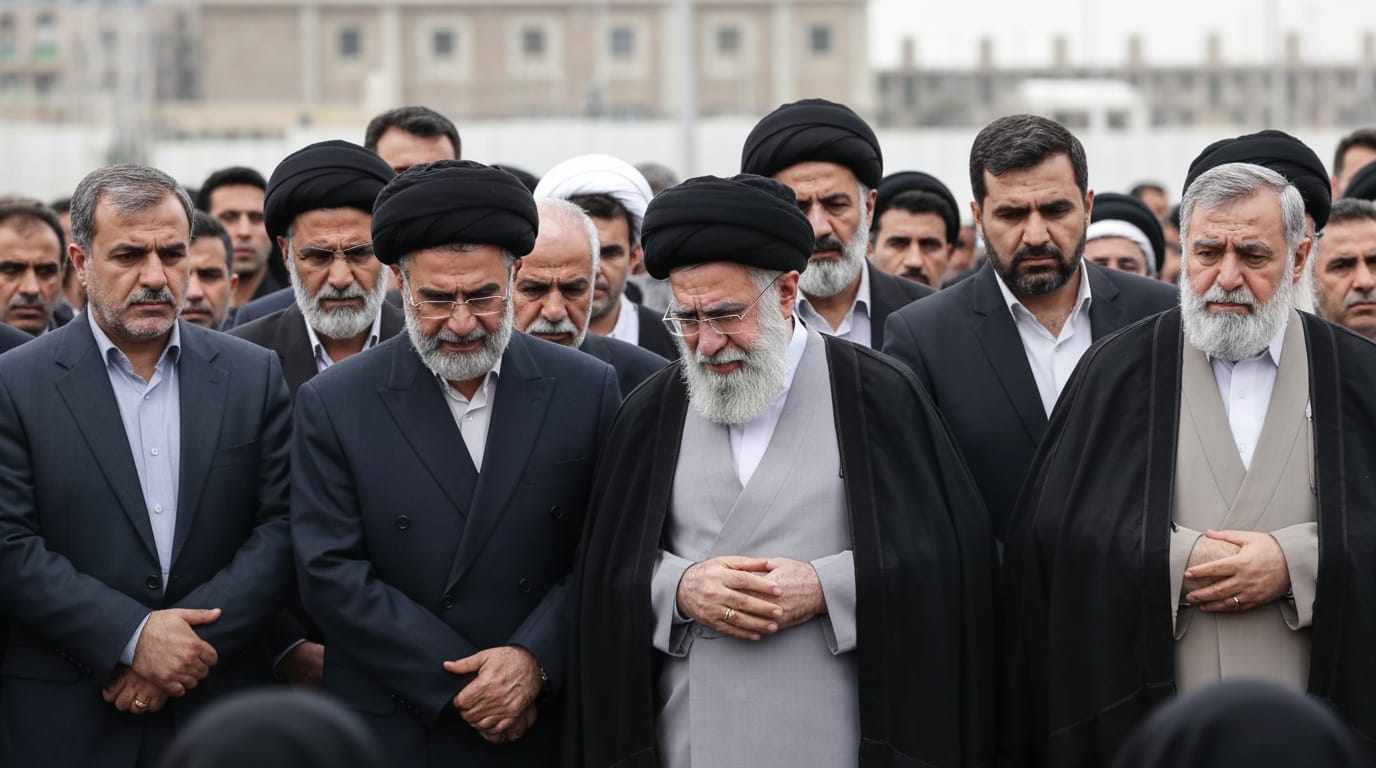
TEHRAN – Millions of Iranians and scores of international dignitaries continued to gather in Tehran today for the second day of elaborate funeral ceremonies honoring the late Supreme Leader Ayatollah Ali Khamenei, who was tragically killed in a joint U.S.-Israeli airstrike four months prior. The somber proceedings, marked by profound national grief and calls for retribution, have brought together top Iranian officials and representatives from over 70 countries, transforming the capital into a focal point of religious and political commemoration. However, the conspicuous absence of the newly appointed Supreme Leader, Mojtaba Khamenei, casts a complex shadow over the nation's leadership transition, fueling speculation about his health and the future stability of the Islamic Republic.
A Nation United in Grief and Resolve
Day two of the public mourning ceremonies saw an immense outpouring of national sentiment, with Tehran's streets and the Grand Mosalla prayer complex overflowing with an estimated 15 to 20 million mourners. This unprecedented attendance underscores the historical significance of Ayatollah Ali Khamenei’s passing, marking the end of a 37-year era during which he held ultimate authority over Iran's political, military, and economic spheres. The sheer scale of the funeral is anticipated to make it the largest state funeral in Iran's history.
Leading Iranian figures were prominently present, demonstrating a united front in the wake of the Supreme Leader's assassination. President Masoud Pezeshkian, Parliament Speaker and chief negotiator Mohammad Bagher Ghalibaf, and Ahmad Vahidi, head of the powerful Revolutionary Guards, were observed paying their respects. The late leader's brothers also participated in public funeral prayers, reinforcing the image of national solidarity. State television broadcast images of President Pezeshkian praying at Khamenei's coffin, which was draped in the national colors of the Islamic Republic and adorned with a black turban, signifying his revered lineage. Chants for revenge against the United States and Israel, the nations attributed with the February 28 airstrike that claimed Khamenei's life, resonated through the crowds, reflecting the deep-seated anger and revolutionary zeal that permeate the mourning period.
International Homage Amidst Rising Tensions
The funeral has not only been a domestic affair but also a significant international event, drawing representatives from over 70 to 100 countries, including heads of state, parliamentary leaders, and foreign ministers. Among the notable foreign dignitaries attending were Pakistani Prime Minister Shehbaz Sharif, Iraqi President Nizar Amidi, Georgian President Mikheil Kavelashvili, Tajikistan's President Emomoni Rahmon, and Turkish Vice President Cevdet Yilmaz. High-ranking officials from China, Russia (including former President Dmitry Medvedev), and various nations in the Caucasus region also sent their condolences. Delegations from Palestinian militant group Hamas and Lebanese militant group Hezbollah, key allies of Iran, were also present, signaling continued regional solidarity. India sent an official delegation led by Bihar Governor Syed Ata Hasnain and Minister of State for External Affairs Pabitra Margherita.
The extensive international participation highlights Iran's enduring diplomatic ties and its geopolitical significance, even as the nation navigates a period of heightened tension. The ceremonies serve as a platform for global expressions of condolence while simultaneously underscoring the deep divisions and rivalries that define the Middle East. Foreign Minister Seyed Abbas Araghchi remarked that this "historic commemoration will remain an everlasting memory in the course of our shared relations," emphasizing the event's diplomatic weight.
The Enigma of the New Supreme Leader's Absence
Amidst the grand display of national unity and international attendance, a notable absence has become a central point of discussion: that of Mojtaba Khamenei, the son of the late Supreme Leader and his recently appointed successor. Mojtaba Khamenei was named the new Supreme Leader in March 2026, succeeding his father. However, he has not made a public appearance since his appointment and is notably absent from his father's week-long funeral ceremonies.
This absence is officially attributed to injuries sustained during the February 28 airstrike that killed his father. Iranian state media have reported that he was "lightly" injured in the attack that also claimed the lives of his wife, son, and other family members. However, persistent rumors and reports from sources like U.S. Defense Secretary Pete Hegseth suggest more severe injuries, including the possibility of disfigurement or even the need for a prosthetic leg and plastic surgery. Some reports even indicated that he narrowly survived the strike after stepping outside his residence minutes before it hit.
The secrecy surrounding Mojtaba Khamenei's health and whereabouts has ignited widespread speculation, both domestically and internationally, regarding his ability to lead and the true extent of his control over the country. While Iranian officials assert he is in "excellent health" and remains "in control of the situation," his continued seclusion from such a pivotal national event raises questions about the stability of the new leadership. His first public statement as Supreme Leader was delivered via a state TV presenter, further underscoring his physical absence. This situation presents a challenge for the new administration as it seeks to consolidate power and project an image of strength during a critical period.
A Prolonged Farewell and an Uncertain Future
The funeral ceremonies for Ayatollah Ali Khamenei are meticulously planned to span a week, reflecting the profound impact of his leadership and the state's efforts to mobilize national sentiment. After public ceremonies in Tehran, the processions are scheduled to move south towards Qom, a spiritual center, on Monday and Tuesday. International religious figures and public mourning events are also planned for Najaf and Karbala in neighboring Iraq, highlighting Iran's strong ties with Shi'ite holy sites. The week will culminate with the final burial ceremony at the Imam Reza shrine in Mashhad, Khamenei's birthplace.
This prolonged farewell aims to solidify national unity and revolutionary zeal following a period of intense geopolitical upheaval. However, the transition of power, marked by the assassination of a long-serving leader and the health mysteries surrounding his successor, presents Iran with considerable challenges. The new leadership faces the immediate task of managing the outpouring of national grief, projecting strength, and addressing the calls for vengeance against those responsible for the previous leader's death. The world watches closely as Iran navigates this complex succession, seeking clarity on its future direction and the implications for regional and global stability.


