Iran's Crisis Deepens: US Weighs Military Options Amid Brutal Crackdown
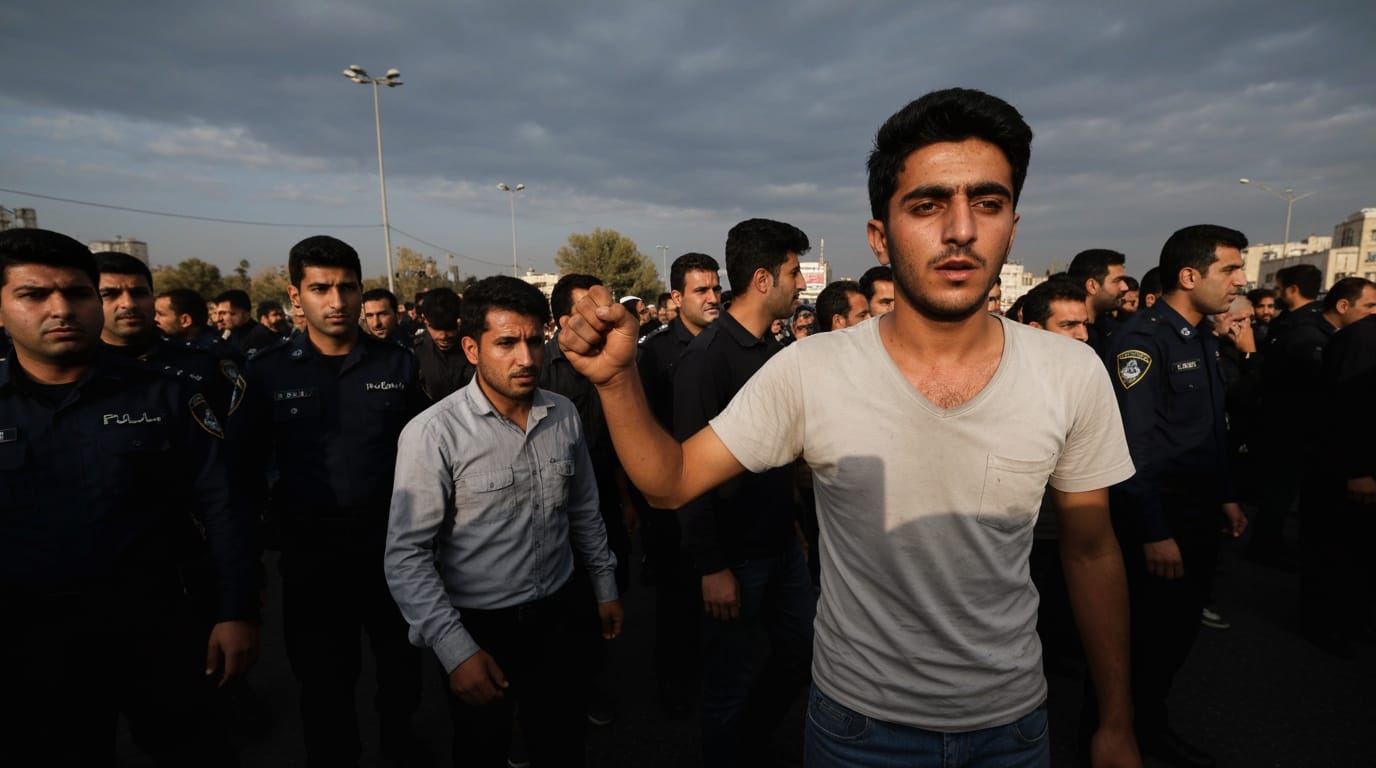
As reports emerge of a devastating crackdown on protesters across Iran, the United States finds itself grappling with a complex dilemma, with military intervention increasingly part of the high-stakes discussion. Iranian security forces are accused of killing hundreds, possibly thousands, of demonstrators, stifling communication, and escalating a response that began with economic grievances and has now broadened into widespread calls for regime change. The crisis has prompted President Donald Trump's administration to issue stern warnings to Tehran, openly stating that military options remain on the table, signaling a potential shift in the US approach to the enduring geopolitical challenge posed by the Islamic Republic.
Escalation and Repression: The Iranian Protests
The current wave of unrest, initially sparked by spiraling inflation and a freefalling currency in late December 2025, has metastasized into one of the most significant challenges to clerical rule since the 1979 Islamic Revolution. Protests have swept across numerous cities, with demonstrators expressing deep-seated discontent with the country's leadership. In response, Iranian authorities have unleashed a brutal crackdown, employing lethal force against unarmed civilians. Unconfirmed reports suggest the death toll exceeds 500, with some rights groups claiming the actual number may be substantially higher, potentially reaching thousands. A communications blackout imposed by the government has severely hampered the ability to verify casualty figures and the full extent of the repression. Eyewitness accounts and credible reports indicate a dramatic escalation in deadly force by security forces, as the regime struggles to contain the widespread dissent. This intense repression follows a pattern seen in previous Iranian protest movements, though the current scale and geographic spread appear particularly challenging for the authorities.
Washington's Deliberation: A Spectrum of Force
Against this backdrop of escalating violence, the Trump administration has intensified its rhetoric, with President Trump publicly warning that Iran's leaders "will pay a big price" for the deadly chaos and asserting that "HELP IS ON ITS WAY" for Iranian protesters. While diplomacy remains an articulated preference, White House Press Secretary Karoline Leavitt affirmed that President Trump is "unafraid to use the lethal force and might of the United States military if and when he deems that necessary". This declaration underscores the gravity of the situation and the active consideration of various responses within Washington's national security apparatus. Personnel at Al Udeid airbase in Qatar, the largest US military contingent in the Middle East, were reportedly advised to leave as a precautionary measure, heightening fears of a potential US strike and subsequent Iranian retaliation. While the US has stated it is "locked and loaded and ready to go" if Iran violently kills peaceful protesters, the specific nature of any intervention remains unclear, even as President Trump recently indicated that "important sources" told the US government that Iran has halted its brutal crackdown on protesters, leaving the question of military strikes open for now.
Understanding the Military Options
Should the US opt for military intervention, a spectrum of choices, each with its own set of complexities and risks, is under consideration. One frequently discussed option involves limited strikes against symbolic targets. This could entail targeting barracks belonging to police, Basij paramilitaries, or the Islamic Revolutionary Guards Corps (IRGC), identified as the "brains and the muscle behind" the crackdown. Analysts suggest that such strikes would pose fewer risks to US armed forces and minimize civilian casualties, potentially being executed without directly involving Gulf allies. However, critics argue this approach might enable the Iranian regime to rally patriotic support, deflect attention from the underlying grievances of the protests, and cause little significant damage, potentially signaling to protesters that Washington is not providing substantial assistance.
Broader military strikes against Iran's military and security forces, particularly the IRGC, are also on the table. While targeting IRGC facilities could send a clear message, there's a distinction to be made between actions aimed at supporting protesters and those serving broader US strategic interests or aiding allies like Israel, such as strikes against Iran's nuclear facilities. Military officials have also reportedly discussed "technological and psychological options" in addition to conventional strikes. Beyond kinetic actions, non-military or quasi-military considerations include cyberattacks to disrupt Iranian communication and decision-making systems, or even the more extreme, intelligence-dependent scenarios of assassination or arming the opposition to facilitate a direct challenge to the regime. However, the feasibility and potential for success of such highly sensitive operations are heavily reliant on robust intelligence capabilities.
The High Stakes of Intervention: Risks and Repercussions
Any form of US military action against Iran carries substantial and unpredictable risks. A primary concern is the potential for retaliation from Tehran, which has previously demonstrated a willingness to respond to perceived aggressions by targeting US assets, Israel, or international shipping lanes. The experience of Iran launching ballistic missiles at Al-Udeid after previous US strikes on Iranian nuclear facilities highlights the difficulty of "managing and neutralizing the counterstrike". Such a response could rapidly escalate into a broader regional conflict, destabilizing an already volatile Middle East.
Furthermore, military intervention, especially if perceived as foreign interference, could inadvertently strengthen the Iranian regime by allowing it to portray itself as a defender against external aggression, thereby rallying nationalist sentiment and diverting attention from the domestic grievances fueling the protests. There is also the significant question of effectiveness; military strikes, particularly limited ones, might not fundamentally alter the regime's behavior or significantly aid the protest movement on the ground. The US has also made adjustments to its military posture in the region, including the redeployment of the USS Gerald Ford aircraft carrier and the reduction of personnel at Al Udeid Air Base, indicating an awareness of the need to protect its forces in anticipation of potential hostilities. Should the violence in Iran escalate into a larger military conflict, quickly bringing an aircraft carrier back to the region as a protective measure would not be a swift option for the US.
Conclusion
The crisis in Iran presents a multifaceted challenge for the United States, forcing a difficult calculation between humanitarian concern for protesters, geopolitical strategy, and the inherent dangers of military engagement. While the administration has openly considered military options to address the brutal crackdown, the potential for Iranian retaliation, regional destabilization, and the complex, often unpredictable, impacts on the protest movement itself weigh heavily on any decision. The current situation demands a carefully calibrated approach, acknowledging that while US officials keep all options on the table, the consequences of any intervention, military or otherwise, could have profound and lasting effects on Iran, the Middle East, and global security. The focus remains on discerning the most effective means to address the escalating human rights crisis while avoiding an unintended escalation of conflict in an already turbulent region.


