Israel Becomes First Nation to Recognize Somaliland, Reshaping Horn of Africa Diplomacy
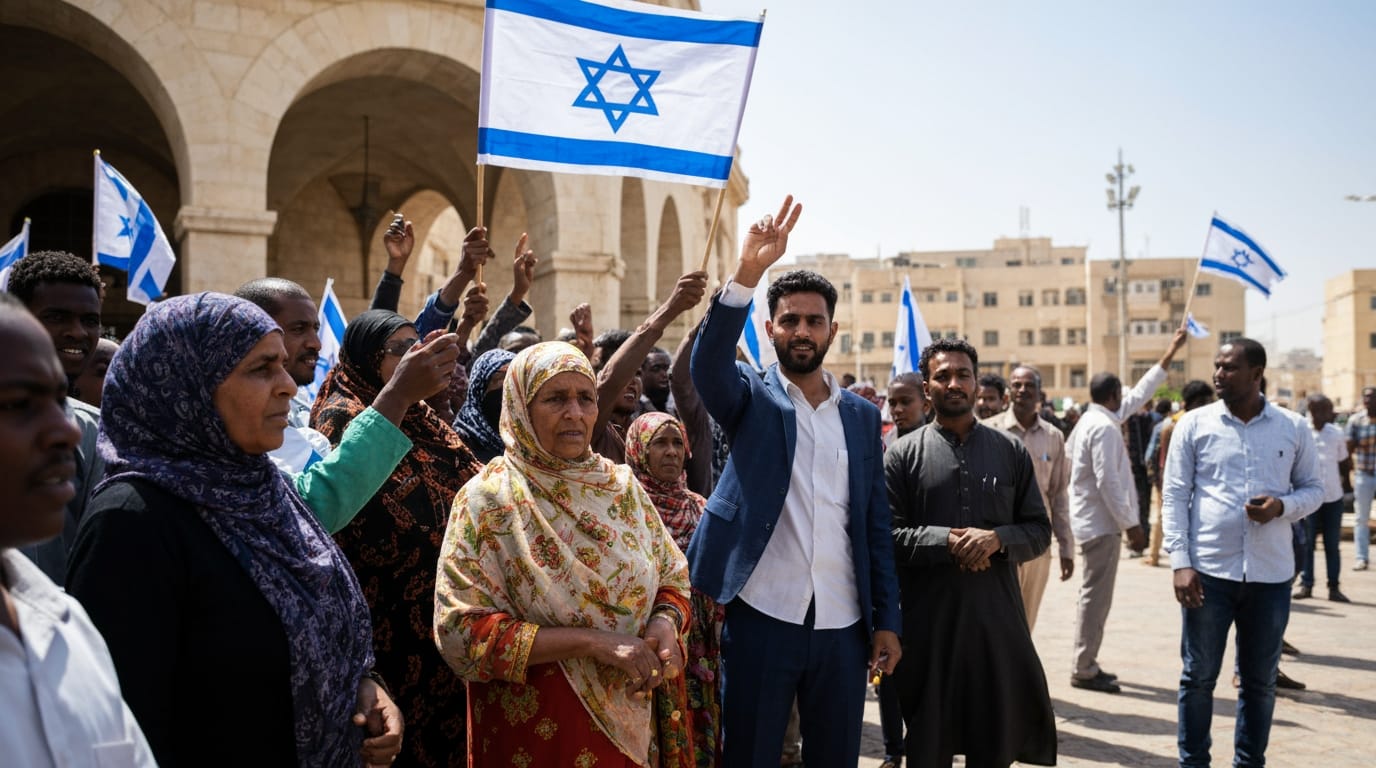
Hargeisa, Somaliland & Jerusalem, Israel – In a landmark diplomatic move, Israel today formally recognized the Republic of Somaliland as an independent and sovereign state, marking a significant turning point for the self-declared nation and introducing a new dynamic into the geopolitical landscape of the Horn of Africa. The recognition, formalized through a joint declaration signed by Israeli Prime Minister Benjamin Netanyahu, Foreign Minister Gideon Sa'ar, and Somaliland President Abdirahman Mohamed Abdullahi, positions Israel as the first United Nations member state to grant full diplomatic legitimacy to Somaliland since its declaration of independence in 1991. This historic accord promises to usher in an era of enhanced cooperation between the two entities, with immediate implications for regional security, economic development, and international relations.
A Decades-Long Quest for Recognition Culminates
Somaliland, a former British protectorate, briefly gained independence in 1960 before voluntarily uniting with the Trust Territory of Somaliland (former Italian Somalia) to form the Somali Republic. However, following decades of political marginalization, conflict, and the collapse of Somalia's central government, Somaliland reasserted its independence in May 1991. Since then, it has functioned as a de facto sovereign state, establishing its own government, currency, military, and democratic institutions, fostering a remarkable degree of stability in a volatile region. Despite these achievements, Somaliland's persistent appeals for international recognition have largely gone unheeded by the global community, primarily due to concerns about altering existing borders and maintaining Somalia's territorial integrity.
Israel's decision today shatters this long-standing diplomatic isolation. While Israel was among 35 nations that recognized Somaliland's brief independence in 1960, this current move elevates that historical connection to a full, formal state-to-state relationship. Israeli Prime Minister Benjamin Netanyahu, in a video call with President Abdullahi, described the new friendship as "seminal and historic," emphasizing the opportunity for expanded partnership in various fields. Foreign Minister Gideon Sa'ar further indicated that embassies would be opened in both countries and ambassadors appointed, signifying the depth of the newfound ties.
Strategic Calculus: Geopolitics and Mutual Interests
The timing and nature of Israel's recognition are deeply intertwined with evolving geopolitical considerations in the Middle East and the Horn of Africa. For Israel, the move represents a strategic enhancement of its national security and an expansion of its diplomatic footprint in a region of critical importance. Somaliland's strategic location on the Gulf of Aden, near the Bab al-Mandab Strait, a vital chokepoint for global maritime trade, offers Israel a crucial vantage point. This positioning is particularly significant in the context of countering regional threats, notably from Iran and its proxies, such as the Houthi rebels in Yemen, who pose a direct threat to Red Sea shipping lanes. Intelligence gathering and potential joint operations against these threats are seen as key benefits for Israel.
Furthermore, the recognition has been framed "in the spirit of the Abraham Accords," the U.S.-brokered normalization agreements between Israel and several Arab nations initiated in 2020. This framing suggests a broader regional realignment and potential for increased cooperation against shared adversaries. Reports have also emerged indicating that Somaliland may accept Palestinian refugees from the Gaza Strip, a clause that, if confirmed, would add another complex layer to the agreement and further align it with the spirit of the Abraham Accords' diplomatic objectives.
For Somaliland, the recognition marks the culmination of decades of diplomatic efforts to achieve international legitimacy and secure its sovereignty. Beyond the symbolic victory, the agreement promises substantial economic and developmental benefits. Prime Minister Netanyahu expressed Israel's willingness to work with Somaliland on economic fields, agriculture, and social development. These areas align with Somaliland's needs for foreign investment and expertise to bolster its growing but still limited economy.
Regional Ripples and International Reactions
Israel's recognition of Somaliland is poised to generate significant ripple effects across the Horn of Africa and the broader international community. The Federal Government of Somalia in Mogadishu is expected to vehemently oppose the move, viewing it as a violation of its territorial integrity and a direct interference in its internal affairs. Most Arab League countries, with the notable exception of the UAE which reportedly mediated parts of the agreement, have historically supported Somalia's unity and are likely to express similar objections. The potential for strained relations with Somalia and other Muslim-majority African nations is a palpable risk.
The move also comes at a time of heightened regional tensions. Ethiopia's recent agreement with Somaliland for port access has already exacerbated relations with Somalia. Egypt's military pact with Somalia further complicates the intricate web of alliances and rivalries in the region. While some critics argue that Israel's recognition could escalate tensions, supporters believe it could foster greater stability and economic growth by strengthening a de facto democratic and stable entity. The question now becomes whether other nations, particularly Western powers that maintain liaison offices in Hargeisa (such as the UK and Denmark), will follow Israel's lead, potentially prompting a broader reassessment of Somaliland's international status.
The Path Forward: Opportunities and Challenges
The newly forged relationship between Israel and Somaliland opens numerous avenues for cooperation while simultaneously presenting substantial challenges. On the one hand, Somaliland stands to gain invaluable support in its pursuit of economic development, leveraging Israeli expertise in sectors like agriculture, water technology, and innovation. Enhanced security cooperation could also bolster Somaliland's capacity to address piracy and terrorism in critical maritime routes, benefiting global commerce. The recognition itself could attract further international investment and engagement, helping to integrate Somaliland more fully into the global economy.
On the other hand, the diplomatic fallout from Somalia and its allies will undoubtedly test the resilience of this new partnership. The issue of potential Palestinian refugee resettlement, if it materializes, could draw further scrutiny and controversy. The long-term impact on regional stability will depend heavily on how these complex dynamics are managed by all parties involved. Israel's move demonstrates a clear intent to deepen its strategic engagement in Africa, a continent increasingly viewed as vital to its security and economic interests. As Somaliland embarks on this new chapter, its leadership faces the critical task of translating diplomatic recognition into tangible benefits for its people, navigating the delicate balance of regional power politics. The world will be watching closely to see how this audacious diplomatic step reshapes the future of the Horn of Africa.


