Israel Intensifies Strikes on Iran's Energy Infrastructure Amid Escalating Conflict
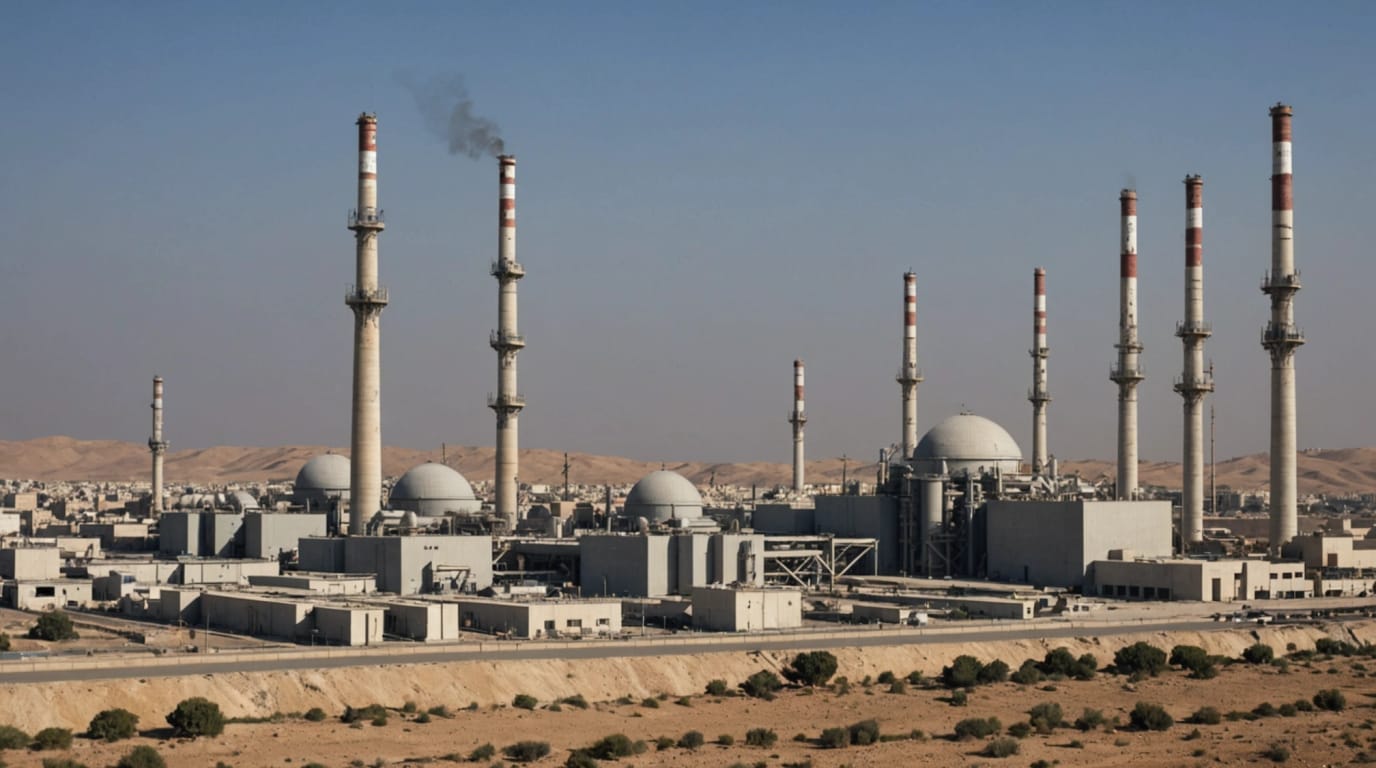
In a significant escalation of the ongoing conflict between Israel and Iran, Israeli forces have broadened their attacks to include Iran's vital energy infrastructure. These strikes, a departure from previous patterns, target key oil and gas facilities, raising concerns about regional stability and global energy markets. The intensified campaign comes as both nations exchange missile barrages, increasing the risk of a wider conflict.
Strategic Shift: Targeting Energy Assets
For years, the conflict between Israel and Iran has largely been a shadow war, characterized by covert operations, cyberattacks, and occasional strikes in Syria. However, the recent shift towards directly targeting Iran's energy sector marks a notable change in strategy. This escalation began last week with attacks on key nuclear facilities and military sites, but quickly expanded to include oil refineries, gas fields, and fuel depots.
On Saturday, June 14, 2025, Iran's Ministry of Petroleum reported that the Shahran oil depot near Tehran was struck, resulting in a massive fire. Simultaneously, reports emerged of attacks on the Ray Oil Refinery, also located in the capital. Further south, the South Pars gas field, one of the world's largest, and the Fajr Jam Gas Refining Company were also targeted. These strikes have forced Iran to partially suspend production at South Pars, a critical source of domestic gas supply.
Analysts interpret this strategic shift as a move towards economic warfare, aimed at crippling Iran's ability to sustain its military and nuclear programs. By disrupting Iran's energy production and exports, Israel hopes to exert greater pressure on the regime and potentially incite internal unrest.
Impact on Iran's Energy Sector
The attacks on Iran's energy infrastructure have had an immediate and significant impact. The South Pars gas field, which supplies a large portion of Iran's domestic gas needs, has experienced a partial shutdown, exacerbating an already existing energy crisis. Prior to the conflict, Iran was grappling with gas shortages, leading to widespread power cuts for businesses and residents. The damage to the Fajr Jam Gas Refining Company further threatens domestic electricity and fuel supplies, particularly in southern and central provinces.
The destruction of fuel depots and refineries near Tehran could also have severe consequences for the capital's residents. With limited fuel reserves, the city's ability to function and for residents to evacuate in case of further attacks is compromised. The economic impact of these disruptions is estimated to be substantial, with blackouts alone costing the Iranian economy millions of dollars daily.
Global Energy Market Implications
The escalating conflict between Israel and Iran has sent ripples through global energy markets. News of the initial attacks caused a surge in oil prices, reflecting concerns about potential supply disruptions. The Strait of Hormuz, a narrow waterway through which approximately 20% of the world's crude oil exports pass, is a major chokepoint. Any disruption to traffic in the Strait could have a cascading effect on global energy supply chains.
Analysts warn that a further escalation, such as Iran blocking the Strait of Hormuz or targeting regional oil infrastructure, could send oil prices soaring. Some predict that prices could rise by $20 per barrel or more in such a scenario. Countries heavily reliant on Iranian oil, such as China, could also face supply disruptions, potentially leading them to seek alternative sources and further driving up prices.
Motivations and Objectives
Israel's decision to intensify its attacks on Iran's energy infrastructure is driven by several factors. Prime Minister Benjamin Netanyahu has repeatedly stated that preventing Iran from developing nuclear weapons is an existential imperative for Israel. The recent strikes are seen as a means of setting back Iran's nuclear program and degrading its ability to produce ballistic missiles.
Beyond the nuclear issue, Israel also aims to weaken Iran's regional influence and its support for proxy groups such as Hezbollah and Hamas. By crippling Iran's economy, Israel hopes to reduce its capacity to fund and arm these groups, thereby enhancing Israel's security.
Some analysts suggest that Israel's actions are also aimed at drawing the United States into a more direct confrontation with Iran. By escalating the conflict, Israel may be hoping to compel the U.S. to intervene militarily and more decisively address Iran's nuclear ambitions.
International Response
The international community has reacted with a mix of concern and condemnation to the escalating conflict. United Nations Secretary-General Antonio Guterres has called for maximum restraint and warned against a deeper descent into conflict. The UN Security Council held an emergency session to discuss the situation, but no concrete action has been taken.
Some countries, such as Pakistan and Iraq, have strongly condemned Israel's attacks, while others, like the Czech Republic, have expressed support for Israel's right to defend itself. Key European allies and the United States have called for de-escalation but have also affirmed Israel's right to self-defense and reiterated that Iran must not be allowed to obtain nuclear weapons.
China, a major importer of Iranian oil, has condemned the attacks and called on both sides to de-escalate. Beijing is likely seeking to promote itself as a responsible actor and potential mediator in the crisis, as a wider regional conflict would threaten its economic interests.
Future Scenarios
The conflict between Israel and Iran remains highly volatile, with several potential scenarios for the future. One possibility is a continued escalation, with both sides intensifying their attacks and potentially drawing in other regional actors. This could lead to a wider war, with devastating consequences for the Middle East and the global economy.
Another scenario is a negotiated de-escalation, potentially brokered by international powers such as the United States, Russia, or China. However, achieving a lasting ceasefire will be challenging, given the deep-seated animosity and mistrust between Israel and Iran.
A third possibility is a prolonged period of low-intensity conflict, characterized by sporadic attacks and covert operations. This scenario could see Israel continuing to target Iran's nuclear and military infrastructure, while Iran retaliates through proxy groups and cyberattacks.
Conclusion
Israel's intensified strikes on Iran's energy infrastructure represent a dangerous escalation in the long-standing conflict between the two nations. The attacks have significant implications for Iran's economy, regional stability, and global energy markets. As the conflict continues, the risk of a wider war looms large, underscoring the urgent need for de-escalation and a diplomatic resolution. The world watches with bated breath as the situation unfolds, hoping that cooler heads will prevail and prevent a catastrophic outcome.


