Israel Reports Killing Senior Hamas Commander Raed Saed in Gaza Strike, Heightening Ceasefire Tensions
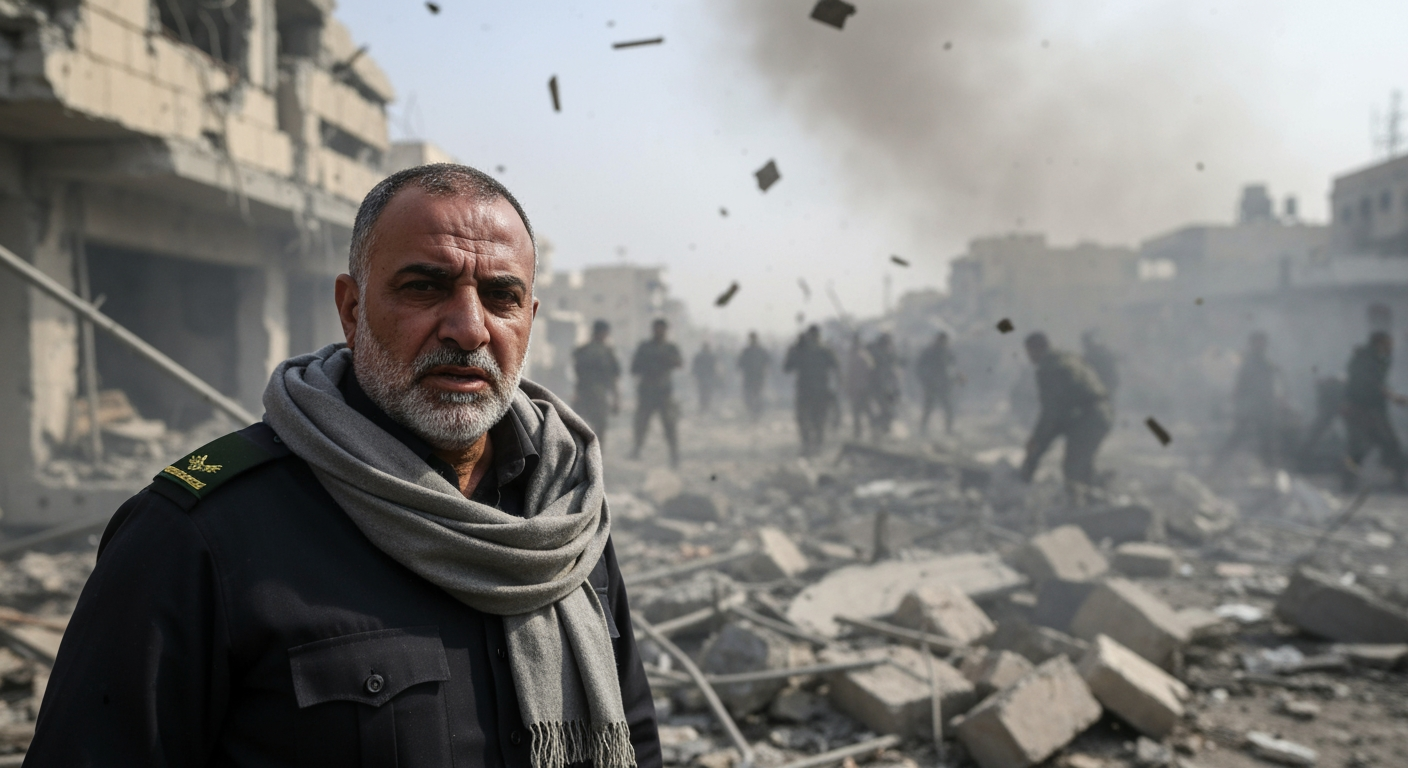
JERUSALEM — Israel announced Saturday it killed senior Hamas commander Raed Saed in an airstrike in Gaza City, a development that, if confirmed by Hamas, would mark the most significant assassination of a militant leader since a U.S.-brokered ceasefire took effect in October. The precision strike, which targeted a vehicle, occurred amid escalating accusations from both sides regarding violations of the fragile truce, raising concerns about the potential for renewed widespread hostilities in the war-torn enclave.
The Israeli military and the Shin Bet intelligence service confirmed Saed's elimination, describing him as a pivotal figure responsible for Hamas's weapons manufacturing and as one of the "architects" of the October 7, 2023, attacks on Israel. The strike, which hit a car traveling along the Al-Rashid coastal road in Gaza City, reportedly killed four people and wounded at least 25 others, according to Gaza health authorities. Hamas has condemned the attack as a "blatant violation" of the ceasefire agreement but has not yet officially confirmed Saed's death, leaving a degree of uncertainty regarding the immediate impact on the militant group's operational capabilities.
The Targeted Strike and Its Immediate Aftermath
The lethal operation unfolded Saturday afternoon in Gaza City. Israeli officials indicated that Prime Minister Benjamin Netanyahu and Defence Minister Israel Katz jointly ordered the strike in direct response to an earlier incident where a Hamas explosive device wounded two Israeli reserve soldiers in southern Gaza. The Israeli military released footage of the strike, asserting that Saed had been a long-standing target. The vehicle carrying Saed was hit, leading to immediate casualties and a swift response from Palestinian ambulance and rescue teams, who transported the dead and wounded to Shifa and Al-Awda hospitals.
While Israel has unequivocally stated Saed's death, Hamas's muted response – a condemnation of the strike as a ceasefire breach without explicit confirmation of his demise – signals an ongoing assessment within the organization or a strategic delay in acknowledging such a significant loss. This approach is not uncommon for militant groups following targeted killings of high-ranking members, as it can allow for internal reorganization and control over the narrative. The absence of immediate confirmation from Hamas or medical sources regarding Saed's presence among the casualties adds a layer of complexity to the reports.
Raed Saed: A Key Figure in Hamas's Military Apparatus
Raed Saed was identified by Israeli intelligence as a central figure within Hamas's military wing, the Izz ad-Din al-Qassam Brigades. He held the crucial position of head of Hamas's weapons manufacturing headquarters, making him instrumental in the group's ability to produce and acquire armaments. Israeli military sources further described him as one of the masterminds behind the devastating October 7, 2023, attacks that initiated the current conflict. Some Hamas sources, as cited in reports, have positioned Saed as the second-in-command of the armed wing, reporting directly to its military chief, Izz eldeen al-Hadad, and previously leading one of Hamas's largest and best-equipped battalions in Gaza City.
His reported elimination represents a significant blow to Hamas's operational and logistical capabilities, particularly its efforts to rebuild and re-arm amidst the ongoing conflict. Israeli officials emphasized that Saed had been "engaged in rebuilding the terrorist organization" and its weapons manufacturing, a blatant violation of the ceasefire, thereby justifying the targeted strike. The targeting of such a high-profile individual underscores Israel's stated objective of dismantling Hamas's military infrastructure and leadership, a goal that has remained consistent throughout the hostilities.
Ceasefire Under Strain: Justification and Condemnation
The strike occurs against the backdrop of a U.S.-brokered ceasefire that came into effect on October 10. This truce was intended to facilitate humanitarian aid, the return of hostages, and a de-escalation of violence after months of intense fighting. However, the agreement has been fraught with tension, with both Israeli and Hamas forces accusing each other of repeated violations.
Israel maintained that the strike on Saed was a legitimate response to Hamas's alleged breaches, specifically citing the explosive device that wounded its soldiers earlier in the day. Israeli Prime Minister Netanyahu and Defence Minister Katz asserted that Saed's activities, including efforts to re-establish Hamas's capabilities and continued weapons production during the ceasefire, constituted a severe violation of the agreement. An Israeli military official elaborated, stating that Saed was "directly responsible for violations of the ceasefire agreement" and was leading weapons production, making his elimination a necessary step.
Conversely, Hamas promptly labeled the Israeli strike as a "blatant violation" of the ceasefire. The group, through a statement on Telegram, argued that the incident reaffirms Israel's deliberate attempts to undermine the truce through "escalating and continuous violations." Palestinian health officials have reported a significant number of casualties since the ceasefire began, with at least 386 Palestinians killed by Israeli airstrikes and shootings. These statistics highlight the ongoing violence despite the ceasefire and the divergent interpretations of its terms by the warring parties.
Implications for a Volatile Region
The reported killing of Raed Saed injects further instability into an already volatile region. Coming after other high-profile assassinations, such as those of Marwan Issa in March 2024 and Yahya Sinwar in October 2024, Saed's death signifies a continuous Israeli effort to decapitate Hamas's leadership structure. However, such actions historically carry the risk of provoking retaliation, potentially unraveling the fragile ceasefire and plunging the Gaza Strip back into more widespread and intense conflict.
The ceasefire, which also included provisions for humanitarian aid and prisoner exchanges, has been crucial for a population grappling with severe humanitarian crises. Any significant breach or perceived escalation threatens to halt aid deliveries, exacerbate civilian suffering, and derail diplomatic efforts aimed at a more lasting resolution. The international community will closely monitor reactions from both sides, particularly Hamas's eventual confirmation or denial of Saed's death and any subsequent actions it may take. The incident underscores the inherent difficulties in maintaining a truce in an environment characterized by deep-seated animosities and competing narratives, where each action by one side is often viewed as a provocation by the other.
Conclusion
The reported killing of senior Hamas commander Raed Saed by an Israeli airstrike in Gaza City on Saturday marks a critical juncture in the precarious ceasefire dynamics. While Israel maintains the strike was a justified response to Hamas's alleged violations and Saed's efforts to rebuild the group's military capabilities, Hamas views it as a severe breach of the truce. The incident highlights the persistent tensions and mutual accusations of ceasefire violations that have characterized the period since October. As the region watches for Hamas's official response and any potential escalation, the fragile peace remains under immense strain, underscoring the enduring challenges to stability in Gaza.
Related Articles

Ratko Mladić, "Butcher of Bosnia" and Convicted War Criminal, Dies at 84
THE HAGUE, Netherlands – Ratko Mladić, the former Bosnian Serb military commander known as the "Butcher of Bosnia" and convicted of genocide, war crimes, and crimes against humanity, has died at the age of 84. Serbian...

Long-Awaited 9/11 Mastermind Trial Set for 2028, Decades After Attacks
GUANTANAMO BAY, Cuba – Nearly a quarter-century after the devastating terror attacks of September 11, 2001, a military judge has finally set a trial date for Khalid Sheikh Mohammed, the alleged mastermind behind the...