Italy Rocked by Protests After Immigrant's Death in Police Custody in Bologna

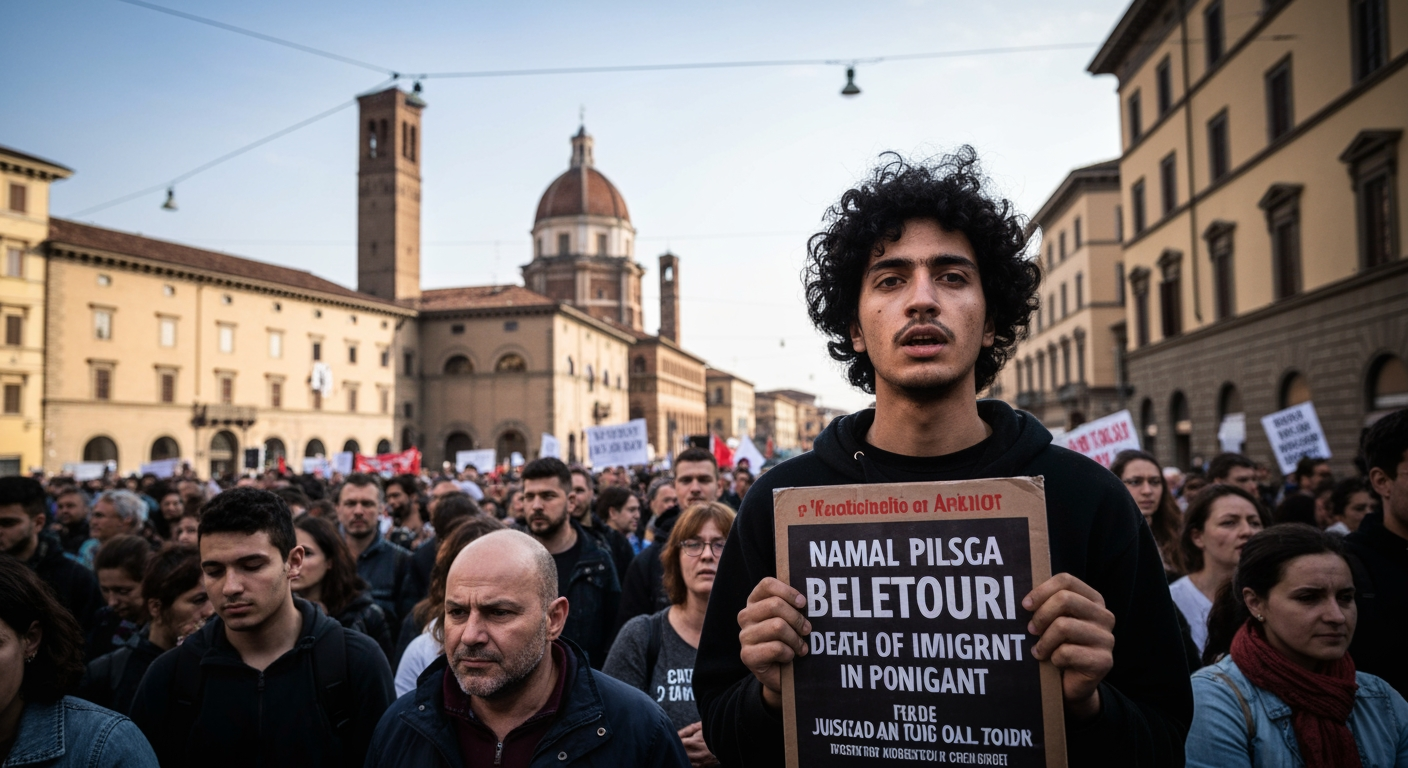
BOLOGNA, ITALY – The death of 42-year-old Moroccan immigrant Abderrahim Fakir while in police custody in Bologna has ignited widespread protests across Italy, prompting a national conversation on police conduct and the treatment of migrants. Fakir, a legal resident and entrepreneur, died Sunday after officers restrained him following reports of erratic behavior, with mobile phone footage of the incident circulating widely and fueling public outrage. The tragic event has drawn comparisons to similar cases of alleged excessive force globally, leading to calls for transparency and accountability from human rights organizations and opposition political parties.
The Tragic Encounter
The incident unfolded on Sunday, July 19, 2026, in Bologna's Pilastro district, when police were dispatched to the scene following reports of a man behaving aggressively and damaging a vehicle. Abderrahim Fakir, who had lived in Italy since childhood and operated a successful removals and cleaning business, was identified as the individual involved. According to media accounts, officers initially attempted to de-escalate the situation, but after Fakir reportedly resisted, they deployed pepper spray and proceeded to restrain him, pinning him to the ground to apply handcuffs.
Disturbing video footage, captured by a local resident and widely shared across Italian media and social platforms, shows Fakir lying face down on the ground, struggling and repeatedly crying out "aiuto, aiuto, basta" (help, help, that's enough) in Italian. Paramedics were present at the scene, yet officers continued to restrain Fakir, and his ankles were reportedly bound after he ceased moving. Medical personnel and officers reportedly did not immediately check his vital signs, doing so only after he became unresponsive. Authorities later indicated that police had informed paramedics that Fakir appeared to be experiencing a "psychiatric episode." Fakir was known to suffer from pre-existing heart issues and asthma, factors that are now under scrutiny as part of the investigation into his death.
Outcry on the Streets
The public reaction to Fakir's death was immediate and forceful. Hundreds of people gathered in Bologna and other Italian cities, initiating protests that quickly gained momentum. Demonstrators voiced strong anti-police sentiments and demanded justice, with some chanting "assassinio di stato" (state murder). Many protesters adopted gestures associated with the Black Lives Matter movement, such as kneeling with raised fists, drawing parallels between Fakir's death and the 2020 killing of George Floyd in the United States.
The demonstrations, initially peaceful, escalated in some instances into clashes with law enforcement. Police reportedly deployed tear gas and water cannon to disperse crowds. The Autonomous Police Union (SAP) reported that more than 50 officers sustained injuries during the unrest, leading to criticism from police unions regarding the organization of some demonstrations. Despite these confrontations, the protests received support from Bologna's Mayor Matteo Lepore and major labor unions, who backed further gatherings and called for a silent vigil in Fakir's memory.
The Official Investigation and Political Divide
In response to the growing public outcry, the Bologna public prosecutor's office launched an investigation into the circumstances surrounding Fakir's death. The probe is proceeding under Italy's recently introduced "Model 45 bis" procedure, a legal mechanism designed to allow preliminary inquiries into incidents involving officers without immediately placing them under formal investigation. This marks the first application of this procedure, which was included in a recent security decree aimed at providing greater legal protection for police officers accused of wrongdoing in the line of duty.
As part of the investigation, prosecutors have requested body camera footage from the officers involved and ordered an autopsy to determine the precise cause of death, including whether Fakir's pre-existing medical conditions played a role or if the restraint contributed to his demise. Italy's Interior Ministry has pledged "complete transparency" in the investigation. However, the two officers directly involved in the restraint remain on active duty during the ongoing inquiry.
The incident has also ignited a fierce political debate across Italy. Opposition leaders and human rights advocates have called for full accountability and an independent investigation, criticizing the government of Prime Minister Giorgia Meloni for fostering a climate that, they argue, encourages heavy-handed policing and discriminatory practices against migrants and ethnic minorities. Conversely, Deputy Prime Minister Matteo Salvini and other members of the governing coalition have staunchly defended the officers' actions, asserting they were "doing their duty" and praising their "professional conduct." These officials have also condemned the protests, characterizing "police murderers" chants as "disgraceful" and criticizing those who express a lack of trust in law enforcement.
A Nation Grapples with Accountability
Abderrahim Fakir's death has resonated deeply, bringing to the forefront long-standing concerns about police brutality and the treatment of immigrants in Italy. Fakir's sister, Khadija, expressed her grief and determination for justice, stating that the police are meant to protect, not to "kill them like a dog." A lawyer who had previously assisted Fakir with his residency permit described him as a "very kind, well-educated, respectful person" who, despite his legal status, harbored fears of expulsion.
The comparisons to the George Floyd case and criticisms about a potential "ICE model" of policing — referencing tactics used by U.S. Immigration and Customs Enforcement — highlight a broader anxiety about the direction of policing in Italy. While government officials have rejected such comparisons, the incident underscores a significant societal divide regarding trust in law enforcement and the rights of vulnerable populations. The ongoing investigations, coupled with sustained public pressure, will play a crucial role in shaping perceptions and potentially influencing future policies regarding police training, accountability, and immigrant relations within Italy.
The death of Abderrahim Fakir has cast a long shadow over Bologna and the entire nation, leaving behind a community demanding answers and a political landscape sharply divided. As the investigations continue, the incident serves as a stark reminder of the fragile balance between public safety and individual rights, particularly for minority communities. The outcome of the official inquiry and the societal response will undoubtedly have lasting implications for justice and police accountability in Italy.
Related Articles

Ratko Mladić, "Butcher of Bosnia" and Convicted War Criminal, Dies at 84
THE HAGUE, Netherlands – Ratko Mladić, the former Bosnian Serb military commander known as the "Butcher of Bosnia" and convicted of genocide, war crimes, and crimes against humanity, has died at the age of 84. Serbian...

Long-Awaited 9/11 Mastermind Trial Set for 2028, Decades After Attacks
GUANTANAMO BAY, Cuba – Nearly a quarter-century after the devastating terror attacks of September 11, 2001, a military judge has finally set a trial date for Khalid Sheikh Mohammed, the alleged mastermind behind the...