Janez Janša: Slovenia's Undeniable Political Survivor Orchestrates Fourth Comeback
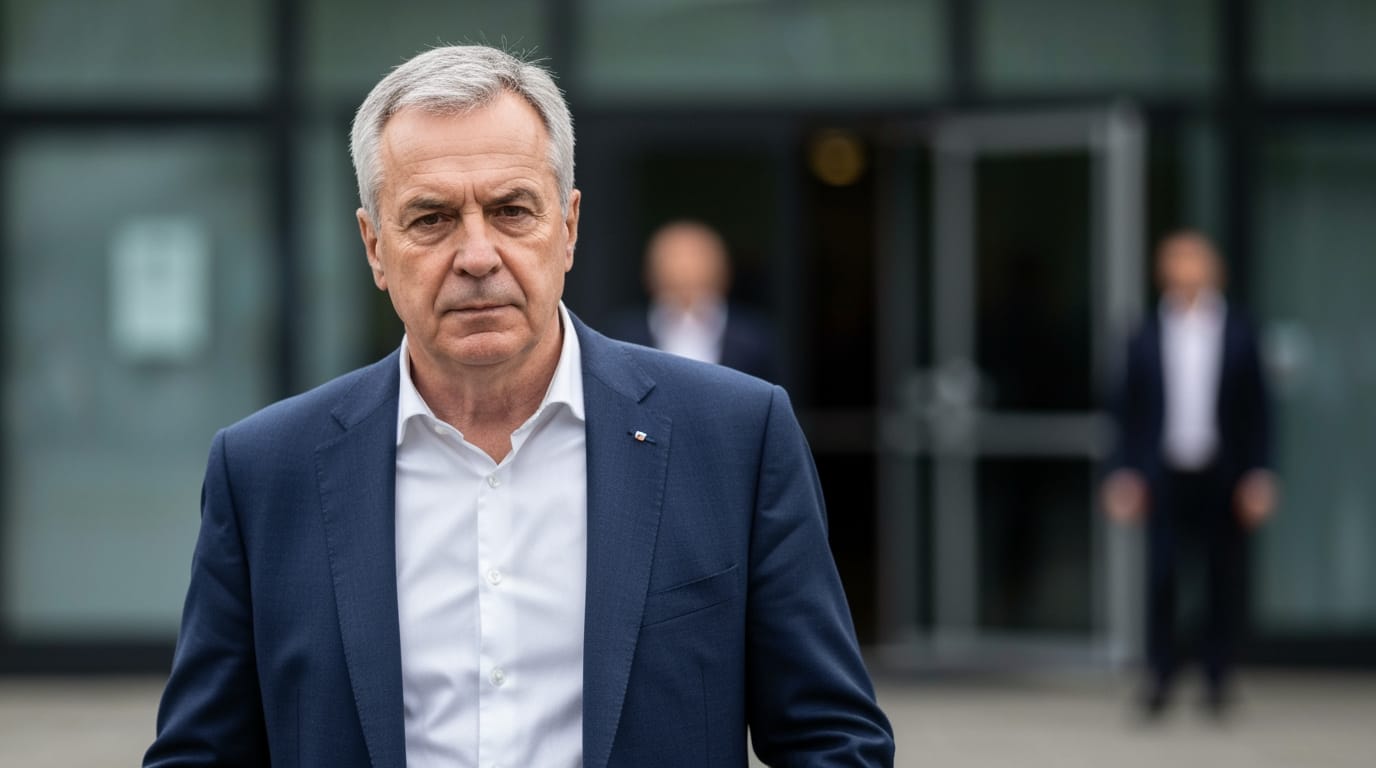
LJUBLJANA, Slovenia — Janez Janša, the veteran right-wing politician often dubbed Slovenia's great political survivor, has once again defied political odds, returning to the prime minister's office for a fourth non-consecutive term. His latest resurgence, confirmed by the Slovenian parliament on May 22, 2026, underscores a career marked by relentless resilience, ideological evolution, and a consistent ability to navigate the nation's often turbulent political landscape. The 67-year-old leader of the Slovenian Democratic Party (SDS) now faces the task of governing a deeply divided nation, promising a shift in domestic and foreign policy priorities.
Janša's political journey commenced decades ago, rooted in the fervent push for Slovenian independence from Yugoslavia. Born in 1958, his early years saw him as a prominent dissident and journalist, critical of the Yugoslav military system. His involvement in the infamous 1988 JBTZ trial, where he and three co-defendants were prosecuted by a military court for allegedly leaking secrets, galvanized Slovenian civil society and became a pivotal moment in the nation's path toward independence. This period saw his arrest and imprisonment, yet upon his release, he emerged as a significant figure in the burgeoning opposition. Following Slovenia's first free elections in 1990, Janša was appointed Minister of Defence, a crucial role during the Ten-Day War of Independence in June and July 1991. He was instrumental in organizing Slovenia's defense strategy against the Yugoslav People's Army, a period that cemented his image as a nation-builder in the minds of many supporters.
After his initial tenure as Minister of Defence, which concluded amidst controversy in 1994, Janša assumed the leadership of the Slovenian Democratic Party (SDS) in 1993, a position he has held continuously since. Under his guidance, the SDS transformed into one of the country's largest center-right parties. His first term as Prime Minister spanned from 2004 to 2008, a period characterized by significant milestones for the young nation, including the adoption of the euro in 2007 and Slovenia's inaugural presidency of the European Union Council in the first half of 2008. He returned to power for a second term from 2012 to 2013 and a third from 2020 to 2022, following the resignation of then-Prime Minister Marjan Šarec. Each time, Janša demonstrated an uncanny ability to rebound from electoral defeats or no-confidence votes, skillfully rebuilding coalitions and capitalizing on political opportunities. His political ideology, once rooted in anti-communist dissidence, has progressively shifted rightward, aligning with national conservative and populist movements in Europe, drawing comparisons to figures such as Donald Trump and Viktor Orbán.
Janša's enduring career has been inextricably linked with recurring controversies and legal challenges, yet he has consistently managed to weather these storms. One of the most notable was the Patria corruption case, in which he was convicted in 2013 and briefly imprisoned. However, Slovenia's Constitutional Court annulled the conviction in 2015 on procedural grounds, and the case ultimately expired, with the state later compensating him for wrongful prosecution. Beyond legal battles, Janša has faced accusations of undermining media freedom and democratic institutions, particularly during his 2020-2022 term. Critics have pointed to his combative use of social media and his alignment with illiberal forces within the European Union. Despite these persistent criticisms and a polarized public perception—with some Slovenians adoring him for his role in independence and others strongly opposing his methods—Janša has repeatedly demonstrated an unparalleled political tenacity. He has often framed these challenges as politically motivated attacks, further solidifying his base among a segment of the electorate.
His latest political comeback in 2026 marks his fourth ascent to the premiership, a testament to his strategic prowess and the fragmentation of Slovenia's political landscape. Although his SDS party came in second in the March 2026 parliamentary elections, trailing Robert Golob's liberal Freedom Movement, the incumbent prime minister was unable to secure a governing majority. This deadlock opened the door for Janša. After weeks of negotiations, he successfully forged a new coalition government, securing 51 votes in the 90-seat National Assembly on May 22, 2026. The new government comprises the SDS, New Slovenia, Democrats, the Slovenian People's Party, and Focus, with additional backing from the right-wing Resnica party. Janša, now Slovenia's oldest prime minister, immediately signaled a decisive shift in national policy. Just minutes after the confirmation of his ministerial team on June 4, 2026, the Palestinian flag, which had flown on the government palace since the previous administration recognized a Palestinian state in 2024, was removed. This move, alongside the almost simultaneous announcement of Israel's intention to open an embassy in Ljubljana, clearly indicates a pivot in Slovenia's foreign policy. Domestically, Janša's agenda includes tax cuts for households and businesses, pro-business reforms, measures to combat corruption and bureaucracy, and a commitment to decentralization.
Janez Janša's return to power solidifies his reputation as a singular figure in Slovenian politics. From a dissident fighting for national liberation to a multi-term prime minister weathering numerous political storms and legal challenges, his career trajectory is one of remarkable survival and adaptation. His ability to repeatedly emerge from opposition, form coalitions, and reclaim the nation's top office speaks volumes about his influence and strategic acumen. As he embarks on his fourth term, Janša's leadership will likely continue to shape Slovenia's domestic policies and its position within the European Union, reinforcing his indelible mark on the country's modern history.


