Japan Seizes Chinese Fishing Vessel, Arrests Captain Amid Heightened Regional Tensions
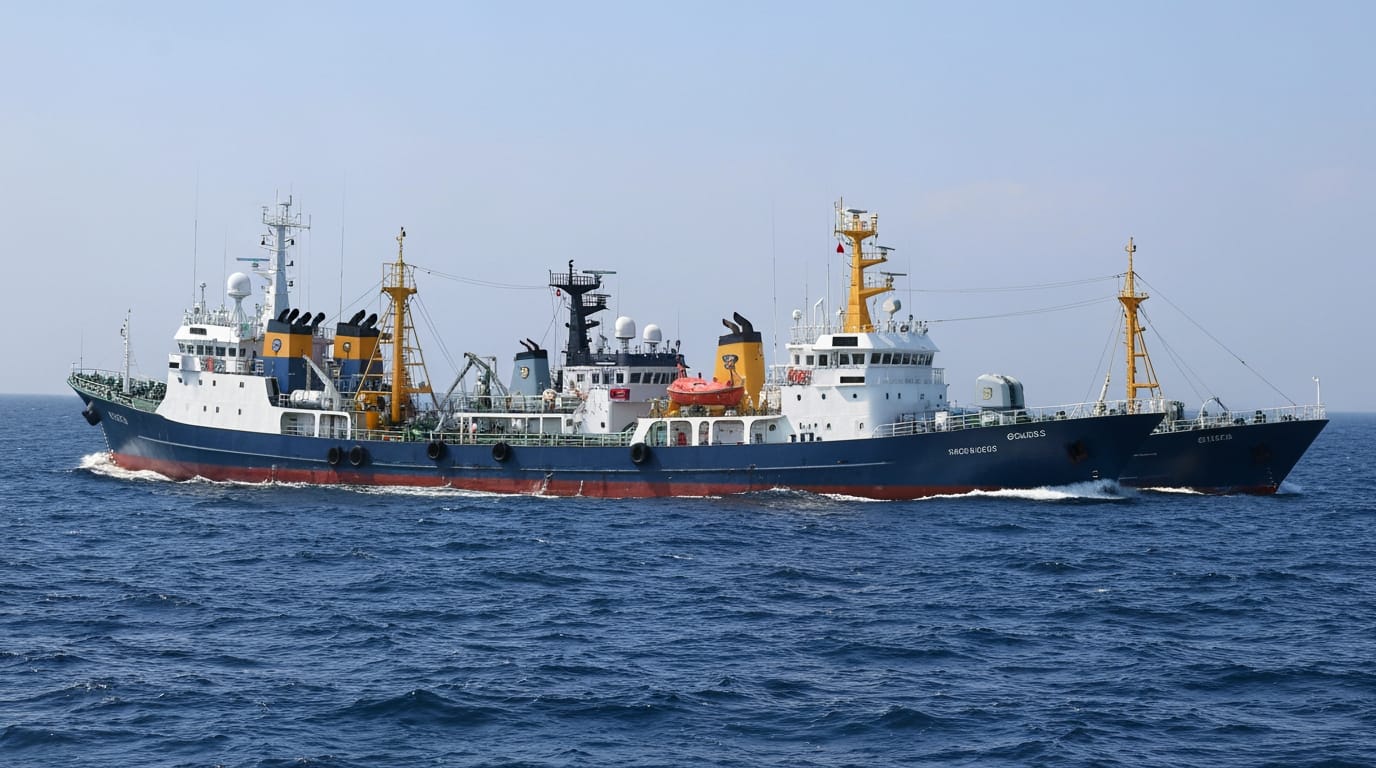
TOKYO, Japan – Japanese authorities have seized a Chinese fishing vessel and arrested its captain within Japan's exclusive economic zone (EEZ) off Nagasaki Prefecture, marking the first such incident involving a Chinese boat since 2022. The move comes as diplomatic relations between the two East Asian powers remain strained, particularly following recent assertive statements from Japan regarding Taiwan and a series of retaliatory measures from Beijing. The incident threatens to escalate an already delicate geopolitical dynamic in a critical maritime region.
The arrest, announced Friday by Japanese officials, underscores Tokyo's resolve to enforce its maritime laws while simultaneously testing the boundaries of a relationship fraught with historical grievances and contemporary territorial disputes. This event is significant not merely as a law enforcement action but as a potential flashpoint in a complex web of security and economic concerns that resonate across the Indo-Pacific.
The Incident: Alleged Evasion and Arrest
The seizure occurred Thursday, February 12, approximately 89.4 nautical miles (about 165 kilometers) south-southwest of Meshima island in the Goto archipelago, an area clearly defined as part of Japan's EEZ. According to Japan's Fisheries Agency, a fisheries inspector ordered the Chinese vessel, identified as the "Qiong Dong Yu," to stop for a routine onboard inspection. However, the vessel allegedly failed to comply and attempted to flee.
Japanese authorities pursued and ultimately intercepted the trawler, arresting its 47-year-old Chinese captain, Zheng Nianli, on the same day. There were 11 people, including the captain, reportedly on board the vessel. While the specific type of fishing being conducted was not immediately detailed by all sources, one report suggested the vessel may have been fishing for mackerel. Japan's Chief Cabinet Secretary Minoru Kihara affirmed the nation's stance, stating, "We will continue to take resolute action in our enforcement activities to prevent and deter illegal fishing operations by foreign vessels." This incident is notable as the first time Japan's fisheries agency has seized a Chinese fishing boat in over two years, though it has detained vessels from other nations like South Korea and Taiwan in the interim.
A Backdrop of Deepening Diplomatic Friction
The seizure unfolds against a period of pronounced tension between Tokyo and Beijing, with recent months witnessing a deterioration in their diplomatic exchanges. A key factor in this escalation has been Japanese Prime Minister Sanae Takaichi's increasingly hawkish stance on China, particularly her comments in November suggesting Japan might intervene militarily should Beijing attempt to take Taiwan by force.
Prime Minister Takaichi's remarks, which reportedly departed from past premiers' more cautious language, were met with an angry reaction from Beijing. China responded by summoning Japan's ambassador, issuing travel warnings for its citizens regarding Japan, and conducting joint air drills with Russia. Additionally, Chinese J-15 jets from the Liaoning aircraft carrier reportedly locked radar on Japanese aircraft in international waters near Okinawa in December, and Beijing reportedly tightened controls on exports to Japan for items with potential military uses. There were also reports of China suspending imports of Japanese seafood, and even the return of Japan's last two pandas to China last month, symbolic of the cooling ties. These actions reflect a broader Chinese strategy to push back against what it perceives as Japanese interference in its core interests.
The implications for regional stability have also been voiced by Taiwanese President Lai Ching-te, who, in a recent interview, cautioned that if China were to seize Taiwan, other countries in the region, including Japan, would likely be Beijing's next targets. He suggested such an action would make China "more aggressive," undermining peace, stability, and the rules-based international order in the Indo-Pacific. Despite the acrimony, Prime Minister Takaichi has stated she is "open to various dialogues with China," though China's foreign ministry has countered that "genuine dialogue should be built on respect for one another."
Persistent Maritime Disputes and the EEZ
The incident highlights the long-standing and often volatile nature of maritime disputes between Japan and China. While this particular seizure occurred in Japan's undisputed EEZ, not near the highly contested Senkaku Islands (known as Diaoyu in China), it inevitably resonates within the context of those broader territorial claims. The Senkaku/Diaoyu Islands, a group of uninhabited islets in the East China Sea, have been a flashpoint for decades, with both countries asserting sovereignty.
The dispute over these islands dates back to the late 19th century and gained significant attention after geological surveys in the late 1960s indicated potential hydrocarbon resources in the seabed. China began asserting its claims over the islands in 1970, challenging Japan's administration. Since 2012, there has been a new status quo of constant confrontation around the Senkakus, with Chinese Coast Guard vessels frequently entering the territorial waters, leading to a transformation in Japanese defense policy and increased spending.
Previous incidents involving fishing vessels have had significant diplomatic repercussions. Notably, the 2010 arrest of another Chinese fishing boat captain off the Senkaku Islands became a major diplomatic crisis between the two nations. China's vast fishing fleet, which constitutes a significant portion of global fishing vessels, has been described by some as a "de facto navy" that often disregards international maritime boundaries and protected areas. This perception further fuels Japan's determination to assert its sovereign rights and enforce its maritime jurisdiction.
Conclusion: A Precarious Balance
The seizure of the Chinese fishing vessel and the arrest of its captain represents more than an isolated law enforcement event; it is a clear manifestation of the underlying geopolitical tensions simmering between Japan and China. While Japan maintains it is simply upholding its sovereign right to manage its exclusive economic zone and deter illegal fishing, Beijing is likely to view the action through the lens of heightened regional rivalry and the broader diplomatic chill.
This incident adds another layer of complexity to already strained bilateral relations, making efforts to foster dialogue and ensure stability in the East China Sea increasingly precarious. As both nations continue to assert their maritime interests and national sovereignty, the careful navigation of such encounters will be crucial to prevent further escalation and maintain regional peace. The coming days will likely reveal Beijing's official response and further illuminate the immediate diplomatic fallout from this latest maritime confrontation.


