Jazz World Mourns the "Saxophone Colossus," Sonny Rollins, Dies at 95
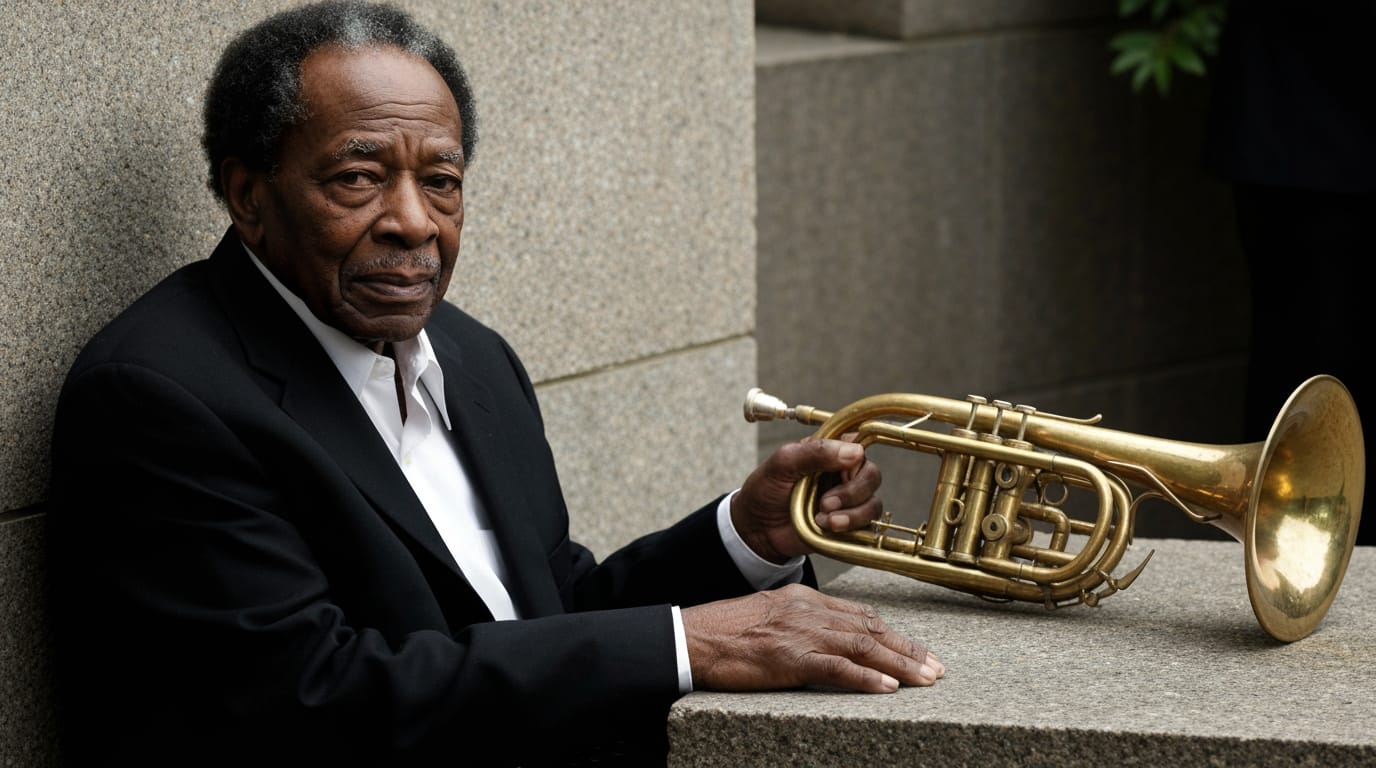
Sonny Rollins, the legendary tenor saxophonist whose innovative improvisations and monumental contributions shaped the landscape of modern jazz for over seven decades, has died. He passed away on Monday, May 25, 2026, at his home in Woodstock, New York, at the age of 95. Revered as the "Saxophone Colossus" and widely acknowledged as one of the most important and influential figures in jazz history, Rollins' passing marks the end of an era, silencing one of the genre's last direct links to its golden age.
A Titan's Departure: The End of an Era
The jazz community, and indeed the broader musical world, is mourning the loss of a true giant. While no specific cause of death was immediately released, a spokesperson indicated that Rollins had been largely confined to his home in recent years due to various physical ailments. His death signifies more than just the loss of an individual artist; it represents the departure of the final surviving musician captured in Art Kane’s iconic 1958 photograph, "A Great Day in Harlem," which gathered 57 jazz luminaries. Rollins' remarkable career, which began in the late 1940s, spanned an incredible period of jazz evolution, from bebop to free jazz and beyond, always with him at the forefront of innovation.
From Harlem's Streets to Global Stages: A Life in Music
Born Walter Theodore Rollins on September 7, 1930, in New York City, Rollins grew up in the vibrant cultural hub of Harlem. His early musical journey began on the piano, but he soon gravitated to the saxophone, first the alto, inspired by Louis Jordan, then the tenor, where he found his true calling under the influence of his idol, Coleman Hawkins, by 1946. Rollins' prodigious talent quickly became apparent, leading him to collaborate with many of the era's emerging and established stars while still in his teens. He was mentored by the eccentric genius Thelonious Monk and recorded with titans such as Miles Davis, Charlie Parker, and Bud Powell, cementing his place in the burgeoning bebop scene. His distinctive tone, often described as "biting and clear," coupled with an unparalleled improvisational imagination, set him apart. Rollins navigated early personal challenges, including a battle with heroin addiction, which led to two stints in jail before he sought treatment and re-emerged with renewed focus in the mid-1950s.
The Innovator and "Saxophone Colossus"
The mid-1950s proved to be a profoundly fertile period for Rollins, as he solidified his reputation as an architectural improviser. His 1956 album, Saxophone Colossus, featuring his iconic composition "St. Thomas," became a landmark recording that not only lent him his enduring nickname but also showcased his thematic improvisation—a style where he would ingeniously develop and transform a single musical idea throughout his solos. This period also yielded other seminal works like Way Out West (1957), A Night at the Village Vanguard (1957), and Freedom Suite (1958), the latter notable for its early exploration of civil rights themes. Beyond "St. Thomas," his compositions "Oleo," "Doxy," and "Airegin" have become enduring jazz standards, frequently interpreted by musicians worldwide.
A testament to his restless pursuit of musical perfection, Rollins famously took several extended sabbaticals from public performance. The most celebrated of these occurred between 1959 and 1961, during which he practiced intensely, often alone on the Williamsburg Bridge in New York City, refining his craft away from the spotlight. This period of self-imposed exile underscored his dedication to continuous growth and innovation, a trait that defined his entire career. He would return with a fresh perspective, ready to challenge established norms and embrace new musical explorations, including ventures into avant-garde and free jazz.
Later Years, Lasting Legacy, and Retirement
Rollins continued to record and perform into his later years, consistently pushing boundaries and maintaining his status as an active, evolving artist. His concert recordings, such as the Road Shows series, captured his enduring artistry and improvisational prowess well into the 21st century. However, health issues eventually led to his retirement from live performances in 2012, and he ceased playing the saxophone altogether in 2014, primarily due to pulmonary fibrosis.
Despite his retirement from the stage, Rollins' influence remained immense. He garnered numerous prestigious awards throughout his lifetime, including multiple Grammy Awards—one for Lifetime Achievement in 2004—the National Medal of Arts in 2010, and a Kennedy Center Honor in 2011. His legacy is not only preserved in his extensive discography of over sixty albums but also in the countless musicians he inspired. Generations of saxophonists and jazz artists have studied his solos, emulated his rich tone, and drawn inspiration from his fearless sound exploration and technical mastery, ensuring that the "Saxophone Colossus" will continue to resonate through the annals of music.
Conclusion
Sonny Rollins' passing marks a profound loss for the world of jazz and music at large. He was a monumental figure who, through his boundless creativity, relentless innovation, and unwavering dedication to his art, continually redefined the possibilities of the tenor saxophone and jazz improvisation. From his early days in Harlem to his global acclaim, Rollins remained a "work in progress," never content to rest on past achievements, always seeking new avenues of expression. His compositions became cornerstones of the jazz repertoire, and his solos remain masterclasses in melodic invention and rhythmic sophistication. While his physical presence may be gone, the "Saxophone Colossus" leaves behind an indelible legacy—a vast and vibrant musical universe that will continue to inspire, challenge, and captivate audiences and musicians for generations to come.


