Kenyan Officer Arrested After Shooting Man at Anti-Brutality Rally
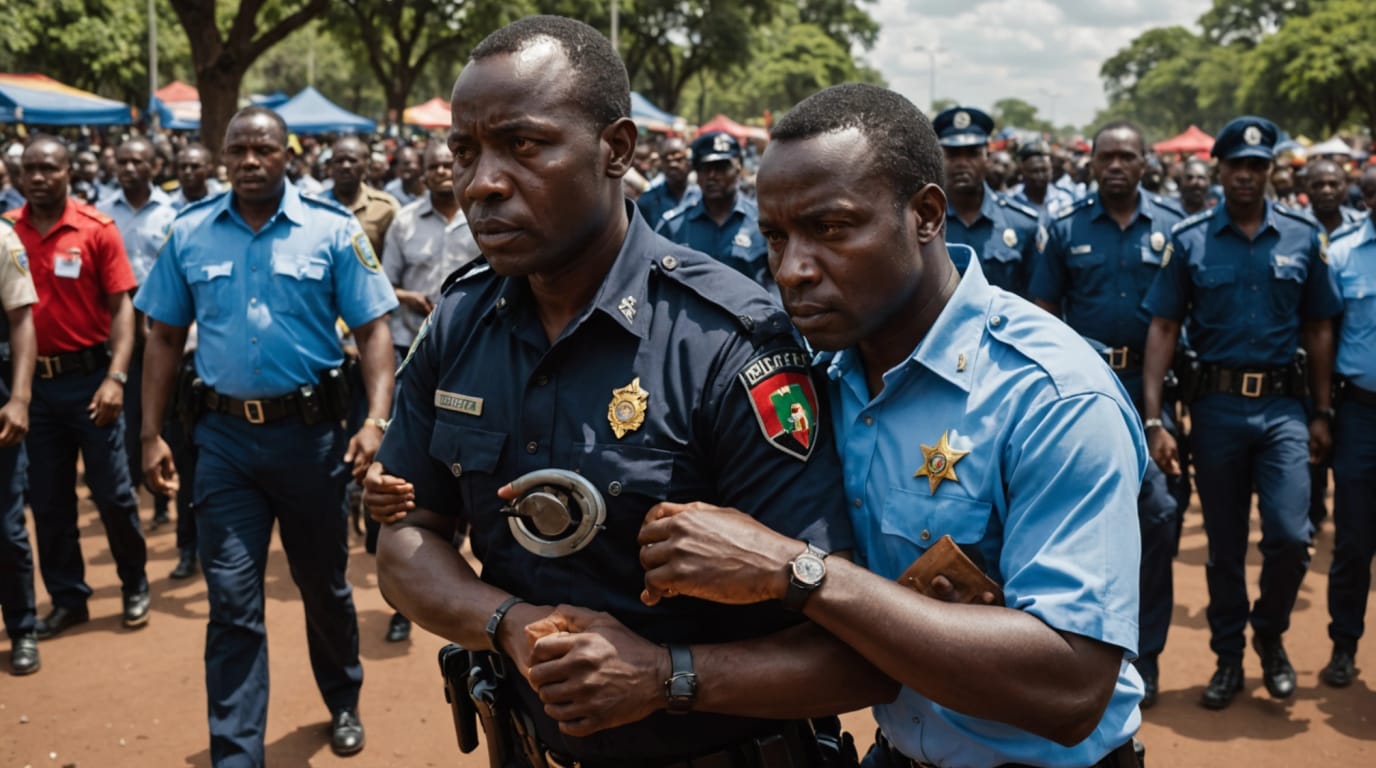
A Kenyan police officer is in custody following the shooting of an unarmed man during a protest in Nairobi on Tuesday. The rally was organized to decry police brutality and demand justice for a blogger who died in police custody earlier this month. The incident, captured by an Associated Press photographer, has ignited public outrage and further fueled concerns about police violence in the country.
Vendor Shot at Close Range
The shooting occurred as protesters gathered in downtown Nairobi to voice their anger over the death of Albert Ojwang, a blogger who died while in police custody. According to witnesses, the victim, who appeared to be a vendor selling face masks, was shot at close range by a police officer. The vendor was reportedly standing on a sidewalk when he was confronted by two officers. Graphic photos show the officers pushing the man before one of them raised his weapon and fired, striking him in the head.
The man was immediately rushed to a Nairobi hospital, where he underwent surgery. A hospital spokesperson confirmed that he survived the shooting and was in serious condition.
Protesters Attacked by "Goons"
The anti-brutality rally was further marred by violence when a group of men on motorcycles, armed with whips and clubs, attacked the protesters. These individuals, often referred to as "goons" in Kenya, were seen assaulting demonstrators while police allegedly stood by and watched.
Amnesty International's Kenya chapter condemned the attack, stating on social media that "the use of militia will escalate confrontation, lawlessness, and chaos." Protesters accused the police of siding with the attackers, with one demonstrator telling Reuters, "Police, shame on you, stop siding with the goons, side with the citizens who pay your salary through our taxes."
Hanifa Adan, a leading voice from last year's Gen Z-led protests in Kenya, told AFP that the "goons" overwhelmed the protesters and beat them with whips while police did nothing to intervene.
Blogger's Death Sparks Outrage
The protests were triggered by the death of Albert Ojwang, a 31-year-old blogger who was arrested earlier this month for allegedly defaming the country's deputy police chief, Eliud Lagat. Police initially claimed that Ojwang died after hitting his head against a cell wall. However, an autopsy revealed injuries consistent with assault, leading to suspicions of police brutality.
President William Ruto has since acknowledged that Ojwang died "at the hands of the police." Two officers were arrested last week in connection with his death, but the investigation is still ongoing.
History of Police Brutality
Tuesday's shooting and the death of Albert Ojwang have highlighted the long-standing issue of police brutality in Kenya. Rights groups have accused the police force of using excessive force and carrying out unlawful killings, particularly in poor neighborhoods.
In 2020, protests erupted in Nairobi after a police watchdog reported that officers were involved in the killing of at least 15 people since the imposition of a coronavirus curfew in March of that year. Human Rights Watch has also accused the police of imposing curfews in a "chaotic and violent manner," often using excessive force to enforce the restrictions.
Last year, more than 60 people were reportedly killed by security forces during demonstrations against a bill that would have increased taxes.
Calls for Accountability
Following the shooting, Kenyan police issued a statement expressing concern and announced that the officer involved had been arrested. However, many Kenyans are demanding greater accountability and systemic reforms to address police brutality.
The next protest against police abuses is scheduled for June 24, and activists are calling for President Ruto to take concrete action to end police violence and ensure justice for victims. The incident has further strained the relationship between the police and the public, raising concerns about the future of law enforcement in Kenya.
The shooting of the unarmed vendor serves as a stark reminder of the challenges Kenya faces in addressing police brutality and ensuring the protection of its citizens' rights. The incident has amplified calls for comprehensive police reforms and a commitment to holding officers accountable for their actions. As investigations continue and protests persist, the nation grapples with the urgent need to restore trust in law enforcement and uphold the principles of justice and human rights.


