Kevin Warsh Confirmed as Federal Reserve Chair Amidst Economic Crosscurrents
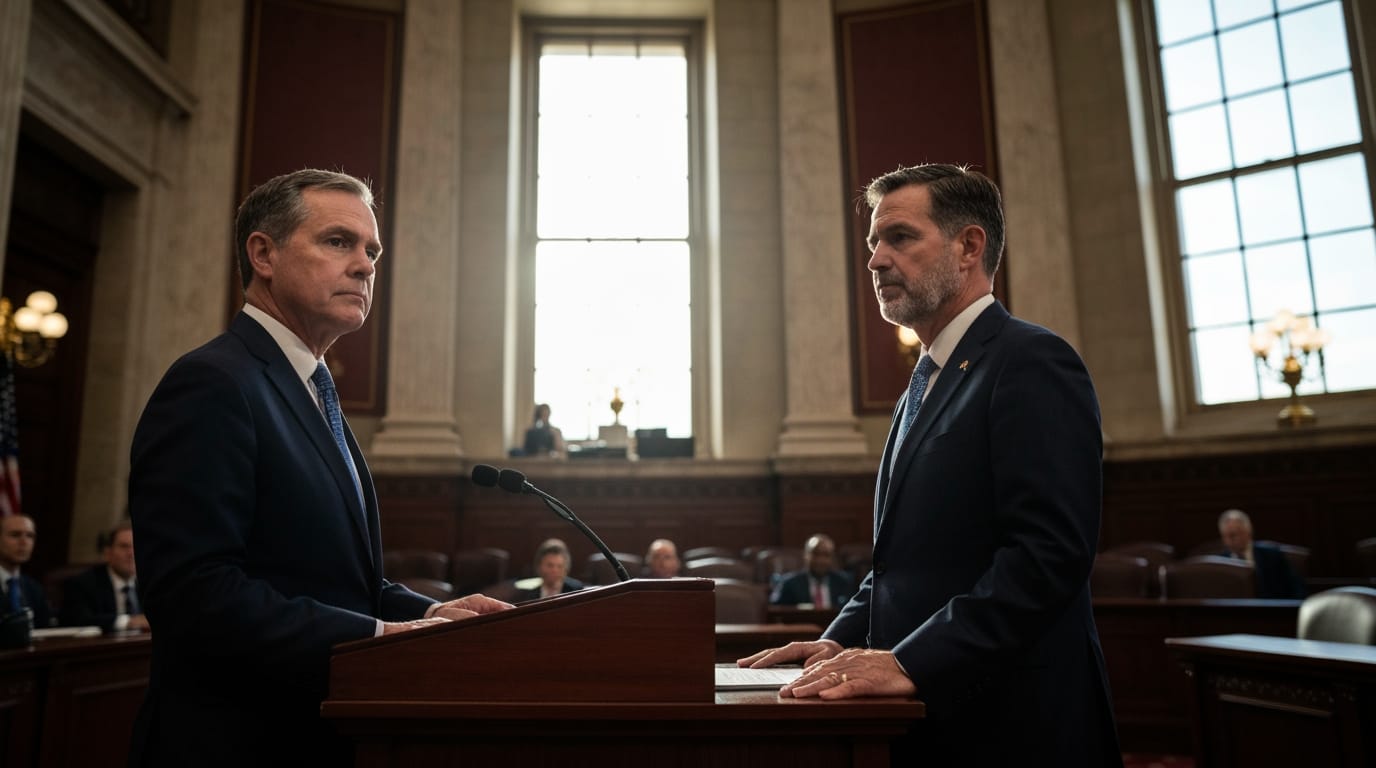
Washington D.C. – The United States Senate today confirmed Kevin Warsh as the new Chair of the Federal Reserve, concluding a nomination process marked by intense political scrutiny and debates over the central bank's independence. Warsh, President Donald Trump's pick, secured the pivotal role with a 54-45 vote, largely along party lines, stepping into the position as the nation grapples with persistent inflation and an uncertain global economic landscape. His confirmation signals a significant shift in leadership at the world's most influential central bank, with implications for monetary policy, interest rates, and the broader financial system.
A Contentious Path to Leadership
Kevin Warsh's journey to the helm of the Federal Reserve was anything but smooth, culminating in a narrow Senate confirmation on May 13, 2026. President Trump officially announced his choice of Warsh on January 30, 2026, tapping him to succeed Jerome Powell, whose term as chair concluded this week. The confirmation followed months of high-stakes political maneuvering, including the President's public criticisms of the outgoing Chair Jerome Powell and a Justice Department investigation into Powell related to renovations at the Federal Reserve's Washington, D.C. headquarters and alleged cost overruns.
A key moment in the confirmation saga involved Republican Senator Thom Tillis, who initially threatened to block the nomination from advancing in the Senate Banking Committee. Tillis's opposition was directly linked to the Justice Department's probe into Powell. He reportedly dropped his objections only after U.S. attorneys agreed to cease their investigation, paving the way for Warsh's nomination to proceed to a full Senate vote. The final confirmation vote saw one Democrat, Senator John Fetterman of Pennsylvania, join all Republicans in supporting Warsh. The bipartisan support, albeit minimal, underscored the complex political environment surrounding appointments to the nominally independent central bank.
Warsh's Background and Monetary Philosophy
Kevin Warsh brings a distinctive blend of private sector experience and prior service within the Federal Reserve System to his new role. He served as a member of the Federal Reserve Board of Governors from 2006 to 2011, a critical period that included the 2008 global financial crisis. This firsthand experience navigating a major economic downturn is expected to inform his approach to financial stability and crisis management. Following his tenure at the Fed, Warsh was a visiting fellow at Stanford University's Hoover Institution and worked as a partner at a prominent investment office.
Throughout recent years, Warsh has not shied away from expressing critical views on the Federal Reserve's operations, particularly regarding its response to the post-COVID inflation surge, its approach to bank regulation, and the size of its balance sheet. He has advocated for a "regime change" at the central bank, suggesting a departure from past policies. While he has previously been characterized by "hawkish views" on monetary policy, emphasizing inflation risks and favoring higher interest rates, Warsh also signaled support for lowering interest rates last year, aligning with President Trump's preferences. This perceived flexibility or shift in stance has drawn both anticipation and scrutiny from economic observers eager to discern his true policy direction. Senator Elizabeth Warren, among others, voiced concerns that Warsh might "roll back critical rules that help guard against another financial crisis."
The Pivotal Role of the Federal Reserve Chair
The Chair of the Federal Reserve holds arguably the most powerful economic position in the U.S. government, tasked with guiding the nation's monetary policy to achieve maximum employment and stable prices. This involves steering the Federal Open Market Committee (FOMC), the central bank's principal monetary policymaking body, which sets target rates for short-term interest rates. These decisions reverberate throughout the economy, influencing borrowing costs for everything from credit cards and auto loans to mortgages and business investments.
Beyond monetary policy, the Fed Chair plays a crucial role in overseeing the safety and soundness of the U.S. banking system, regulating large financial institutions to prevent systemic risks, and administering consumer credit protection laws. The Chair also serves as a key economic spokesperson, reporting twice annually to Congress on the state of the economy and the Fed's monetary policy objectives, and engaging periodically with the Treasury Secretary and the President. Kevin Warsh inherits these immense responsibilities at a time when the economy faces the dual challenges of inflation running above the Fed's 2% objective and the need to maintain a solid labor market.
Navigating Independence and Political Pressure
The confirmation of Kevin Warsh underscores the persistent tension between the Federal Reserve's statutory independence and the political pressures exerted by the White House. President Trump has historically been vocal about his desire for lower interest rates and has not shied away from publicly criticizing previous Fed leadership when their policies diverged from his economic agenda. Warsh's expressed willingness to consider lowering rates, despite his past hawkish leanings, has fueled speculation about how he will balance the Fed's independence with executive branch expectations. During his confirmation hearings, Warsh reportedly denied charges that he would be a mere "sock puppet" for the President, affirming his commitment to independent judgment in setting monetary policy.
In an unusual move that highlights the heightened political climate, outgoing Chair Jerome Powell has opted to remain on the Federal Reserve's Board of Governors as a rank-and-file member, breaking with the tradition of former chairs departing the central bank entirely. Powell's decision is widely interpreted as an attempt to safeguard the institution's integrity and ensure an independent voice continues to influence monetary policy decisions. He will retain a vote on the powerful 12-member FOMC, a factor that could shape the future direction of interest rate policies. This unprecedented overlap creates a dynamic environment within the Fed, where both continuity and change will be simultaneously at play.
The Road Ahead for Monetary Policy
Kevin Warsh steps into the Fed Chair role at a critical juncture for the U.S. economy, succeeding a chair who navigated the complexities of a pandemic-induced recession and a subsequent surge in inflation. His immediate challenges will include addressing sticky inflation, which has impacted the costs of essentials like food, housing, and transportation, and steering monetary policy in a way that fosters job growth while maintaining price stability. The markets and the public will closely watch Warsh's initial actions for signals on the future trajectory of interest rates, the Fed's balance sheet, and its regulatory approach. His leadership will be pivotal in determining whether the U.S. economy can achieve a soft landing, curbing inflation without triggering a significant slowdown or recession, while also affirming the central bank's crucial role in an often politically charged environment.


