Kevin Warsh Takes Helm of Federal Reserve Amid Independence Concerns
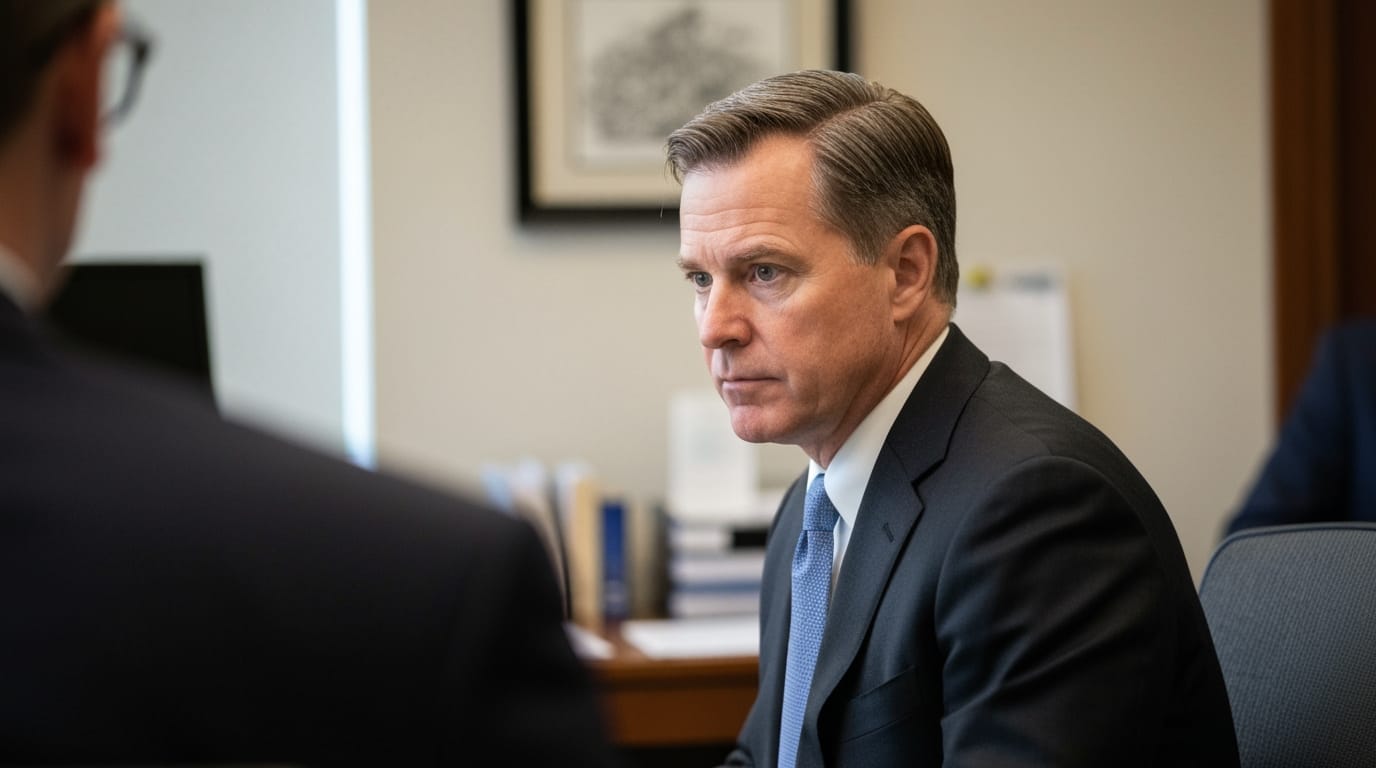
WASHINGTON D.C. — Kevin Warsh has been confirmed as the new Chair of the Federal Reserve, assuming leadership of the nation's central bank at a moment marked by economic uncertainty and profound questions regarding its traditional independence. His ascension follows a contentious nomination process spearheaded by President Donald Trump, who had been an outspoken critic of the Fed's previous leadership. The confirmation of Warsh, a former Fed governor with a background in investment banking and a reputation for evolving economic views, ushers in a new era for an institution central to global financial stability, but one now shadowed by political scrutiny and the lingering presence of his predecessor.
A Career Forged in Crises and Policy Debates
Born in Albany, New York, Kevin Maxwell Warsh, 56, brings a deep, albeit sometimes controversial, resume to the Federal Reserve's top post. A graduate of Stanford University with a degree in public policy and Harvard Law School, Warsh began his career on Wall Street, rising to executive director in mergers and acquisitions at Morgan Stanley. His early foray into public service saw him join the George W. Bush administration in 2002 as a special assistant for economic policy and executive secretary of the National Economic Council, where he advised on key economic issues, including the aftermath of significant accounting scandals and the Sarbanes-Oxley Act.
In 2006, President Bush nominated Warsh to the Federal Reserve Board of Governors, making him, at 35, the youngest person ever to serve in that capacity. During his tenure until 2011, Warsh was a key figure in the Fed's response to the 2008 financial crisis, working closely with then-Chairman Ben Bernanke. He gained a reputation as a "hawkish" voice on interest rates, often expressing concerns about inflation and critiquing the central bank's expansionary policies, including its quantitative easing programs. Specifically, he opposed the Fed's decision to rapidly lower interest rates during the crisis, fearing inflationary consequences, and was the sole Fed official to argue against a $600 billion Treasury bond purchase plan in 2011.
Following his departure from the Fed, Warsh transitioned to academic and policy roles, notably becoming a senior fellow at Stanford's Hoover Institution and a visiting scholar at its Graduate School of Business. During this period, he continued to be an vocal critic of what he perceived as the Fed's "broken" policy framework and its expanded balance sheet, advocating for significant reforms.
The Road to Washington: Trump's Disruption of Tradition
Warsh's path to the Fed chairmanship was intertwined with the political dynamics of the Trump administration, even predating his recent nomination. He was among the finalists considered by President Trump in 2017 to succeed Janet Yellen, a role that ultimately went to Jerome Powell. However, upon returning to office, President Trump intensified his public criticisms of Jerome Powell, frequently assailing the then-Fed Chair for what he viewed as excessively high interest rates and calling for their reduction.
The nomination of Warsh in January 2026 came amidst an extraordinary period of pressure on the Federal Reserve. A federal investigation into Jerome Powell, initiated by the Department of Justice, became a significant point of contention. Republican Senator Thom Tillis blocked Warsh's nomination from advancing through the Senate Banking Committee until the inquiry into Powell concluded. The Justice Department subsequently dropped its probe, clearing the legislative path for Warsh's confirmation.
Throughout this period, President Trump made clear his desire for a Federal Reserve leader amenable to lower interest rates, publicly stating his belief that anyone disagreeing with him on this matter would not become Fed chair. This overt political intervention set an unconventional backdrop for Warsh's confirmation hearings and ignited widespread debate about the future of the central bank's operational independence.
A Shifting Economic Philosophy and a New Vision for the Fed
Kevin Warsh's current monetary policy stances represent a notable evolution from his earlier "hawkish" positions. While he previously emphasized vigilance against inflation, he has more recently aligned with the argument that technological advancements, particularly artificial intelligence, will exert a disinflationary force on the economy. This perspective suggests a rationale for lower interest rates, which Warsh believes should precede significant productivity growth driven by AI. This view, however, has faced skepticism from some economists who question the certainty of AI's disinflationary impact and warn against potential premature rate cuts.
Warsh has consistently advocated for a "regime change" in the conduct of Federal Reserve policy. Key tenets of his vision include a significant reduction of the Fed's balance sheet, which expanded substantially during past crises, and a move towards less intervention and clearer communication in financial markets. He argues that the Fed's expanded role has created market distortions and that a smaller balance sheet, coupled with a lower policy rate, would better support households and small businesses. Warsh has also indicated a desire for greater coordination between the Fed and the Treasury Department on non-monetary policies.
However, Warsh inherits a challenging economic landscape. The current environment is characterized by elevated inflation, fueled in part by geopolitical conflicts and tariff policies. These factors present a complex scenario for Warsh as he aims to implement his preferred policies, particularly his goal of guiding the Federal Open Market Committee towards rate cuts while simultaneously reducing the Fed's balance sheet.
The Crucible of Independence
The question of Federal Reserve independence formed the core of Warsh's contentious confirmation process. During his Senate committee hearing in April 2026, he faced pointed questions from Democratic lawmakers, who voiced concerns that he might serve as a "sock puppet" for the president. Senator Elizabeth Warren, in particular, pressed Warsh on his willingness to assert independence and even challenged him on whether Trump lost the 2020 election, a question Warsh declined to answer directly. Despite these criticisms, Warsh maintained that he would be a "strictly independent" chairman and stated that President Trump had never asked him to commit to specific interest rate decisions.
His eventual confirmation by the Senate in May 2026, with a 54-45 vote largely along party lines, was described as one of the narrowest and most partisan in the institution's history for the position of Fed Chair. Further underscoring the shift in tradition, President Trump hosted Warsh's swearing-in ceremony at the White House, a departure from the customary practice of holding such events at the Federal Reserve headquarters without presidential attendance. This move was widely interpreted as an assertion of the administration's personal stake in the leadership of the central bank.
Adding another layer of complexity to Warsh's new role, former Chair Jerome Powell announced his intention to remain on the Fed's Board of Governors even after his term as chair concluded. This unusual decision, Powell indicated, was prompted by the sustained attacks on the central bank's independence by the Trump administration and his desire to ensure the investigation into him was fully resolved. Powell's continued presence on the board, whose term as a governor extends until 2028, could potentially create an unprecedented dynamic and a "competing power center" for the new chairman.
A Fraught Future for the Federal Reserve
As Kevin Warsh assumes the chairmanship, he navigates a complex confluence of economic challenges, an evolving policy mandate, and heightened political scrutiny. His tenure will be closely watched for how he balances his reform agenda with the immediate demands of managing inflation and fostering economic growth. The central question remains whether Warsh will chart an unequivocally independent course, resisting potential external pressures, or if his leadership will be perceived as more aligned with the political priorities of the executive branch. His actions will undoubtedly shape not only the future of U.S. monetary policy but also the perception of the Federal Reserve's enduring independence in an increasingly politicized environment.