SpaceX Prepares for Historic IPO, Eyeing Trillion-Dollar Valuation and Shaking Up Global Markets
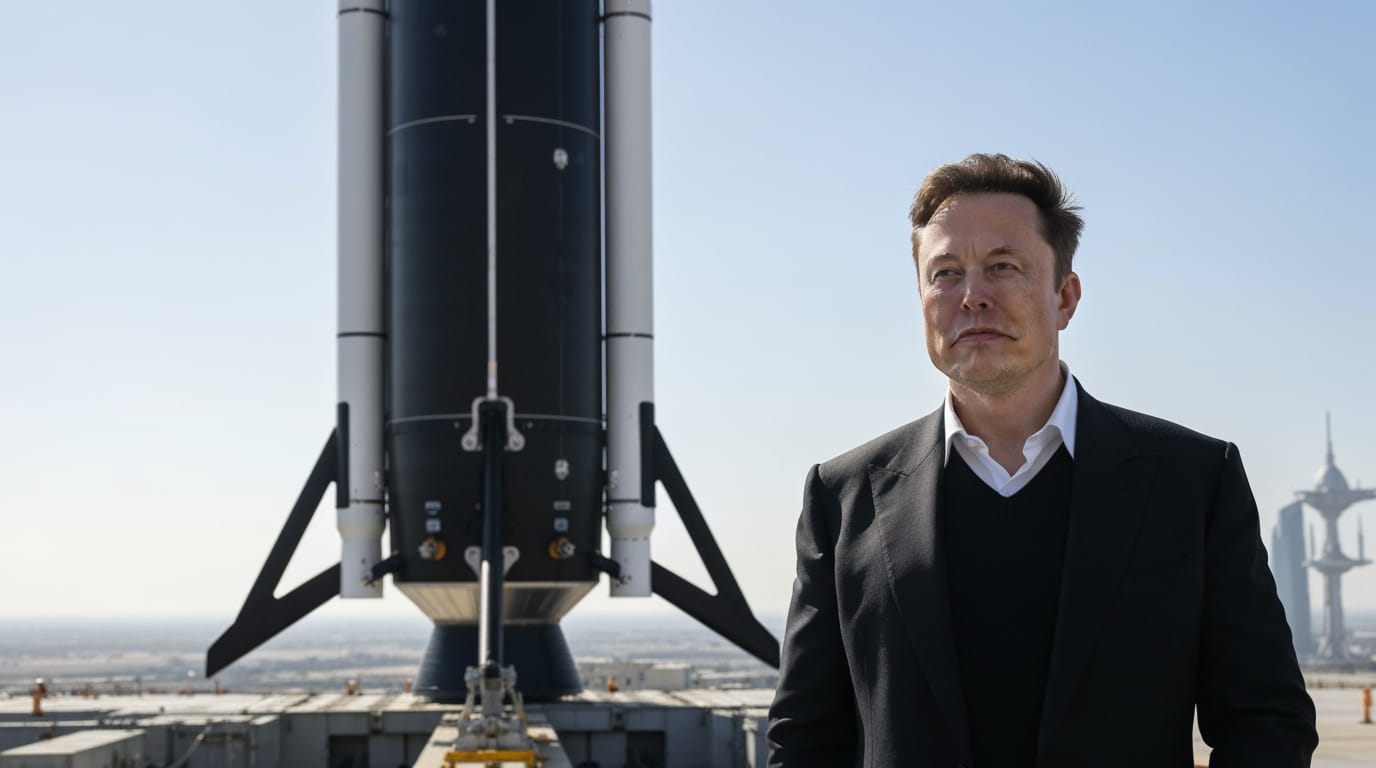
SpaceX, the ambitious aerospace company founded by Elon Musk, has officially initiated plans for an Initial Public Offering (IPO), filing its S-1 registration statement with the U.S. Securities and Exchange Commission on May 20, 2026. This move sets the stage for what is anticipated to be the largest stock market debut in history, with a target valuation soaring between an unprecedented $1.75 trillion and $2 trillion. The public listing, expected on Nasdaq under the ticker symbol "SPCX," carries profound implications not only for the future of space exploration and technology but also for the personal wealth of its visionary founder, Elon Musk, potentially pushing him into the realm of the world's first trillionaire.
The Cosmic Unveiling: Details of a Monumental Offering
The formal filing on May 20 confirmed months of speculation, outlining a meticulous timeline for the highly anticipated IPO. The company's roadshow is slated to commence on June 4, with pricing expected on June 11, and shares projected to begin trading publicly on June 12, 2026. SpaceX aims to raise between $40 billion and $80 billion through this offering, dwarfing previous IPO records, including the 2020 Saudi Aramco listing. In an unusual move for such a significant offering, reports suggest that Elon Musk intends to allocate up to 30% of the available shares to retail investors, a substantially higher proportion than typically seen in major IPOs. This allocation strategy underscores a potential effort to broaden public participation in the company's ambitious future.
A Trillion-Dollar Trajectory: Musk's Ascent to Unprecedented Wealth
The sheer scale of SpaceX's projected valuation could redefine personal fortunes. Elon Musk, already the world's wealthiest individual with an estimated net worth ranging from $659 billion to $788 billion as of May 2026, holds a significant stake in SpaceX—approximately 40% to 42% of the company. Analysts widely anticipate that a successful IPO, valuing SpaceX at over $1 trillion, would propel Musk's personal wealth beyond the $1 trillion mark, establishing him as the world's first trillionaire. His fortune has seen a rapid ascent, crossing $600 billion in mid-December 2025 and reaching $800 billion by February 2026, primarily driven by his holdings in Tesla and SpaceX. Despite the public listing, Musk is poised to maintain absolute control over SpaceX. Through a dual-class share structure, with Class B shares carrying 10 votes each, he will retain an overwhelming 85.1% of the combined voting power, classifying SpaceX as a 'Controlled Company.' This governance structure effectively prevents external shareholders from significantly influencing corporate decisions.
Starlink and Starship: The Dual Engines of Growth and Ambition
SpaceX's financial disclosures reveal a complex operational landscape, driven by its diverse ventures. In 2025, the company reported revenues of $18.67 billion, marking a substantial increase from the previous year. However, this period also saw a net loss of $4.94 billion, a figure that climbed to $4.28 billion in the first quarter of 2026 alone. This shift from a profitable 2024 (with $791 million net income) is largely attributed to significant reinvestment and the integration of xAI.
The company's Starlink satellite internet constellation stands out as a critical revenue generator. In 2025, the "Connectivity" segment, predominantly driven by Starlink, contributed $11.3 billion to SpaceX's revenue, representing 60% of its total. Starlink demonstrated robust operational profitability with a $4.42 billion operating profit and an impressive 63% EBITDA margin in 2025. By March 2026, Starlink boasted over 10.3 million subscribers globally, a 105% increase year-over-year. This segment is widely regarded as the "financial engine" that provides crucial cash flow, funding other capital-intensive endeavors within SpaceX, notably the development of the Starship program. Interestingly, the average revenue per user (ARPU) for Starlink has been declining, a deliberate strategic choice to prioritize volume and market penetration over higher individual pricing, especially as the service expands into regions with lower purchasing power.
Conversely, the "Space" segment, encompassing its dominant launch services and the ambitious Starship program, recorded an operating loss of $660 million in 2025, with research and development expenses reaching $3 billion. SpaceX's launch business commanded over 80% of the global mass-to-orbit market share in 2025, underscoring its operational prowess. The Starship initiative, central to Musk's long-term vision of Mars colonization, has already incurred over $15 billion in development expenditures. The company aims for an aggressive schedule of 400 Starship launches over four years to realize its interplanetary ambitions. Government contracts, including over $20 billion from the U.S. government by late 2024, continue to provide a stable and significant revenue stream for SpaceX, supporting its extensive projects.
A new dimension to SpaceX's financial picture is the acquisition of xAI, Elon Musk's artificial intelligence company, in February 2026. While integrating AI capabilities into SpaceX's operations, xAI also introduced significant financial liabilities. In 2025, xAI posted an operating loss of $6.36 billion, and in the first quarter of 2026 alone, its capital expenditures totaled $7.7 billion. This substantial burn rate, implying an annualized expenditure exceeding $30 billion, is primarily responsible for SpaceX's overall net losses and is perceived by some as a "money pit" absorbing Starlink's profits. The AI venture also involves a substantial $1.25 billion monthly computing lease agreement with Anthropic.
Navigating the Gravitational Pull of Risk
Despite the monumental potential, the SpaceX IPO is not without considerable risks and challenges. The projected valuation, estimated at 109 to 116 times its trailing 2025 revenue and 58 to 65 times its forward 2026 revenue, is considered exceptionally high by historical IPO benchmarks. Critics argue that this valuation is largely driven by speculative future growth rather than current fundamentals, particularly given the company's overall unprofitability following the xAI merger.
Operational risks are also prominent. The development of advanced technologies like Starship inherently involves the risk of rocket launch failures, which can significantly impact investor confidence and operational timelines. Regulatory hurdles, intense competition within the satellite and launch sectors, and geopolitical factors also present ongoing challenges. Furthermore, the concentrated control held by Elon Musk through the dual-class share structure raises governance concerns, as retail investors will have virtually no influence over corporate decisions. Some market observers have cautioned that the IPO, fueled by significant hype, could become a "massive trap" for retail investors, particularly if a large number of early investors and employees seek to sell their shares post-listing, creating issues with "exit liquidity." The integration of xAI, with its substantial losses and capital expenditures, also introduces a layer of complexity and financial uncertainty into SpaceX's otherwise strong Starlink performance.
A New Frontier in Finance and Space
The impending SpaceX IPO marks a watershed moment, fusing the cutting-edge ambitions of aerospace and artificial intelligence with the high stakes of global finance. It represents a colossal leap for private space enterprise, offering an unprecedented opportunity for public investors to participate in the colonization of Mars, the expansion of a global satellite internet network, and the advancement of AI. While the potential for transformative growth and the creation of unprecedented personal wealth for Elon Musk looms large, the endeavor is equally fraught with financial complexities and inherent risks. As the market prepares to embrace SPCX, the world watches to see if SpaceX can successfully navigate the gravitational forces of investor expectations, technological challenges, and financial realities to truly open a new frontier, both in space and on Wall Street.