Kremlin Under Siege: Putin's Inner Circle Braces for Unprecedented Internal Threats
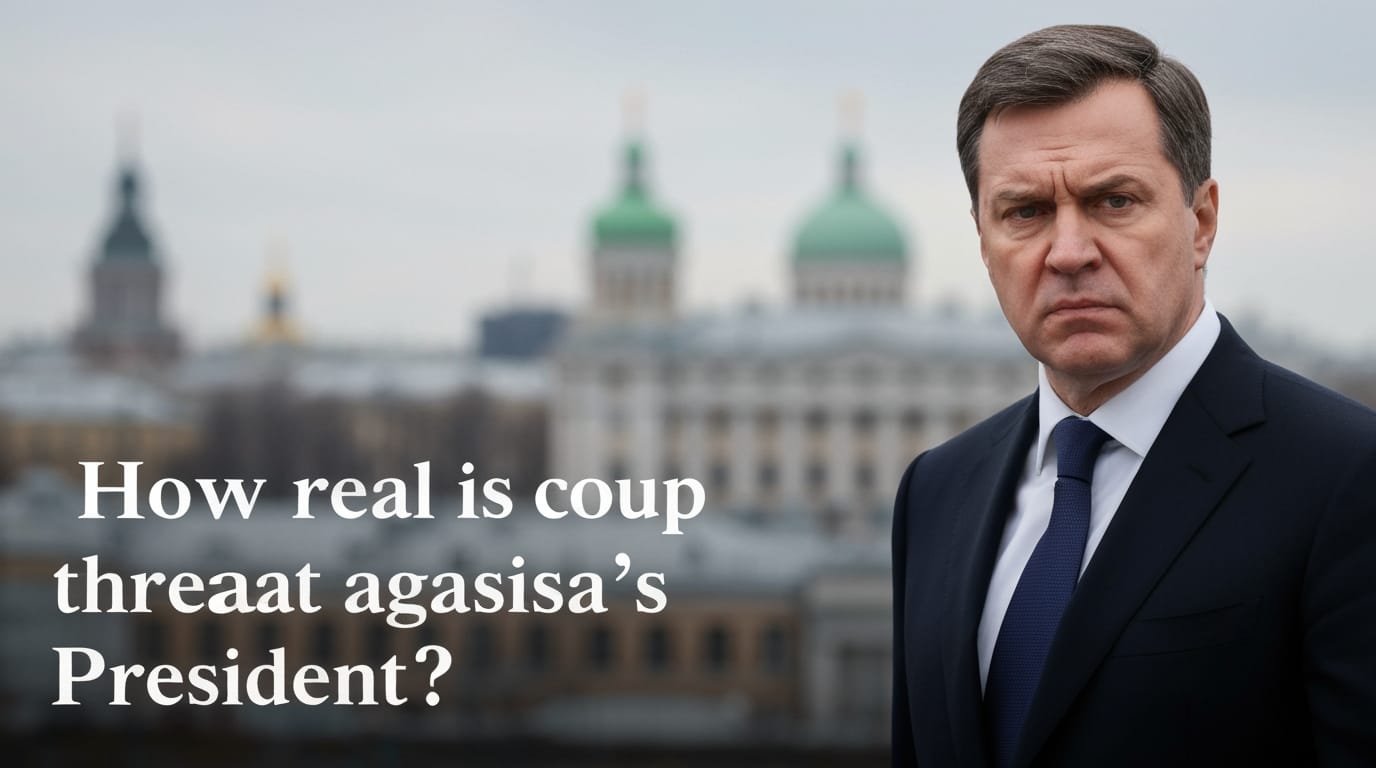
MOSCOW – Amidst a protracted conflict in Ukraine and escalating international pressure, an intricate web of intelligence reports and expert analyses suggests that the Kremlin is exhibiting heightened levels of concern over internal threats to President Vladimir Putin's authority. Reports indicate an unprecedented tightening of personal security measures around the Russian leader, signaling a palpable shift toward a "fortress governance model" designed to counter not external aggressions, but potential elite defection, intra-service rivalry, and even coup attempts. While the prospect of a traditional, overt military coup remains low, the increasing preoccupation with insider risks highlights a regime simultaneously stable on the surface and brittle beneath.
The Iron Curtain Around the President
Since early 2026, a European intelligence assessment, corroborated by independent sources within Russian security services, points to a marked intensification of protective protocols around President Putin. The Federal Protective Service (FSO), typically responsible for personal security, has reportedly expanded its authority and operational scope, leading to a significant reduction in presidential mobility. Putin's traditional residences near Moscow and in Valdai are reportedly being used less frequently, with an increased reliance on upgraded bunker facilities in regions like Krasnodar.
This new security posture includes multi-layer screening for all visitors to the presidential administration, involving full searches, and restrictions on digital connectivity among staff in close proximity to the president. Surveillance of personnel, particularly those in Putin's immediate entourage, has reportedly been expanded, transforming routine interactions into potential vectors of compromise. Public appearances are increasingly pre-recorded or tightly managed, limiting exposure not only to kinetic threats like drones but also to insider risks. These measures, according to analysts, are characteristic of late-stage personalist regimes under perceived internal threat, prioritizing continuity of command over political signaling and visibility.
The Wagner Mutiny's Lingering Shadow
The armed mutiny by the Wagner Group in June 2023 stands as the most direct and serious challenge to President Putin's authority in over two decades, exposing significant vulnerabilities within the Russian power structure. Led by Yevgeny Prigozhin, a long-time Putin associate, the mercenary forces seized military installations in Rostov-on-Don and advanced towards Moscow with little initial resistance. While the rebellion was ultimately aborted after a deal brokered by Belarusian President Alexander Lukashenko, its immediate aftermath left a lasting impression on the Kremlin.
The event "reveals that the emperor has no clothes," according to some observers, demonstrating that a challenge to the established order was indeed conceivable. It highlighted deep-seated discontent within certain military circles regarding the conduct of the war in Ukraine and the perceived incompetence of the military leadership. Although Prigozhin's stated goal was not to overthrow the president but to challenge the military high command, the mutiny undeniably damaged Putin's image of a leader in total control and prompted new questions about the loyalty of various elite factions. The fact that Prigozhin and many of his forces initially avoided severe punishment, before his eventual death in a suspicious plane crash, further underscored the complex and informal rules governing power dynamics within Russia.
Fractured Elites and Growing Paranoia
The current environment within the Kremlin is described as an "coup-anxiety phase," characterized by deepening mistrust among the elites. Reports suggest growing friction within Russia's security services, with surveillance tools traditionally used for criminal investigations now being redirected to monitor government officials. The Federal Security Service (FSB) has reportedly been instructed to focus on detecting potential plots among Russia's political and military elite.
Adding to this internal scrutiny are concerns about the loyalty of prominent figures. Sergei Shoigu, former Defense Minister and currently Secretary of the Security Council, is reportedly viewed by the Kremlin as a potential source of instability due to his residual influence in military circles. The March arrest of his deputy, Ruslan Tsalikov, is seen by some as a breach of informal security guarantees for elite figures, potentially raising the risk of further actions against Shoigu's network. Despite these tensions, the Russian security system is deliberately organized to fragment power, with various military and paramilitary forces balancing each other, making a coordinated elite-led coup challenging.
The Calculus of Coup Risk
Expert assessments regarding the likelihood of a coup against President Putin offer a nuanced perspective. While a full-scale, traditional military takeover—"tanks on Red Square"—is generally deemed a low-probability event, the possibility of an "elite-managed removal, medical pretext, 'security incident,' or forced delegation of power" is considered significantly higher, with some analysts assigning a 20-30% probability within the next 12-18 months. However, some experts caution against "wishful thinking," suggesting that many rumors about imminent coups might be "psy-ops" or mere engagement farming, particularly given Russia's opaque political system.
Several factors could potentially elevate the risk of such a scenario. A major Russian military defeat in Ukraine, a wave of successful Ukrainian strikes on senior Russian officers, visible arrests within high-level security or military networks, a severe budget shock, or widespread social unrest could push the probability of an elite-driven leadership transition above 35-40%. The regime's ongoing heavy reliance on propaganda and repression to control public sentiment and silence dissent also plays a crucial role in maintaining stability, though economic strains and the human cost of the war could, over time, erode this control. The absence of a clear successor is also noted as a potential destabilizing factor should Putin's rule suddenly end.
A Regime in Transition
The current landscape in Russia indicates a regime that, despite its outward display of strength and resilience, is increasingly preoccupied with internal fragilities. While immediate, overt threats of a coup remain tempered by the centralized nature of power and robust internal security mechanisms, the intensification of security around President Putin suggests that the Kremlin itself perceives a growing danger from within. This environment of heightened suspicion and inward consolidation reflects a leadership navigating the complex and unpredictable challenges posed by a prolonged war, economic pressures, and the enduring echoes of past internal dissent. The long-term stability of this "fortress governance model" will depend on its ability to manage these internal stresses without fracturing the elite cohesion that has underpinned the President's rule for more than two decades.


