Pakistan's Remittance Rollercoaster: Families Grapple with Volatile Gulf Inflows Despite Recent Rebound
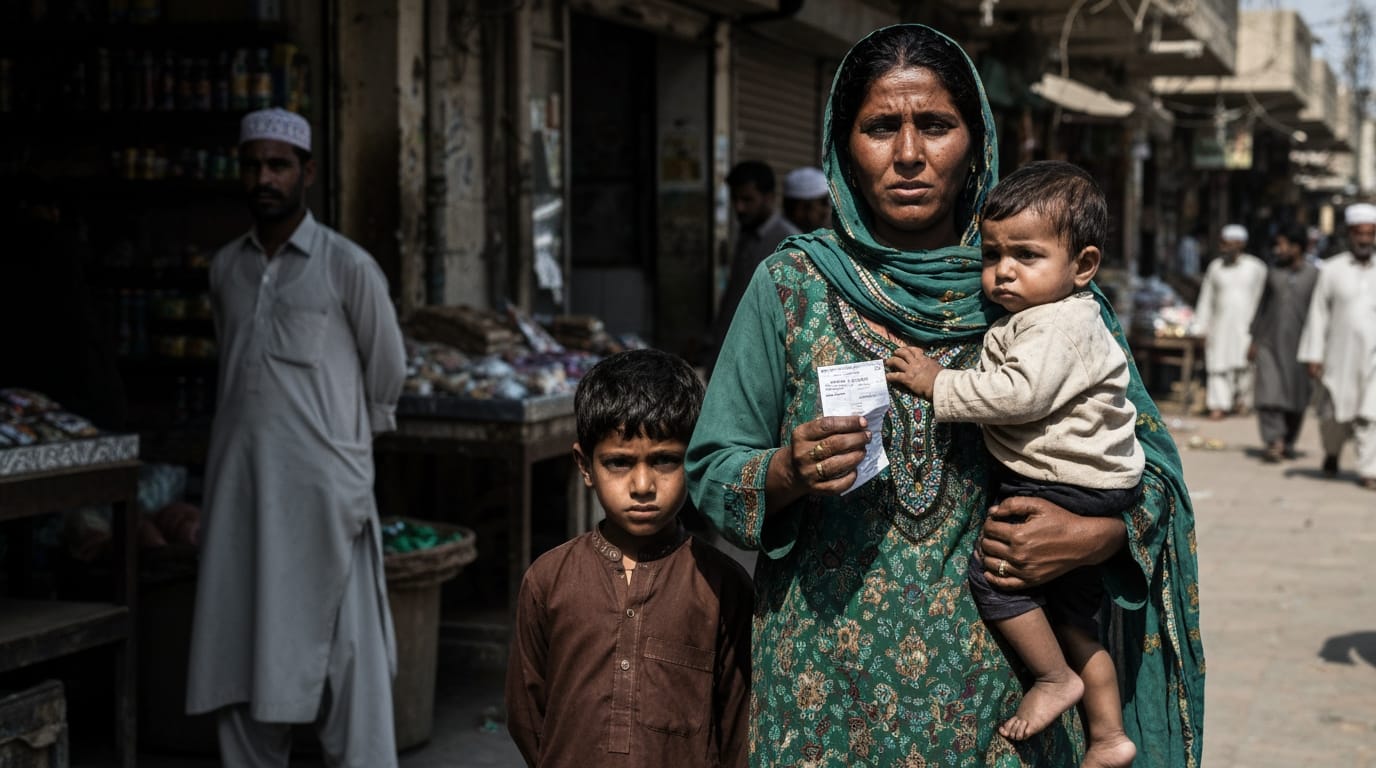
Pakistani families, long reliant on the vital financial lifelines extended by relatives working in Gulf Cooperation Council (GCC) countries, have navigated a turbulent period marked by significant fluctuations in remittances. While 2022 and 2023 saw a notable downturn that placed considerable strain on household budgets, more recent data from late 2024 and early 2025 indicates a robust rebound. This volatility underscores the precarious balance many households maintain, highlighting the profound economic and social implications of these critical foreign currency inflows for Pakistan's stability and development.
A Vital Lifeline's Ebb and Flow
Remittances sent home by overseas Pakistani workers constitute a foundational pillar of the nation's economy, consistently accounting for approximately 8 to 10 percent of its Gross Domestic Product (GDP). These funds serve as a primary source of foreign exchange after exports, playing an instrumental role in financing the country's import bill, shoring up foreign exchange reserves, and bolstering the rupee's stability. Beyond macroeconomic indicators, remittances profoundly impact individual households, directly supporting basic needs, education, medical care, and housing for millions. They act as a crucial social safety net, contributing significantly to poverty reduction and improving the socioeconomic status and living standards of recipient families.
The reliance on these funds is particularly pronounced for families whose members have migrated to the Middle East. Historically, the Gulf region, particularly Saudi Arabia and the United Arab Emirates, has been the predominant destination for Pakistani laborers, absorbing millions of workers over decades and contributing more than half of Pakistan's total remittances.
However, this critical financial flow experienced a challenging phase. Official remittance growth slowed in 2022, with yearly inflows declining by 3.9 percent to USD 29.8 billion. The downturn deepened in 2023, witnessing an 11.7 percent reduction, bringing the total to USD 26.3 billion. This period of decline put significant pressure on the families depending on these funds, affecting their ability to meet daily expenses, invest in education, or access healthcare.
Decoding the Dip and the Surge
Several factors contributed to the earlier decline in remittance inflows. Economic downturns in Saudi Arabia and Kuwait during 2023, coupled with reduced growth in other GCC economies due to fluctuating oil prices, directly impacted the earnings and employment prospects of Pakistani expatriates. Furthermore, Pakistan's own unfavorable balance-of-payments situation and strict currency exchange restrictions inadvertently incentivized a shift towards informal money transfer methods, meaning official remittance figures may not have captured the full extent of funds entering the country. Geopolitical tensions and conflicts in the broader Middle East region also posed a continuous threat, risking large-scale return migration and further dampening remittance flows, with potential impacts estimated between $1 billion and $4 billion.
Despite these challenges, more recent data points to a significant reversal and robust recovery. The State Bank of Pakistan reported a substantial increase in January, with remittances rising 25 percent compared to the same month in the previous year, exceeding the $3 billion mark for two consecutive months. For the calendar year 2024, Pakistan recorded its highest annual remittance total in history, reaching $34.1 billion, a 32 percent increase from 2023. Projections for the fiscal year 2026 anticipate total remittances to fall between $40 billion and $42 billion, with $30 billion already received in the first nine months. This resurgence suggests that various internal and external factors have converged to restore confidence and facilitate formal transfers. Macroeconomic stabilization efforts within Pakistan, alongside a crackdown on illegal money transfer channels and a more stable currency rate, appear to have encouraged migrants to utilize official banking systems once again.
The Human Cost and Resilience
For the millions of Pakistani families with loved ones working abroad, remittances are not merely economic data points; they are the bedrock of their existence. During periods of decline, such as in 2022 and 2023, the financial squeeze was acutely felt. Households faced difficult choices, often cutting back on non-essential spending, and sometimes even on critical expenses like education and healthcare. The ability to save for the future or invest in small businesses diminished, trapping many in a cycle of immediate consumption.
However, the recent rebound has brought a measure of relief, illustrating the enduring resilience and commitment of overseas Pakistanis. The decision to remit often transcends political sentiments or economic incentives, driven fundamentally by the imperative to support family. For many, sending money home is "no choice at all" when faced with the welfare of their dependents. This deep-seated familial obligation ensures a continuous flow of funds, even amidst fluctuating economic landscapes in host countries or political appeals at home. The increased inflows enable families to once again pursue better living conditions, invest in children's education, and accumulate assets, fostering upward mobility and economic stability.
Navigating Future Uncertainties
Pakistan's profound dependence on Gulf remittances and external debt from the region presents a double-edged sword. While the current rebound is welcome, it highlights an underlying vulnerability to external shocks. Changes in global migration trends, the automation of industries in host countries, and evolving national labor policies in the Gulf economies could all impact future demand for foreign workers. Anecdotal reports of visa cancellations for Pakistani workers in the UAE, for instance, serve as a stark reminder of these risks.
In response, Pakistan faces the critical task of diversifying its overseas labor markets beyond the traditional Gulf destinations. Emerging opportunities in countries like Japan, South Korea, Malaysia, and certain European nations for skilled and semi-skilled laborers are being explored. Simultaneously, there is a recognized need to enhance policies for the reintegration of returning migrants, providing them with financial resources, vocational training, and entrepreneurial assistance to leverage their acquired skills and savings for domestic economic growth.
Domestically, the government has taken measures, such as the Pakistan Remittance Initiative (PRI), to incentivize the use of formal banking channels for remittances, aiming to maximize their contribution to the official economy. However, a more fundamental challenge lies in addressing Pakistan's structural economic weaknesses. Over-reliance on remittances for balance-of-payments stability can mask deficiencies in critical sectors like manufacturing, agriculture, and exports. Transforming remittances from a consumption buffer into a growth driver necessitates channeling these funds into productive investments and fostering sustainable domestic job creation, thereby reducing the nation's susceptibility to external economic whims.
Conclusion
The journey of remittances to Pakistan is characterized by both immense importance and inherent volatility. While the recent surge provides much-needed relief to countless families and bolsters the national economy, it simultaneously underscores the persistent "edge" on which many households exist. The economic well-being of a significant portion of the Pakistani populace remains intricately linked to the fortunes of Gulf economies and the stability of global labor markets. To foster long-term resilience, Pakistan must continue its efforts to stabilize its own economy, diversify its export markets, and create sustainable domestic employment opportunities, transforming its reliance on external financial flows into a springboard for self-sustained prosperity. This ongoing effort will be crucial in moving beyond the reactive management of remittance fluctuations towards a more secure and predictable future for Pakistani families.


