UAE Forges Distinct Path, Reshaping Dynamics Across Middle East and Africa
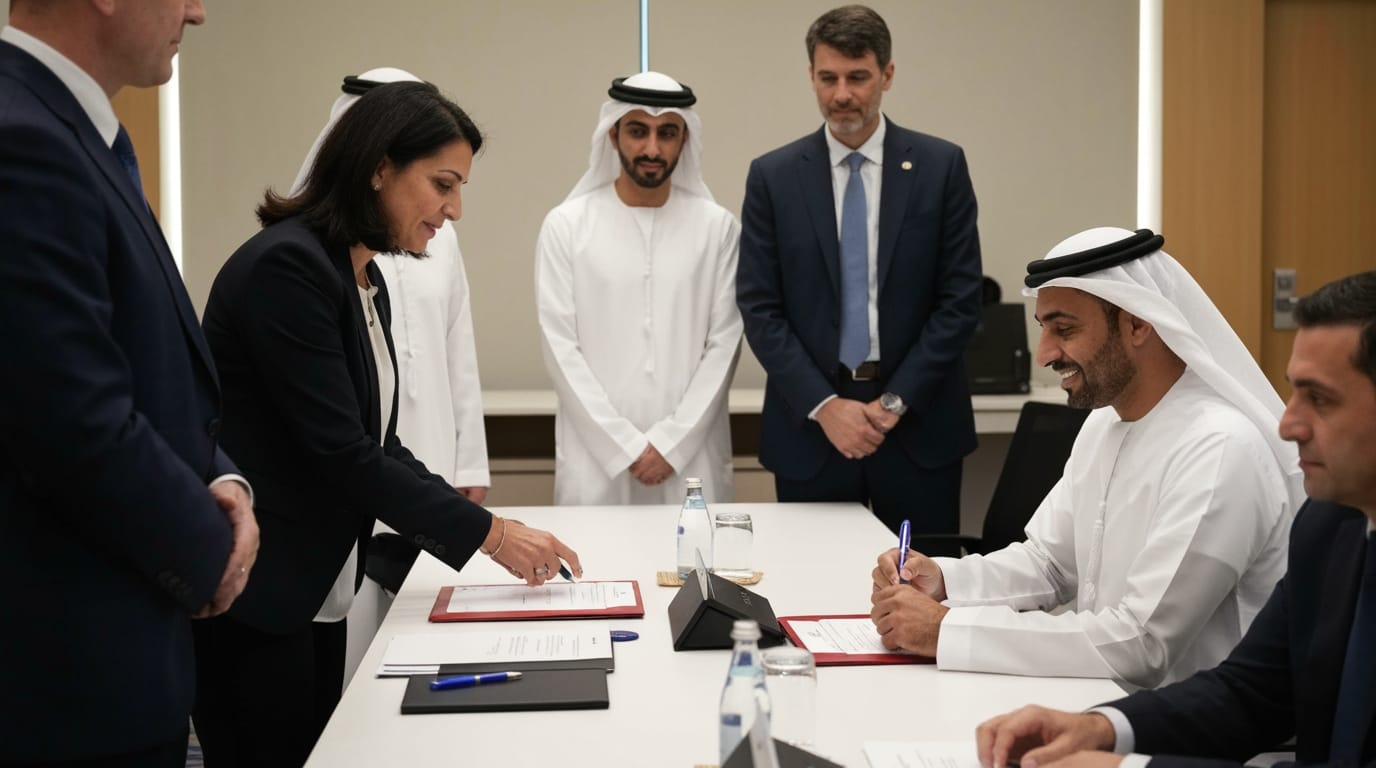
The United Arab Emirates is rapidly emerging as a pivotal, independent force across the Middle East and Africa, employing an assertive foreign policy grounded in substantial economic investment, strategic partnerships, and a significant humanitarian footprint. Driven by a long-term vision of economic diversification and enhanced global influence, the UAE has become a leading investor and diplomatic actor, actively charting a course that redefines traditional regional power dynamics and international relations. Its multifaceted engagement underscores a pragmatic approach to securing its interests and fostering stability in a complex geopolitical landscape.
Economic Engine Driving Regional Transformation
At the core of the UAE's expanding influence is its robust economic strategy, marked by unprecedented investments across Africa and parts of the Middle East. Between 2019 and 2023 alone, the UAE committed over $110 billion in investments across Africa, positioning itself to become Africa's largest development partner and investor within a five-year timeline, potentially surpassing historically dominant economic partners like the European Union, the United States, and China. This massive capital outflow has focused predominantly on critical sectors such as logistics, energy, minerals, mining, and infrastructure, addressing Africa's estimated $150 billion annual infrastructure development gap.
A cornerstone of this economic outreach is the development of port infrastructure and logistics networks. Emirati state-owned entities, including DP World and AD Ports Group, manage numerous ports across at least 13 countries in Africa, with plans for further expansion. These investments aim to establish the Emirates as a crucial logistics connector between Asia, Africa, and Europe, leveraging the UAE's strategic geographical location. For instance, DP World is undertaking a $1 billion upgrade of Dar es Salaam Port in Tanzania, while AD Ports is investing $380 million to modernize the Luanda multipurpose terminal in Angola. Non-energy trade between African countries and the UAE has consequently surged, increasing from $20 billion in 2012 to $60 billion in 2022, with bilateral trade reaching approximately $107 billion in 2024.
The UAE's commitment to Africa also extends significantly into the energy sector, particularly renewable energy. Of the $110 billion invested between 2019 and 2023, approximately $72 billion was specifically allocated to green and renewable energy projects. Companies like Masdar and AMEA Power are driving extensive projects in solar, wind, and green hydrogen across the continent, with Masdar pledging $10 billion to renewable energy initiatives in Africa, targeting 10 GW capacity by 2030. This focus aligns with Africa's vast renewable energy potential and the continent's electrification needs. Beyond energy and logistics, the UAE is also investing in agricultural land for food production, telecommunications, and has announced a $1 billion initiative to expand artificial intelligence (AI) infrastructure and services across Africa. This "AI for development initiative" aims to support critical areas like education, healthcare, and climate adaptation, helping African nations meet their national development priorities.
Expanding Diplomatic Footprint and Strategic Engagements
Parallel to its economic overtures, the UAE has significantly expanded its diplomatic presence and strategic engagement across the Middle East and Africa. With an aim to enhance its role as a "middle power" and achieve greater strategic autonomy, the UAE has pursued a flexible and comprehensive strategic vision involving alliance-building and expanded diplomacy. The Emirates maintains diplomatic relations with over 189 countries and has expanded its network to include 19 embassies in sub-Saharan Africa alone, with more planned.
The UAE's foreign policy has shown a shift towards a more pragmatic approach, prioritizing dialogue and economic interests over robust military intervention in some contexts, particularly since the early 2020s. However, its strategic interests occasionally lead to involvement in regional conflicts. For example, the UAE has been identified as a significant backer of certain factions in Libya and has reportedly allied with Ethiopian President Abiy Ahmed during the Tigray conflict. Concerns have also been raised regarding alleged support for the Rapid Support Forces (RSF) militia in Sudan, a claim the UAE has publicly denied, though some international bodies have found the allegations credible. These engagements often aim to secure access to resources, stabilize regions where Emirati companies have substantial investments, and counter the influence of groups perceived as threats.
In the broader Middle East, the UAE has actively supported efforts to combat extremism and restore stability. It plays a moderate role within organizations such as OPEC and the Gulf Cooperation Council (GCC), and actively participates in UN initiatives. A notable diplomatic achievement was the 2020 agreement to normalize relations with Israel, known as the Abraham Accords, which aimed to lower tensions and foster new avenues for positive change across the region. The UAE has also deepened strategic partnerships with countries like Kenya, exemplified by Comprehensive Economic Partnership Agreements (CEPAs) that foster cooperation in investment, development, renewable energy, technology, and infrastructure.
Humanitarian Commitment and Development Aid
Beyond economic and geopolitical maneuverings, the UAE has established itself as a significant global contributor to humanitarian aid and development, particularly in Africa. Its approach is characterized by what some term "pragmatic humanitarianism," where aid is closely linked to development and capacity-building. The UAE has consistently exceeded the United Nations' target for official development assistance, with African countries receiving the largest share of its aid. Over the past decade, Africa received approximately $20.9 billion of the UAE's foreign assistance.
Emirati humanitarian institutions, including the Emirates Red Crescent and the Khalifa bin Zayed Al Nahyan Foundation, provide rapid response to natural disasters and health crises across Africa. The aid focuses on diverse areas such as health, education, infrastructure, and sustainable agriculture. In the health sector, the UAE supports the establishment of hospitals, field clinics, and vaccination campaigns, while also training local medical personnel. Education initiatives include school construction and scholarships for African students.
In response to ongoing conflicts, such as the crisis in Sudan, the UAE has significantly expanded its humanitarian efforts, dispatching numerous relief flights carrying tons of food, medical, and relief supplies. It has also constructed field hospitals in neighboring Chad to provide medical care for Sudanese refugees, with tens of thousands of cases treated. Furthermore, the UAE has pledged $4.5 billion towards climate-related projects in Africa, underscoring its commitment to sustainable development and addressing global challenges.
Charting a Course for Future Global Influence
The UAE's concerted push into the Middle East and Africa is a strategic imperative driven by several interlocking factors. A primary motivation is economic diversification, reducing reliance on fossil fuels by investing in new growth sectors and securing global supply chains. By positioning itself as a global trade hub, connecting continents through its advanced logistics and port networks, the UAE aims to solidify its future economic stability and influence.
This strategy has allowed the UAE to transcend traditional measures of power, such as land area and population, by leveraging qualitative measures of influence, including pioneering technology and robust economic partnerships. Its proactive engagement in emerging economies and critical sectors allows it to shape regional and international initiatives, from climate leadership (hosting COP28) to infrastructure megaprojects. The UAE's approach is often described as "economy-first," aligning foreign policy with economic diversification goals and preparing for a post-oil future.
While the UAE's growing presence offers significant opportunities for development and investment in the MEA region, it also introduces new geopolitical dynamics and, in some instances, raises questions about its involvement in local power struggles. Nevertheless, the UAE's distinct and impactful role is undeniable, characterized by an energetic pursuit of strategic autonomy and a multifaceted engagement that continues to reshape the landscape of the Middle East and Africa.
Conclusion
The United Arab Emirates is strategically redrawing its role on the global stage, asserting itself as a transformative force across the Middle East and Africa. Its proactive and substantial investments in critical infrastructure, renewable energy, and emerging technologies, coupled with an expanding diplomatic network and significant humanitarian contributions, signify a deliberate effort to build enduring partnerships and secure its long-term interests. By positioning itself as a vital economic and logistical hub, and a committed development partner, the UAE is charting a unique and influential course, redefining its status as a pivotal global actor in an increasingly interconnected world.


