Religious Freedom Under Siege: Christians Face Escalating Persecution in India's Heartland
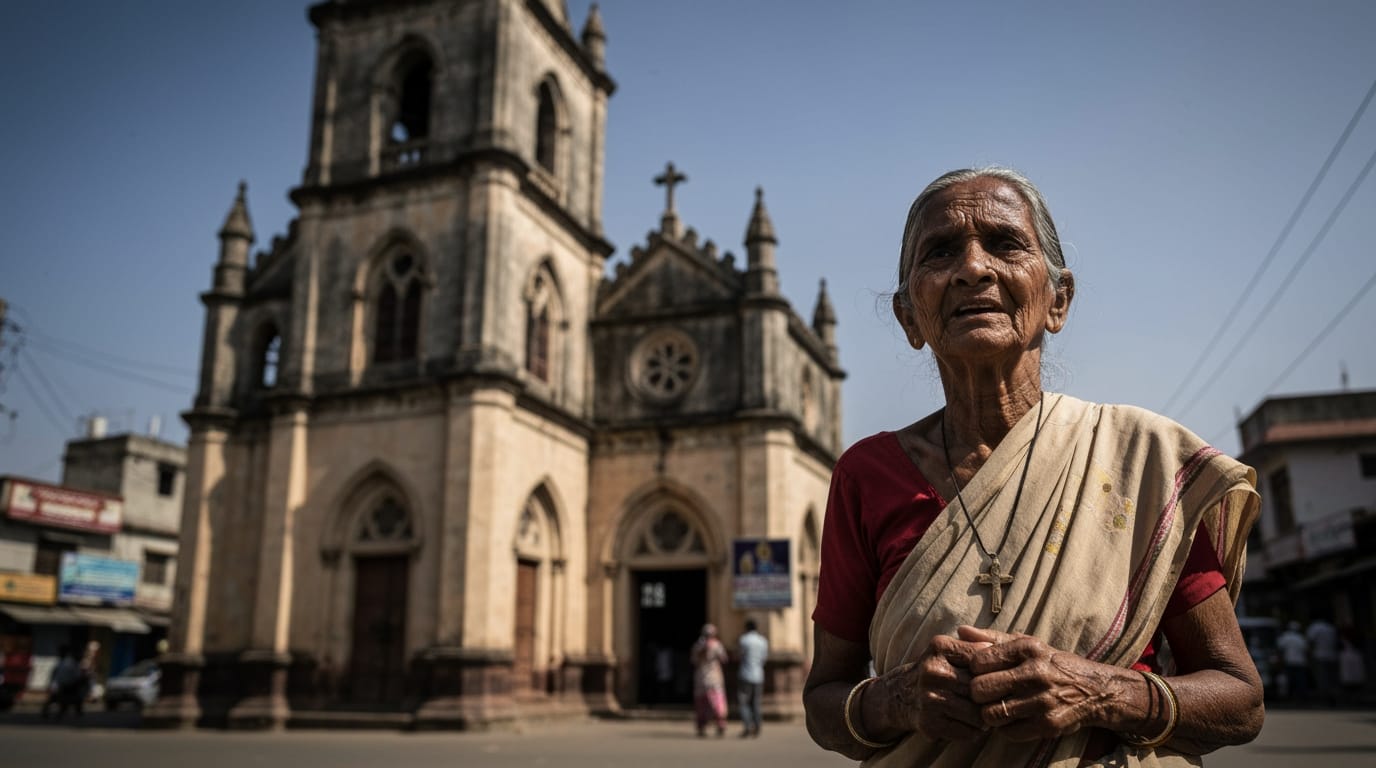
India, a nation constitutionally dedicated to secularism, is witnessing a profound and escalating crisis for its Christian minority, particularly within its central and northern regions, often referred to as the heartland. Reports from various human rights organizations indicate a dramatic surge in incidents of violence, discrimination, and legal challenges targeting Christians, casting a shadow over the country's commitment to religious freedom. This growing climate of hostility is fueled by a combination of burgeoning Hindu nationalism and the widespread application of controversial anti-conversion laws, fundamentally altering the landscape for Christian communities across several states.
The statistics paint a stark picture of a worsening situation. According to Persecution Relief, incidents against Christians increased by 60% between 2016 and 2019, rising from 330 to 527 reported hate crimes. More recently, the United Christian Forum (UCF) documented 834 verified acts of violence and intimidation against Christians in 2024 alone, marking a staggering 555% increase over the decade since 2014. The Evangelical Fellowship of India's Religious Liberty Commission (EFI-RLC) independently verified 640 incidents of violence and discrimination in 2024, quadrupling the 147 cases recorded in 2014. In 2025, the EFI-RLC recorded an unprecedented 920 incidents, the highest number documented in a single year. These figures underscore a troubling trajectory of rising intolerance, with many attacks reportedly going unreported due to fear of retribution.
The epicenter of this escalating persecution largely lies within India's "heartland" states, most notably Uttar Pradesh and Chhattisgarh, which recorded 209 and 165 attacks respectively in 2024, making them hotbeds of anti-Christian sentiment. Madhya Pradesh also consistently features in reports concerning increased pressure on Christians following the enactment of anti-conversion laws. Other states, including Rajasthan, Haryana, Jharkhand, and Karnataka, have either implemented or are considering similar legislation, contributing to a broader environment of apprehension for Christian communities. While states like Nagaland, Meghalaya, and Mizoram have Christian majorities, even these areas are not entirely immune to the broader trends impacting religious minorities. The surge in anti-Christian violence has been directly linked by monitoring groups to the rise to power of the Bharatiya Janata Party (BJP) at both state and national levels, first in 1998 and more prominently since 2014.
A significant driver of this persecution is the proliferation and weaponization of state-level anti-conversion laws, often misleadingly termed "Freedom of Religion Bills." Currently, 12 of India's 28 states enforce these laws, which ostensibly aim to prevent conversions through deceit or coercion. However, human rights organizations and Christian leaders assert that these laws are routinely misused to harass, intimidate, and unjustly arrest Christian individuals, including pastors and community leaders, often based on false accusations. Uttar Pradesh's law is considered among the most stringent, establishing a troubling precedent. Under these statutes, individuals accused of "unlawful conversion" face severe penalties, including fines and imprisonment, and are often presumed guilty until proven innocent, making legal recourse challenging. Such laws have inadvertently emboldened vigilante groups, who perceive them as a license to target Christian communities under the pretext of preventing forced conversions.
This legal framework operates within a broader ideological landscape dominated by Hindutva, a Hindu nationalist philosophy asserting that to be authentically Indian is to be Hindu. This ideology fosters an environment where religious minorities, including Christians, are increasingly marginalized. Organizations such as the Vishva Hindu Parishad (VHP), Bajrang Dal, and the Rashtriya Swayamsevak Sangh (RSS), often described as affiliates of the Hindu nationalist movement, are frequently implicated in inciting violence against Christians. The rhetoric employed by these groups, often disseminated through public meetings and social media, fuels animosity and legitimizes discriminatory actions against Christian communities.
The human toll of this escalating persecution is profound, impacting the daily lives and sense of security for countless Christians. The violence manifests in various forms, including physical assaults, the burning and destruction of churches, disruption of worship services, and in some harrowing instances, sexual assaults. Beyond physical attacks, Christians face social ostracism, economic boycotts, and constant intimidation, creating a climate of fear. Vulnerable populations, such as women, Dalits (members of the lowest caste), and indigenous communities, are disproportionately affected by these acts of violence and discrimination. For instance, in one instance in Chhattisgarh, a 65-year-old Christian man’s family faced demands for "reconversion" to Hinduism before they could bury him in his village. Tragic events, such as the 2023 violence in Manipur, witnessed hundreds of deaths and over 200 churches razed, highlighting the devastating potential of communal conflict. Compounding these challenges, police response in many cases has been criticized; rather than protecting victims, authorities are sometimes reported to arrest Christians on fabricated charges, while perpetrators of violence often act with impunity.
The international community and human rights organizations have voiced increasing alarm over the deteriorating religious freedom conditions in India. Organizations including the United Christian Forum (UCF), Evangelical Fellowship of India (EFI), International Christian Concern (ICC), Open Doors, Human Rights Watch, Persecution Relief, Voice of the Martyrs, and Global Christian Relief consistently document and report on the growing persecution. The United States Commission on International Religious Freedom (USCIRF) has repeatedly expressed its concern, classifying India in its Tier-1 for minority persecution since 2020, a category shared with countries like China and North Korea. The USCIRF has also recommended that the U.S. State Department designate India as a "Country of Particular Concern" due to the severity of the situation. Furthermore, amendments to India's Foreign Contribution Regulation Act (FCRA) have been criticized by human rights groups and Christian organizations, which contend that these changes are deliberately used to restrict foreign funding for non-profit organizations, including those providing essential services like orphanages, clinics, and schools, thereby further hindering the work of Christian-led charities. Critics view these amendments as an attempt to repress minority religious groups and consolidate governmental control over civil society.
The rising tide of persecution against Christians in India's heartland represents a profound challenge to the nation's pluralistic traditions and constitutional guarantees of religious freedom. The combination of state-sanctioned anti-conversion laws, the emboldening of Hindu nationalist groups, and the ensuing social and physical violence has created a hostile environment for Christian communities. As incidents continue to climb and international scrutiny intensifies, the future of religious minorities in India, and indeed the secular fabric of the nation itself, remains a significant concern for human rights advocates worldwide.


