Landmark Jimmy Lai Verdict Reshapes Hong Kong's Legal Landscape, Drawing International Condemnation
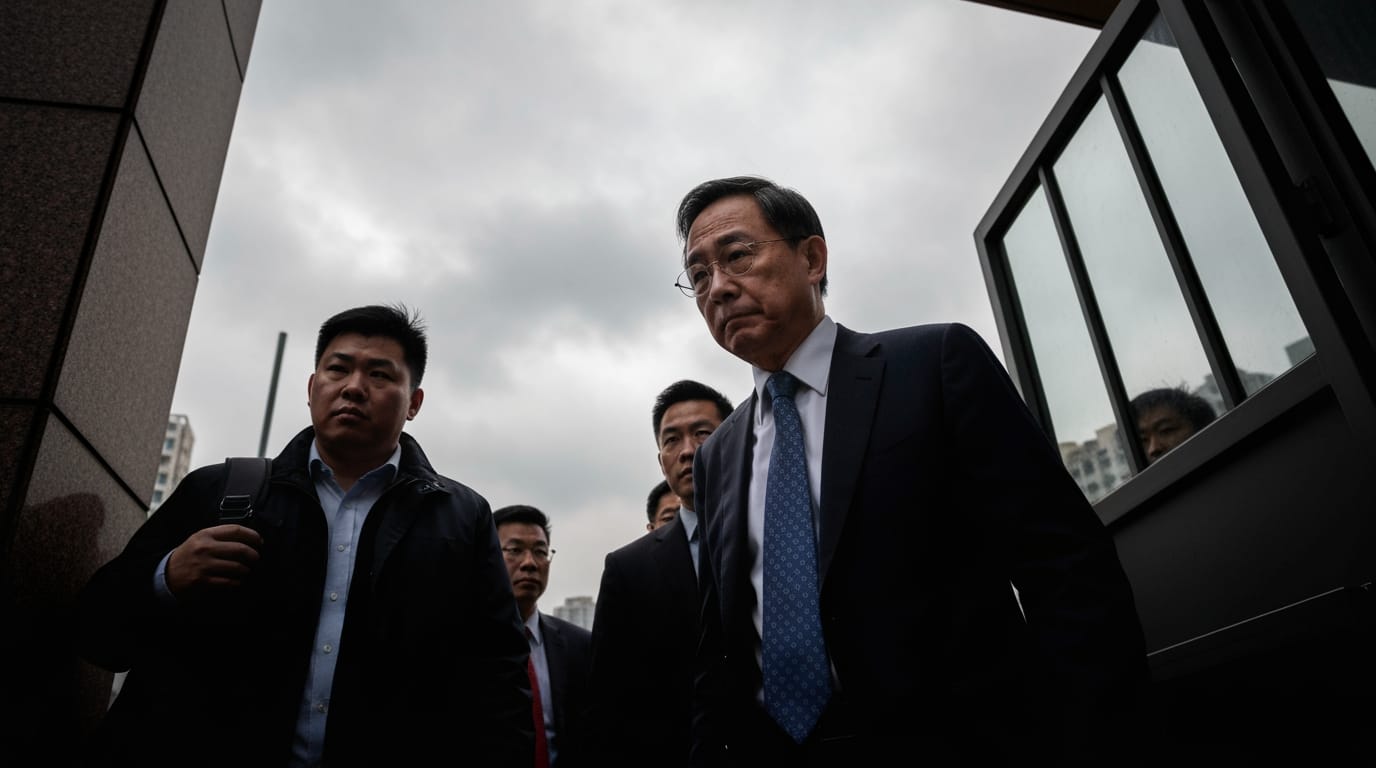
HONG KONG – In a pivotal ruling that underscores the dramatic transformation of Hong Kong’s legal and political landscape, pro-democracy media mogul Jimmy Lai was convicted Monday on charges of collusion with foreign forces and sedition under the Beijing-imposed National Security Law (NSL). The verdict, delivered after a protracted trial, carries a potential life sentence for the 78-year-old founder of the now-defunct Apple Daily newspaper, and has ignited a fresh wave of international criticism over the erosion of judicial independence and fundamental freedoms in the city. Lai, a prominent critic of the Chinese Communist Party, had consistently pleaded not guilty to all charges.
The case against Lai has been widely viewed as a symbolic test of Hong Kong’s commitment to the “one country, two systems” framework, which was designed to guarantee the city a high degree of autonomy, including independent legal and press freedoms, for 50 years after its 1997 handover from British rule. His conviction, along with that of three associated companies, solidifies fears that the city's once robust rule of law is increasingly aligned with mainland China’s authoritarian legal system.
The Verdict: A Defining Moment for Hong Kong's National Security Era
A panel of three government-approved judges found Lai guilty on two counts of conspiring with foreign forces to endanger national security and one count of conspiracy to publish seditious material. The charges stemmed largely from his media outlet's coverage and alleged calls for international sanctions against Hong Kong and Chinese officials following the 2019 pro-democracy protests. Prosecutors presented 161 articles from Apple Daily as evidence, contending that Lai used his media platform and personal influence to incite disaffection and lobby foreign powers, particularly the United States, to support the protest movement and impose sanctions.
Lai's defense maintained that his actions were protected under freedom of expression and that he had not called for foreign sanctions, only for support for Hong Kong's freedoms. However, the court's 855-page verdict stated that Lai had "never wavered in his intention to destabilize the governance of the CCP," even after the NSL’s enactment. The trial, which lasted 156 days, saw Lai testify for 52 days, denying allegations of seeking foreign interference. His health, including diabetes and hypertension, has reportedly deteriorated during his extended detention, much of which has been spent in solitary confinement. A pre-sentencing hearing is scheduled for January 12, with the collusion offense carrying a maximum penalty of life imprisonment.
From Rags to Riches to Pro-Democracy Icon
Jimmy Lai Chee-ying's life story is a quintessential rags-to-riches tale deeply intertwined with Hong Kong's modern history. Born in Canton (Guangzhou), mainland China, in 1947, Lai escaped to Hong Kong at the age of 12, fleeing the famine of the Great Leap Forward. Starting as a child laborer in garment factories, he built a business empire, first with the successful clothing retail chain Giordano, which pioneered "fast fashion."
His transformation into a vocal pro-democracy advocate and critic of Beijing began after the 1989 Tiananmen Square massacre. Lai became convinced that greater transparency and accountability were needed in China, leading him to pivot from retail to media. In 1990, he founded Next Magazine, followed by the influential Apple Daily newspaper in 1995, just two years before Hong Kong's handover. Apple Daily quickly distinguished itself with a mix of tabloid sensationalism and fearless political reporting, becoming a powerful pro-democracy voice and a thorn in Beijing's side. The newspaper’s outspoken stance and Lai’s personal activism, including participation in the 2014 Umbrella Movement and the 2019 protests, made him a prime target for authorities.
Before the national security charges, Lai had faced numerous arrests and convictions for his role in unauthorized assemblies related to the 2019 protests and a separate fraud case involving a lease violation. His legal battles intensified after the NSL came into effect in June 2020. Apple Daily was raided by hundreds of police officers in August 2020, and its assets were frozen, ultimately forcing its closure in June 2021, marking a significant blow to press freedom in the city.
The National Security Law and the Erosion of Autonomy
The Hong Kong National Security Law, imposed by Beijing on June 30, 2020, criminalizes four broad categories of acts: secession, subversion, terrorism, and collusion with foreign forces. Critics, including human rights organizations and Western governments, argue that the law is vaguely worded, sweeping in scope, and can be applied to virtually any act deemed a threat to national security, effectively criminalizing dissent. It bypasses Hong Kong's local legislature and gives Beijing significant control over national security matters, including the power to designate judges for such cases, a practice that undermines judicial independence.
Lai’s trial, heard by judges appointed under the NSL, without a jury, exemplifies the structural changes to Hong Kong’s legal system. The law explicitly states that its provisions prevail over local laws in cases of conflict, further diminishing Hong Kong's legal autonomy. The conviction sends a clear message that critical speech and perceived foreign engagement can lead to severe penalties, contributing to a chilling effect on press freedom and civil society. Media outlets and civil organizations have been disbanded, and critics have largely gone silent since the law's implementation.
Global Outcry and Beijing's Unwavering Stance
The verdict against Jimmy Lai has drawn immediate and strong condemnation from across the international community. The United Kingdom, whose foreign secretary called the prosecution politically motivated, demanded Lai's immediate release, emphasizing concerns over press freedom and judicial independence. The United States and Taiwan echoed these sentiments, with Taiwan's Mainland Affairs Council stating that the ruling is "tantamount to declaring to the world" that Hong Kong's freedom, democracy, and judicial independence have been "gradually eroded." Human rights organizations, such as Reporters Without Borders and the Committee to Protect Journalists, decried the conviction as a "sham" and a "disgraceful act of persecution," underscoring the severe impact on independent journalism. The United Nations Working Group on Arbitrary Detention had previously found Lai to be unlawfully detained.
Despite the international outcry, Beijing and Hong Kong authorities have firmly defended the verdict and the National Security Law. They assert that the law is essential for stability and to restore order following the 2019 protests, rejecting accusations of eroding the city's rule of law. Officials maintain that the trial was fair, transparent, and based on substantial evidence, with the Hong Kong Police Force noting that over 2,220 exhibits were examined during proceedings. Chinese state media characterized Lai as an "instigator of anti-China riots" and a "pawn of external anti-China forces." They also criticized Western nations for their "political manipulation" and for imposing "political values" on Hong Kong's judicial system.
Conclusion: A Bleak Horizon for Hong Kong's Autonomy
The conviction of Jimmy Lai represents a somber milestone in Hong Kong's post-handover history, casting a long shadow over the future of its autonomy and the "one country, two systems" framework. It marks the effective dismantling of a vibrant, independent press and reinforces concerns that Beijing is systematically tightening its grip on the city, silencing dissent through legal mechanisms. The judgment not only signals a new era for media and civil liberties in Hong Kong but also deepens the chasm between Beijing and Western democracies over fundamental human rights and the rule of law. As Jimmy Lai awaits his sentence, his case remains a stark reminder of the challenges facing those who advocate for freedom in a city grappling with its rapidly changing identity.