Le Pen Conviction Sparks Political Firestorm, Party Claims "Political Motivation"
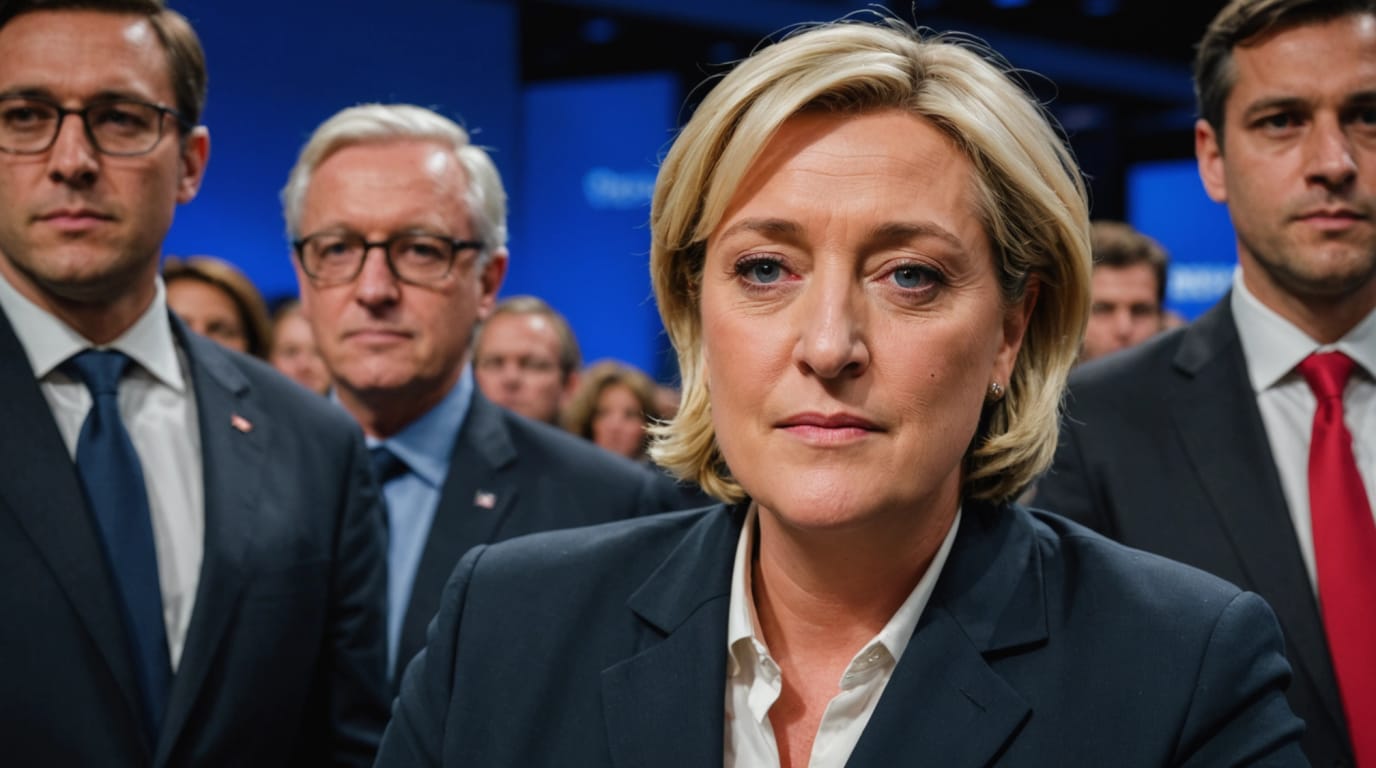
Marine Le Pen, the prominent figure of the French far-right, has been convicted of embezzlement and barred from holding public office for five years, sending shockwaves through the French political landscape. The Paris court's decision has ignited a fierce debate, with Le Pen's party, Rassemblement National (RN), decrying the verdict as politically motivated and an assault on democracy. The ruling throws into serious doubt her chances of contesting the 2027 presidential election, a race in which she was expected to be a leading contender.
The conviction stems from allegations that Le Pen and several members of her party misused European Parliament funds between 2004 and 2016. The court found that funds intended for parliamentary aides were instead diverted to pay party staff, a violation of EU regulations. Prosecutors argued that this amounted to a fraudulent use of public funds, totaling several million euros. In addition to the ban from public office, Le Pen received a four-year prison sentence, two years suspended and two to be served under house arrest, and a fine of $170,000, though these penalties are suspended pending appeal.
The Embezzlement Case and the Verdict
The case against Le Pen and her associates centered on the employment of parliamentary assistants. EU rules dictate that these assistants should be working on European parliamentary matters. However, prosecutors successfully argued that RN members were using these funds to pay individuals working for the party in France, effectively using EU money for domestic political purposes. The court described this as "a democratic bypass" that deceived the parliament and voters.
Le Pen and her co-defendants have consistently denied any wrongdoing, claiming the case is a politically motivated attempt to derail her career. They argue that the charges are based on flimsy evidence and that the timing of the trial, so close to the next presidential election, is highly suspicious. Le Pen has characterized the case as an attempt to orchestrate her "political death," warning that millions of French voters would be deprived of their chosen candidate.
Political Reactions and International Condemnation
The verdict has drawn strong reactions from across the political spectrum, both in France and internationally. RN party officials have rallied around Le Pen, echoing her claims of political persecution. Jordan Bardella, president of the RN, has condemned the ruling as an attack by "elites" on democracy itself. Supporters have taken to social media to express their outrage, using hashtags like #FreeMarine and accusing the French judiciary of bias.
Outside of France, the ruling has also sparked controversy. The Kremlin has criticized the decision, calling it a demonstration of Europe's politically motivated "violation" of democratic norms. Le Pen has long faced accusations of being too close to the Kremlin and advancing Russian narratives. Former US President Donald Trump's administration called it "concerning" to exclude candidates from politics. Dutch far-right politician Geert Wilders voiced shock at the court ruling, pledging his "100 percent" support for Le Pen. Elon Musk, the billionaire, called the ruling an "abuse" and said it would "backfire."
Implications for the 2027 Presidential Election
The immediate impact of the conviction is Le Pen's ineligibility to run for office for the next five years. This effectively removes her from the 2027 presidential race, where she was widely expected to be a strong contender. In the 2022 election, Le Pen secured 41.45% of the vote in the second round against Emmanuel Macron, demonstrating her significant support base.
Her absence from the political stage could have several consequences. It could fracture the far-right movement in France, potentially leading to a power struggle among different factions. It could also create an opportunity for new leaders to emerge and challenge the established political order. Alternatively, it could galvanize Le Pen's supporters, leading to increased political mobilization and a backlash against the perceived injustice of the court's decision.
The Future of Rassemblement National
Beyond the immediate impact on Le Pen's career, the conviction raises questions about the future of Rassemblement National. The party has been a major force in French politics for decades, evolving from its controversial origins under Jean-Marie Le Pen to become a mainstream contender for power under his daughter, Marine.
While the party has made strides in recent years to broaden its appeal and shed its extremist image, the conviction of its leader could damage its credibility and undermine its efforts to gain wider acceptance. However, it could also serve to rally the party's base and strengthen its narrative of being an outsider fighting against a corrupt establishment. The party's ability to navigate this crisis will be crucial to its long-term survival and success.
A Divided Nation
The Le Pen conviction underscores the deep divisions within French society. On one hand, there is a strong desire to uphold the rule of law and hold politicians accountable for their actions. On the other hand, there is a growing sense of disillusionment with the political establishment and a belief that the system is rigged against ordinary people.
These divisions are likely to intensify in the coming years, as France grapples with a range of challenges, including economic inequality, immigration, and national identity. The Le Pen case has become a lightning rod for these tensions, highlighting the fragility of French democracy and the need for greater dialogue and understanding across the political spectrum.
In conclusion, Marine Le Pen's conviction for embezzlement and subsequent ban from public office represents a seismic event in French politics. While the courts have ruled on her guilt, the political ramifications of this decision will continue to reverberate throughout the country for years to come. Whether it marks the end of Le Pen's political career or a new chapter in the rise of the far-right remains to be seen, but one thing is certain: French politics has been irrevocably changed.


