Lebanon on the Brink: Disarmament Deadline Looms Amidst Renewed Tensions and Economic Ruin
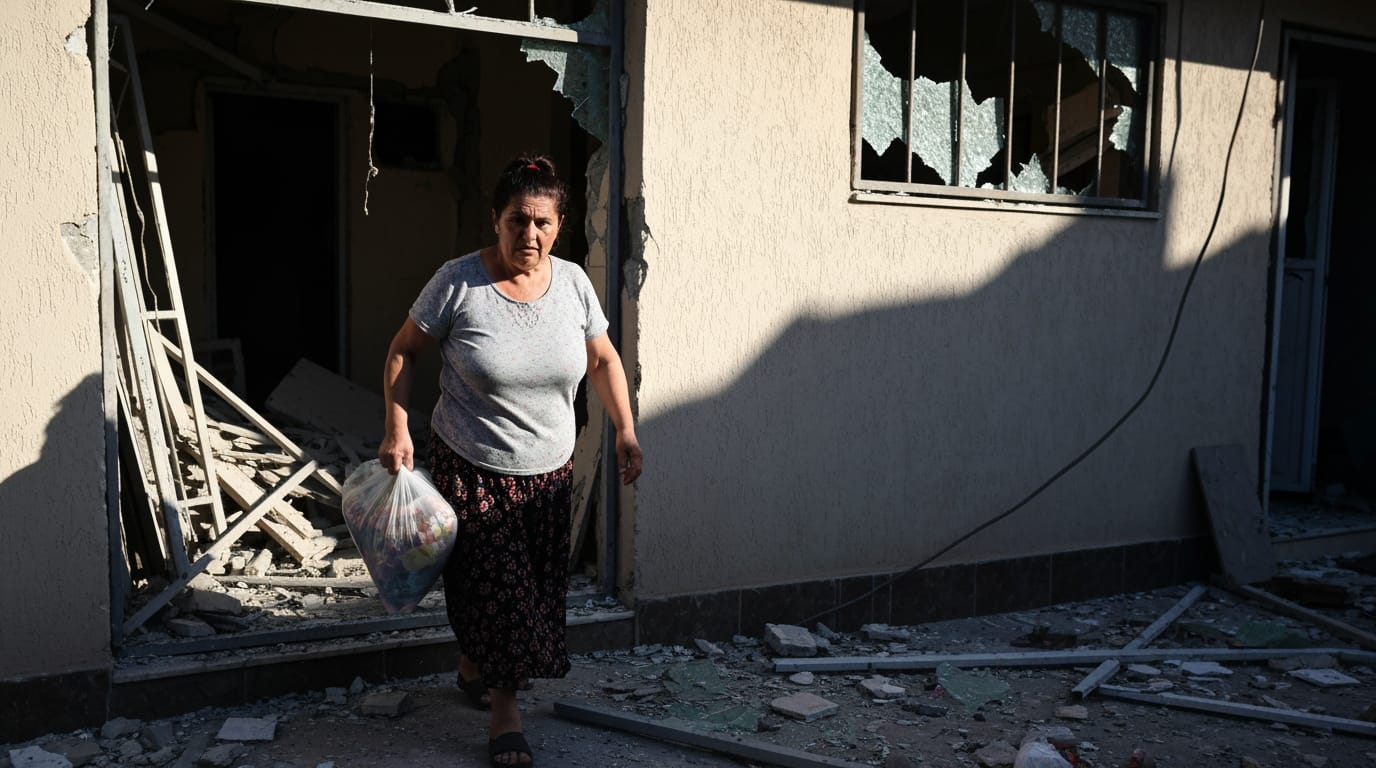
Beirut, Lebanon – Lebanon faces an existential crossroads as a critical deadline approaches, demanding the disarmament of Hezbollah amidst escalating regional tensions and an enduring economic crisis. With the United States imposing a year-end deadline for the Lebanese government to assert full control over its territory and disarm the powerful Iran-backed group, the nation is caught in a precarious dance between international mandates, Israeli threats, and internal political paralysis. The stakes are immense, with the specter of renewed large-scale conflict threatening to plunge an already suffering populace into further despair.
The current precarious situation stems from a US-brokered ceasefire in November 2024, which temporarily halted intense hostilities between Israel and Hezbollah. However, the truce has been fragile, marked by persistent Israeli military actions and allegations of Hezbollah rearming, placing Lebanon at the center of a geopolitical maelstrom. The international community, led by the US, insists that a lasting peace and economic recovery hinge on the Lebanese government's ability to dismantle non-state armed groups, particularly Hezbollah, whose military capabilities and political influence remain deeply entrenched.
The Looming Deadline and International Pressure
The core of the current crisis is the December 31, 2025, deadline set by the United States for Lebanon to disarm Hezbollah. This demand is intricately linked to a broader US-backed plan that promises Israeli withdrawal from disputed territories and vital reconstruction aid for Lebanon. Under the terms of the November 2024 ceasefire, brokered by the US and France, the Lebanese Army was explicitly tasked with disarming Hezbollah.
Lebanon's newly formed government, led by Prime Minister Nawaf Salam and President Joseph Aoun, has reportedly adopted a plan to disarm Hezbollah, particularly in the critical region south of the Litani River. However, the implementation of this plan faces formidable obstacles. Hezbollah, designated a terrorist organization by the US and EU, operates as a hybrid actor, wielding significant political power alongside its military capabilities. Its refusal to disarm, citing ongoing Israeli threats and occupation of Lebanese territory, directly contradicts the government's obligations and international expectations. This intractable position has led to internal friction, with Hezbollah-aligned ministers reportedly walking out of cabinet sessions discussing disarmament strategies.
Israel's Persistent Strikes and Regional Chessboard
Despite the ceasefire agreed upon in late 2024, Israel has maintained a steady campaign of airstrikes and ground breaches within Lebanese territory throughout 2025. These actions, which Israel claims target Hezbollah infrastructure and operatives, have been recorded by the United Nations Interim Force in Lebanon (UNIFIL) as thousands of violations of UN Security Council Resolution 1701. The continuation of these strikes, even as the Lebanese Army attempts to implement disarmament measures, underscores the volatile nature of the border region.
The current escalation follows a significant conflict in 2024, which intensified after Hezbollah joined the war in solidarity with Hamas following the October 2023 events in Gaza. That conflict severely degraded Hezbollah's military infrastructure and led to the deaths of key leaders, including its long-time secretary-general Hassan Nasrallah and his successor Hashem Safieddine. However, reports suggest that Hezbollah has actively worked to rebuild and rearm its capabilities, particularly in southern Lebanon, further fueling Israeli concerns and threats of large-scale military action if the disarmament deadline is not met. The region remains a complex geopolitical chessboard, with Iran's continued backing of Hezbollah and US efforts to counter Iranian influence adding layers of complexity to Lebanon's internal struggles.
A Nation Mired in Multiple Crises
The renewed tensions and the disarmament ultimatum land upon a Lebanon already grappling with an unprecedented economic catastrophe. Since 2019, the country has been plunged into one of the world's worst financial crises, marked by a currency devaluation exceeding 90 percent and widespread poverty affecting nearly 44 percent of the population, according to the World Bank. The conflict in 2024 further exacerbated these woes, resulting in an estimated $8.5 billion in combined physical damage and economic losses, representing a staggering 40 percent of Lebanon's GDP.
The destruction of infrastructure, disruption of trade, and deterrence of foreign investment have crippled key sectors such as tourism and agriculture. Basic services are on the brink of collapse, and humanitarian needs are immense. The prospect of another war, fueled by the failure to meet the disarmament deadline, threatens to unleash catastrophic economic and human consequences, including an estimated 15 to 25 percent contraction in GDP and mass displacement. Analysts warn that such a scenario could lead to infrastructure damage exceeding $25 billion and an unemployment rate potentially soaring above 65 percent.
The Human Toll and Uncertain Future
Amidst the geopolitical maneuvering and high-stakes diplomacy, it is the ordinary Lebanese citizens who bear the brunt of the instability. The 2024 conflict displaced over 1.2 million people in Lebanon, with hundreds of thousands more crossing into Syria. Many families, already struggling with hyperinflation and limited access to essential services, face an uncertain future, contemplating further displacement or deeper poverty.
The Lebanese Armed Forces (LAF), while central to the disarmament plan, face significant challenges. With limited resources, an eroded budget due to the economic crisis, and concerns about internal cohesion and impartiality, their capacity to unilaterally disarm Hezbollah remains questionable. International support, including financial aid and training, is critical for strengthening the LAF's role in asserting state authority. However, this aid is often conditioned on progress towards Hezbollah's disarmament.
As the end-of-year deadline approaches, Lebanon is poised on a knife-edge. The choice between confronting Hezbollah, risking internal conflict and an Israeli military response, or failing to disarm, potentially inviting further Israeli aggression and alienating international support, presents an impossible dilemma for the fragile government. The coming weeks will determine whether Lebanon can navigate this perilous path towards stability or if it will once again be engulfed in the fires of conflict, deepening its already profound suffering.