Turkey on Edge: Ankara Navigates a Perilous Geopolitical Landscape Amidst Iran Conflict
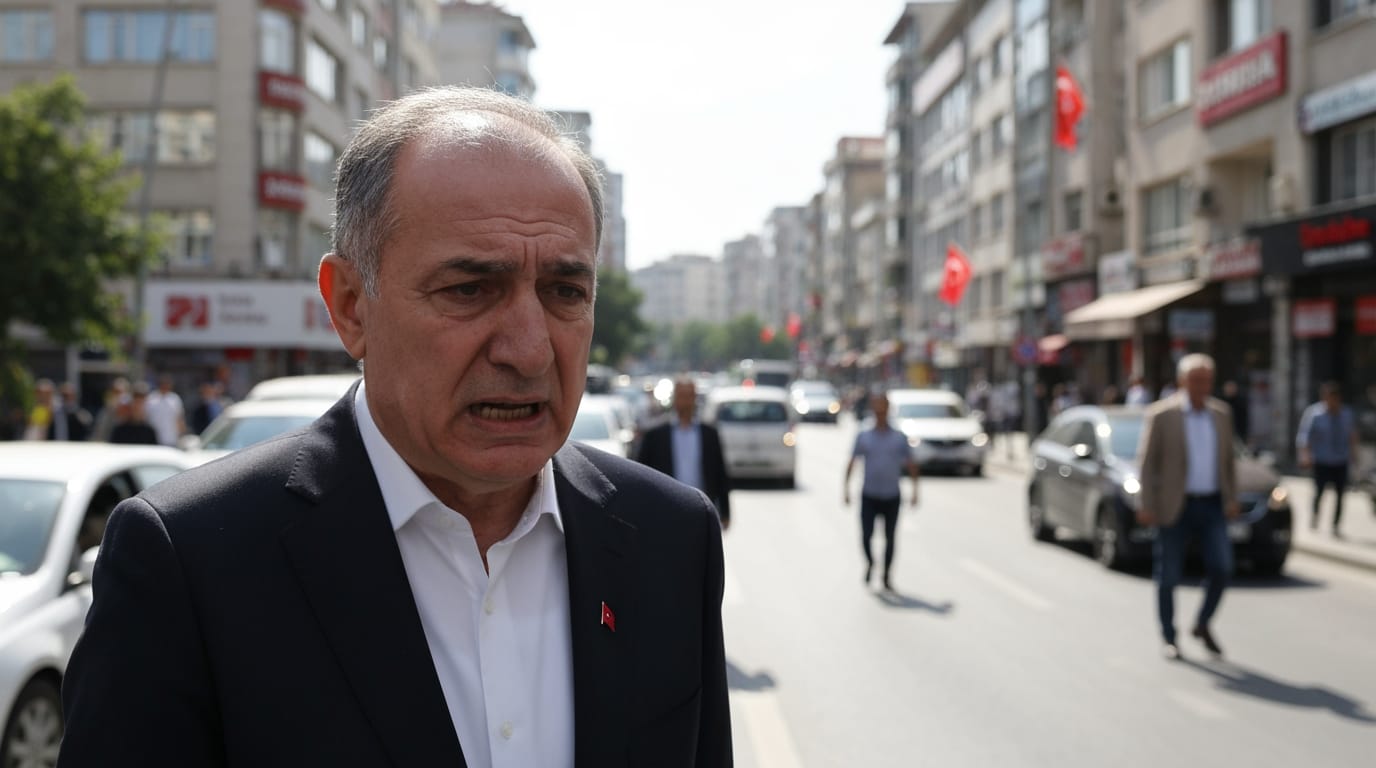
Ankara finds itself traversing a precarious path as the conflict involving the United States, Israel, and Iran escalates, threatening to engulf the broader Middle East in an unprecedented conflagration. Positioned geographically and geopolitically between the warring parties, Turkey faces a complex calculus of security, economic, and diplomatic risks, meticulously attempting to preserve its national interests while advocating for de-escalation in an increasingly volatile region. Recent missile incidents targeting Turkish airspace underscore the immediate and tangible dangers of a widening conflict, forcing Ankara to confront the harsh realities of its "cautious neutrality."
The Geopolitical Tightrope: Navigating a Volatile Neighborhood
Turkey's strategic dilemma has been acutely highlighted by the direct threat of Iranian missile activity. On March 4, and again on March 9, NATO air and missile defense systems intercepted Iranian ballistic missiles heading towards Turkish territory, reportedly aimed at the critical Incirlik airbase where U.S. and NATO forces are stationed. These incidents prompted a stern warning from Turkish Foreign Minister Hakan Fidan, who informed his Iranian counterpart that "next time, Turkey will respond in kind." While Iran denied intentionally targeting Turkey, the events served as a stark reminder of Ankara's vulnerability to spillover from regional hostilities.
Ankara views external attempts at regime change in Tehran, particularly through large-scale military intervention or proxy forces, as a recipe for instability, a lesson it draws from historical precedents in the Middle East. Turkish policymakers are profoundly concerned that a destabilized Iran could lead to a "security vacuum" in neighboring Syria and Iraq, creating fertile ground for non-state actors and terrorist organizations. A worst-case scenario for Turkey involves the potential disintegration of Iran, which could lead to the emergence of a Kurdish quasi-state along its borders, reigniting dormant internal conflicts and providing sanctuary for groups hostile to Ankara, such as the Kurdistan Workers' Party (PKK) or its affiliates. Reports of potential U.S. engagement with and arming of Iranian Kurdish opposition groups have particularly alarmed Turkey, recalling past tensions with its NATO ally over cooperation with Kurdish elements in Syria.
Economic Imperatives: A Fragile Economy on Edge
Beyond immediate security threats, Turkey grapples with significant economic vulnerabilities that would be exacerbated by a prolonged regional conflict. The nation's economy, still in recovery and battling inflation, faces severe strain from disrupted trade routes, soaring energy prices, and a potential new wave of refugees. Turkey currently hosts approximately 3.5 million refugees, primarily from Syria and Afghanistan, and fears that an Iranian conflict could trigger an unmanageable influx, further straining social services and generating political discontent.
Energy security remains a critical concern. While Turkey has made strides in diversifying its natural gas imports, reducing its reliance on traditional pipeline suppliers like Russia and Iran through increased domestic production and liquefied natural gas (LNG) capacity, Iran still accounts for roughly 13% of Turkey's total gas imports. A disruption to this supply, coupled with surging global oil prices—already trading above $100 a barrel—would fuel inflationary pressures and worsen Turkey's current account deficit. Furthermore, the Baku-Tbilisi-Ceyhan (BTC) oil pipeline, a vital artery supplying European markets and a significant portion of Israel's oil, traverses Turkish territory and has been explicitly identified by Iran as a potential target. Any attack on the BTC pipeline would have immediate and severe repercussions for global energy markets and for Turkey's economy.
Historical Echoes and Regional Ambitions: A Complex Relationship
The intricate relationship between Turkey and Iran spans centuries, rooted in the historical rivalry between the Ottoman and Safavid empires and marked by periods of both intense competition and pragmatic cooperation. While ideological differences (Sunni-majority Turkey versus Shia-majority Iran) and proxy conflicts in regions like Syria and the Caucasus have frequently strained ties, both nations have also found common ground, particularly in their shared interest in suppressing Kurdish separatism.
Under the ruling Justice and Development Party (AKP), Turkey has pursued a more assertive foreign policy, seeking greater regional influence. However, Ankara's strategic objective remains regional consolidation and stability, an approach that stands in stark contrast to what it perceives as Israel's preference for regional fragmentation. Turkish officials worry that a regime change in Iran could lead to a more pro-Western and pro-Israeli government, potentially diminishing Turkey's diplomatic leverage and creating a new geopolitical dynamic that could challenge its own regional aspirations. This underlying strategic calculation informs Ankara's strong preference for the survival of the current Iranian regime, or at least for any successor to remain outside the direct orbit of Western influence.
Alliances Under Strain: The US, NATO, and Turkish Sovereignty
The unfolding conflict serves as a critical "stress test" for the often-strained relationship between the United States and Turkey. As a NATO member, Turkey hosts crucial alliance infrastructure, including the Incirlik airbase and a vital radar facility in Kürecik. Yet, Turkish public opinion largely attributes responsibility for the current conflict to the U.S. and Israel, with many sympathizing with Iran. This sentiment complicates any potential decision by Ankara to respond militarily to Iranian provocations, as it risks being perceived by its populace as aligning with the U.S. and Israel.
The U.S. decision to close its consulate in Adana and advise citizens to leave southeastern Turkey reflects the gravity of the situation and the perceived risk to American personnel in the region. Ankara's balancing act involves trying to influence Washington's approach, differentiating it from Israel's more structural and long-term objectives in the region, while also working to restrain Israel's actions. President Erdoğan's administration has engaged in extensive diplomatic efforts, communicating with both Muslim states and Western allies, including President Trump, in a bid to foster de-escalation. However, the prospect of the U.S. supporting Kurdish groups hostile to Turkey or pursuing policies that further destabilize its immediate neighborhood remains a significant point of tension.
Ankara's Delicate Path Forward
As the conflict in the Middle East continues to unfold, Turkey remains caught in a multifaceted dilemma. Its dual imperatives—to ensure national security and economic stability while navigating complex regional power dynamics and maintaining strained alliances—demand a delicate and highly strategic approach. Ankara's consistent calls for diplomacy and its warnings against escalation underscore a profound awareness of the catastrophic consequences a wider war would unleash on an already fragile region. The ongoing missile interceptions serve as a stark reminder that despite its best efforts, Turkey may not be able to remain a mere observer in a conflict that increasingly threatens to spill beyond its borders. The coming weeks will undoubtedly test Ankara's resilience and diplomatic acumen as it endeavors to steer clear of the "ring of fire" President Erdoğan fears.


