Macron Seeks to Cement France's Leadership Role in a Shifting Europe
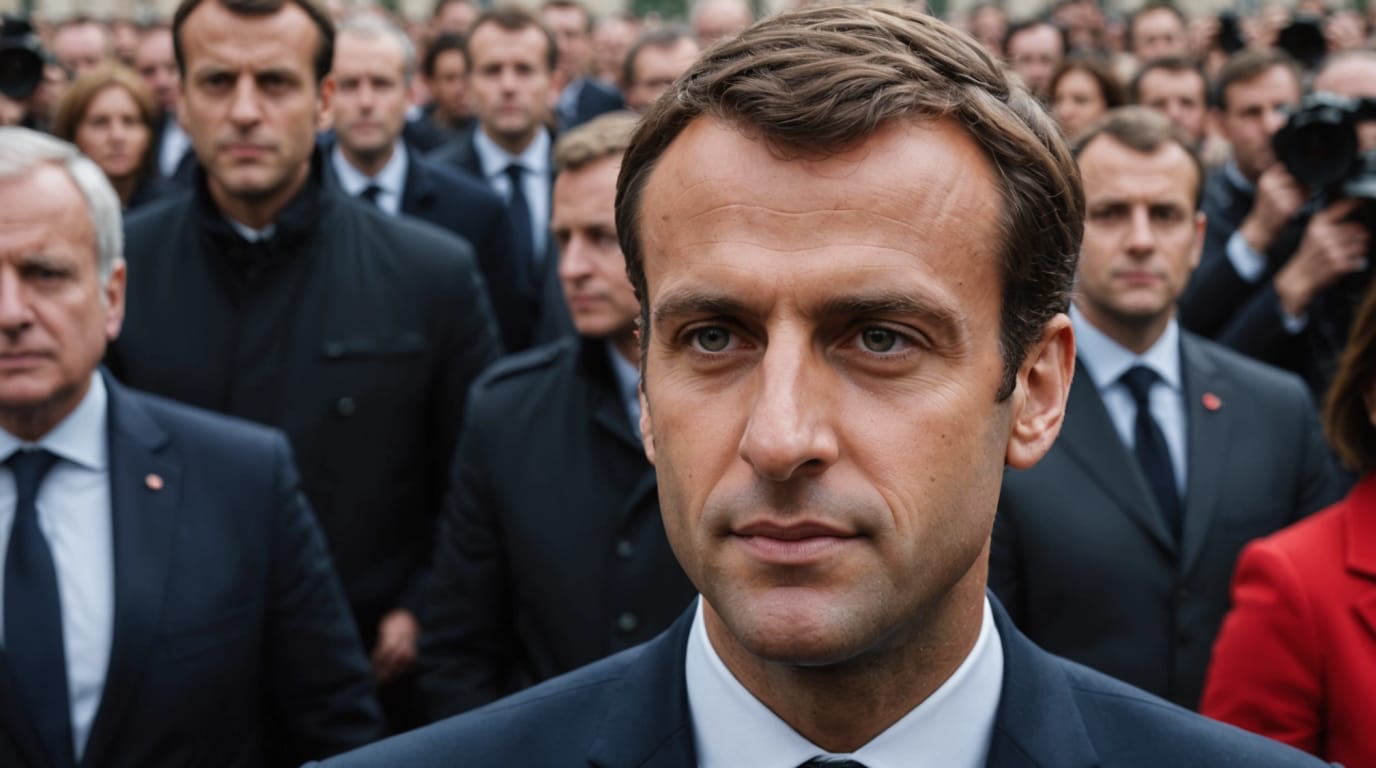
Amidst global uncertainties and a changing transatlantic alliance, French President Emmanuel Macron is actively pursuing a leadership role for France within Europe, advocating for a stronger, more independent European Union capable of navigating complex challenges and asserting its interests on the world stage. Macron's vision encompasses bolstering European defense capabilities, promoting economic prosperity, and championing a distinct European cultural and intellectual model.
A Call for European Sovereignty
Macron has consistently emphasized the need for Europe to take greater responsibility for its own security and destiny. In a recent speech at the Sorbonne University, he warned that Europe is "mortal" and could "die" if it fails to build a robust defense and undertake necessary economic reforms. He has urged Europeans to abandon naivety in dealing with foreign powers and to strive for strategic autonomy, reducing dependence on the United States and other global actors. This call for sovereignty resonates with a long-standing French aspiration to be a dominant player in global politics.
Strengthening European Defense
A key component of Macron's vision is a stronger European defense. He has advocated for increased defense spending, the development of a European rapid intervention force, and the creation of a European defense industry. Macron has also suggested expanding France's nuclear umbrella to provide security guarantees for other European nations. In light of the war in Ukraine and a perceived shift in U.S. priorities towards the Indo-Pacific region, Macron argues that Europe must enhance its own defense capabilities to ensure its security and stability. He has presented the idea of a "coalition of the willing" led by France and the UK, and has been a vocal proponent of European rearmament.
Economic and Strategic Independence
Macron's push for European leadership extends to the economic sphere. He has called for doubling European investments in key sectors such as artificial intelligence, space, biotech, green energy, and quantum computing. He envisions a new European economic model for growth and production that can respond to a world where energy and raw materials are scarce. Macron has also emphasized the need for Europe to diversify its trade relationships and reduce its reliance on any single partner. This includes strengthening ties with countries in Africa, Latin America, and Asia, and pursuing balanced and reciprocal strategic partnerships.
Navigating Domestic and International Challenges
Macron's pursuit of European leadership comes at a time of both domestic and international challenges. France has experienced political instability, with a minority government facing opposition in the National Assembly. Macron's domestic approval ratings remain relatively low, and there is public skepticism about some of his proposals, such as deploying troops to Ukraine.
Internationally, Macron faces resistance from European partners who are reluctant to follow his lead on certain issues, particularly military intervention. The traditional "Franco-German motor" that has driven European integration is also facing strains, with differing strategic visions between the two countries. Despite these challenges, Macron has been actively engaged in international diplomacy, seeking to mediate conflicts and promote European interests. He has positioned himself as a key interlocutor with Russia, and has led international initiatives on issues ranging from artificial intelligence to climate change.
A Vision for the Future
Macron's vision for Europe is one of a strong, independent, and influential global power. He believes that Europe must overcome its divisions and embrace a new era of strategic autonomy, economic prosperity, and cultural leadership. While his proposals have generated debate and faced resistance, Macron's ambition to reshape Europe's role in the world has placed France at the center of discussions about the continent's future. Whether he can successfully translate his vision into reality remains to be seen, but his efforts to assert French leadership have undoubtedly injected new energy into the European project.


