Maduro's Capture in Venezuela: A Bold Stroke Reshapes Geopolitics, Signaling a Stern Warning to Iran
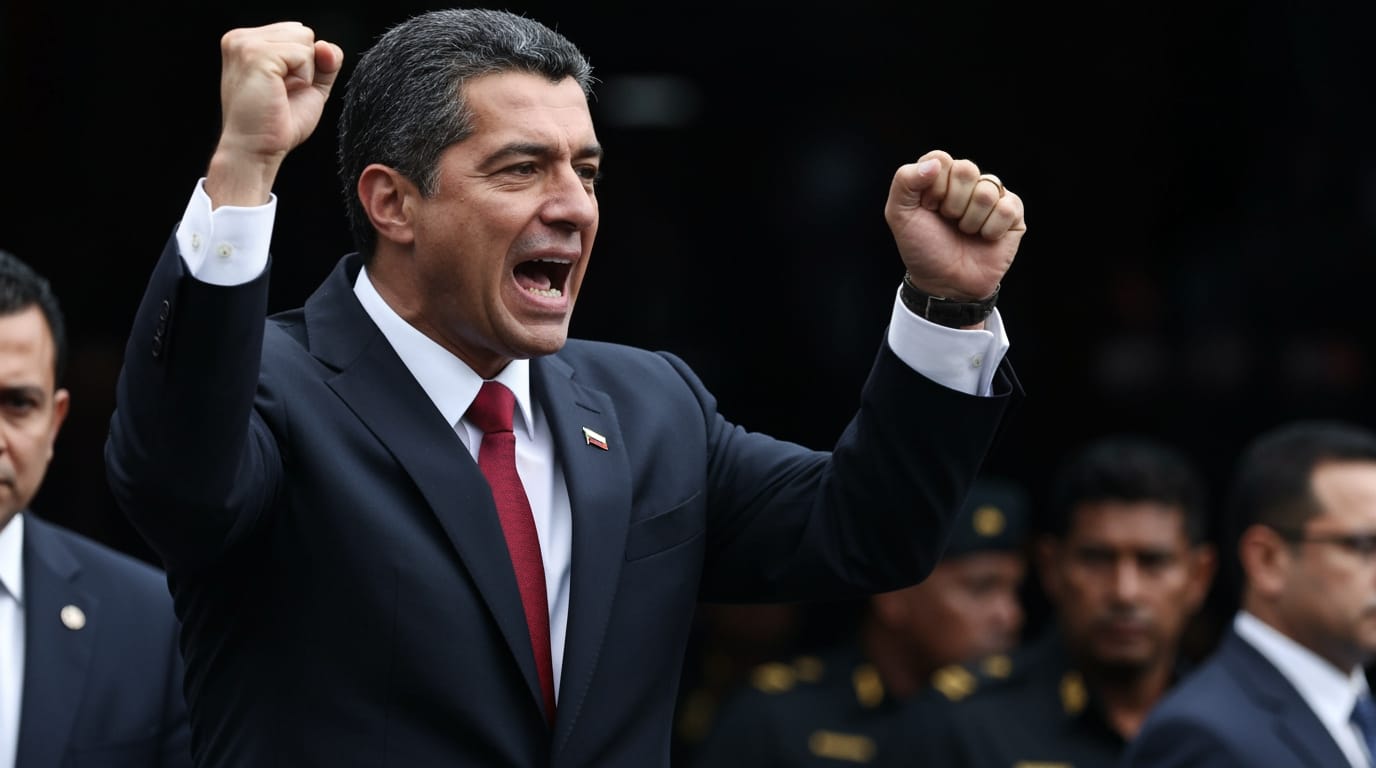
NEW YORK, NY – In a dramatic escalation of international pressure, Venezuelan President Nicolás Maduro was captured on January 3, 2026, by United States forces in Caracas and subsequently transferred to federal custody in New York, where he faces an array of narco-terrorism and drug trafficking charges. The audacious operation marks a significant blow to a regime long accused of illicit activities and immediately sends profound geopolitical tremors across the globe, with particular resonance for Iran, a staunch ally of Venezuela. This extraordinary event not only reshapes the political landscape of South America but also serves as a potent warning signal to Tehran and other nations engaged in sanctions evasion and defiance of international norms.
The Daring Operation and Maduro's Arraignment
The capture of Nicolás Maduro, along with his wife Cilia Flores, unfolded during a predawn military operation in the Venezuelan capital, Caracas. The U.S. government had previously announced an increased reward of up to $50 million for information leading to Maduro's arrest or conviction, stemming from a 2020 indictment on charges including narco-terrorism, cocaine importation, and weapons offenses. The superseding indictment alleges Maduro's involvement in a two-decade-long conspiracy with international drug trafficking organizations, including Mexico's Sinaloa Cartel and Colombian rebel groups like the FARC, to smuggle vast quantities of cocaine into the United States.
Upon arrival in New York, Maduro was arraigned in a federal court, pleading not guilty to all charges. He reportedly insisted he remained the legitimate president of Venezuela and claimed to be a "prisoner of war". The swift and decisive action, described by the U.S. as "Operation Absolute Resolve," involved a "large-scale strike" and led to significant casualties among Venezuelan and Cuban security personnel, with at least 24 Venezuelan officers and 32 Cuban military and police officers reportedly killed. The U.S. operation represents the largest military intervention in Latin America since 1989 and its most assertive action for regime change since 2003.
A Symbiotic Alliance: Venezuela and Iran's Shared Defiance
For decades, Venezuela and Iran have cultivated a robust strategic partnership, forged in a shared defiance of U.S. influence and international sanctions. This alliance deepened significantly following the 2019 tightening of U.S. sanctions against both nations, particularly targeting their oil sectors. The relationship transcended mere political solidarity, evolving into a sophisticated mechanism for economic survival and geopolitical maneuver.
Iran has been instrumental in assisting Venezuela in circumventing crippling U.S. sanctions. Tehran supplied Caracas with essential refined fuel, technical expertise for refinery repairs, and blending components, critical for Venezuela's beleaguered state-owned oil industry, PDVSA. In return, Venezuela provided heavy crude, gold, and other commodities, often through opaque contracts and "shadow shipping networks" designed to bypass conventional financial channels and Western scrutiny. Experts noted that this arrangement created a "trading laboratory" for Iran under severe banking restrictions, enabling it to operate supply chains and move revenue through non-transparent financial channels.
Beyond economic cooperation, the partnership also encompassed military ties, with the U.S. accusing Venezuela of supporting Tehran's unmanned aerial vehicle (UAV) program and broader weapons proliferation activities. Intelligence assessments have long suggested Venezuela served as a strategic outpost for Iranian influence, including alleged Hezbollah activity and money laundering operations that moved funds between Venezuela, Lebanon, and Syria.
The Unmistakable Warning: Tehran's Sanctions-Evasion Model Under Threat
The apprehension of Nicolás Maduro carries direct and severe implications for Iran, threatening to dismantle a critical component of its global sanctions-evasion architecture. U.S. Secretary of State Marco Rubio explicitly linked the operation to broader efforts to curb Iranian and Hezbollah activity in the Western Hemisphere, stating the mission aimed to ensure Venezuela "no longer cozy up to Hezbollah and Iran in our own hemisphere". Israeli officials echoed this sentiment, with Diaspora Affairs Minister Amichai Chikli declaring Maduro's capture a blow to the "global axis of evil" and a "clear message" to Iran's Supreme Leader about the consequences of supporting narco-terrorism and terror proxies.
For Tehran, the loss of Maduro's regime translates into a potential collapse of a vital hub for sanctions circumvention. Iran's significant investments in Venezuela's oil refining sector, primarily political rather than commercial, now face an uncertain future. These ventures, which kept fuel flowing to Venezuela and provided an outlet for Iranian crude, were predicated on the survival of aligned governments. With a post-Maduro Venezuela likely to seek re-engagement with Western economies, there is a strong possibility of a sharp cooling of relations with Tehran, audits of existing contracts, and potential expropriation of Iranian-linked assets.
This development comes at a particularly sensitive time for Iran, which is grappling with internal protests, a collapsing currency, and mounting anxiety within its leadership. The disruption of financial pipelines and logistical routes that the Iranian regime relied upon to sustain its proxies and project power abroad further constrains its capabilities.
Geopolitical Ripple Effects and the Future Landscape
Maduro's capture signals a significant reassertion of U.S. deterrence in the Western Hemisphere, specifically targeting openly anti-U.S. regimes involved in drug trafficking and providing strategic access to adversaries like Iran, Russia, and China. The move has been closely watched in global capitals, not merely as a regime change in South America, but as a potential precursor to a larger confrontation with Iran's "axis of resistance".
While the U.S. sanctions regime against Venezuela remains largely intact following Maduro's arrest, the potential for a new, U.S.-aligned government in Caracas could usher in an era of greater transparency and compliance, directly impacting Iran's ability to utilize Venezuela as a sanctions evasion platform. The economic and energy impacts could also extend to other players like Russia and China, who have invested heavily in Venezuela and benefited from its past policies.
The events in Venezuela underscore a renewed commitment by the U.S. to hemispheric security and an aggressive stance against narco-terrorism. The fallout for Iran, losing a long-standing partner and a crucial lifeline for its sanctions-busting efforts, is expected to be substantial, forcing Tehran to re-evaluate its strategies in an increasingly challenging international environment.


