Major Blow to Global Terrorism: ISIS Second-in-Command Eliminated in Nigeria
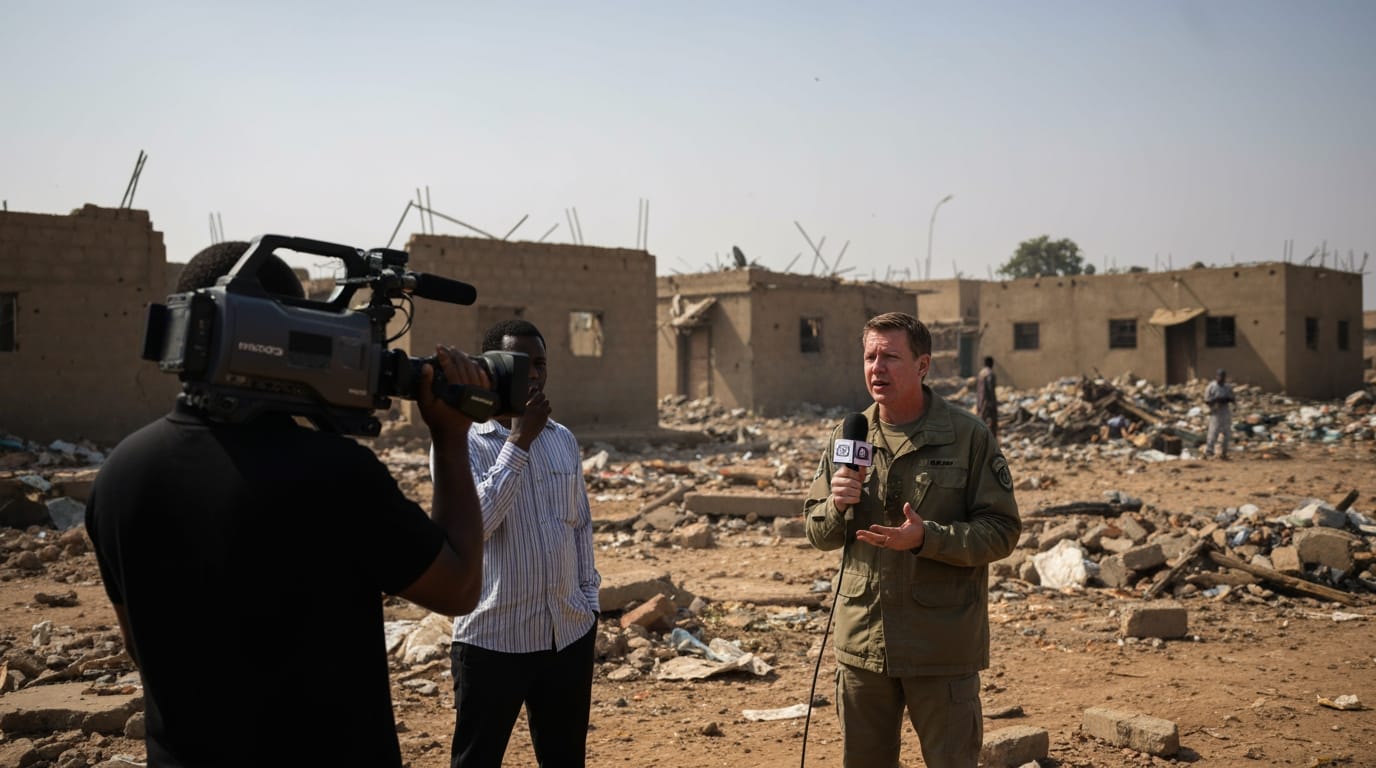
Abuja, Nigeria – In a significant victory against global terrorism, United States President Donald Trump announced Saturday the successful elimination of Abu Bilal al-Minuki, identified as the second-in-command of the Islamic State (ISIS) globally, during a joint operation with Nigerian forces. The high-stakes mission, described as "meticulously planned and very complex," underscores an intensified cooperative effort between the two nations to dismantle extremist networks operating across Africa and beyond.
The removal of such a high-ranking figure marks a pivotal moment in the ongoing fight against radical Islamist groups that have plagued the West African region, particularly Nigeria. Al-Minuki was reportedly instrumental in plotting operations that aimed to target American interests and perpetuate terror throughout Africa, making his demise a substantial blow to ISIS's operational capabilities worldwide. This successful joint venture highlights a strategic shift towards more aggressive and direct counter-terrorism engagement between the U.S. and Nigeria, building on recent efforts to deepen their military and diplomatic ties.
The Precision Strike: A Testament to Collaborative Intelligence
President Trump's announcement confirmed that the operation, based on actionable intelligence, was carried out by American and Nigerian forces working in concert on African soil. While specific details of the raid remain undisclosed, its success points to enhanced intelligence sharing and tactical coordination, which have been central to the burgeoning US-Nigeria security partnership. The focus on a "global second-in-command" suggests a target whose influence extended far beyond regional affiliates, reaching into the core command structure of ISIS. This meticulous planning and execution against a top-tier target signify a robust and determined stance against the persistent threat posed by Islamic State leadership.
The elimination of Abu Bilal al-Minuki is expected to severely disrupt ISIS's global operations, potentially creating a significant leadership vacuum within the decentralized terror organization. Historically, the death of high-profile leaders can force terrorist groups to expend resources on security and succession, diverting attention from attack planning and potentially leading to internal power struggles. However, experts also note that resilient organizations like ISIS, with their bureaucratic and often self-sufficient cells, have shown an ability to adapt and regenerate leadership. The immediate impact will likely be felt in the disruption of strategic planning and coordination of major attacks.
ISIS's Evolving Threat in West Africa: A Complex Landscape
The operation took place within Nigeria, a nation that has grappled with various extremist groups, most notably Boko Haram and its more potent offshoot, the Islamic State West Africa Province (ISWAP). ISWAP, which pledged allegiance to ISIS in 2015, emerged as a dominant force in the Lake Chad Basin, conducting extensive insurgencies against Nigeria, Cameroon, Chad, and Niger. The group has been responsible for numerous attacks on military targets, government officials, aid workers, and civilians, establishing shadow governance structures in areas under its control.
Nigeria and the broader Lake Chad region have been identified by the United States as critical battlefronts in its 2026 counterterrorism strategy. The strategy acknowledges that ISIS remnants, displaced from their strongholds in Iraq and Syria, have increasingly relocated and re-established operational networks in parts of Africa, exploiting weak governance and porous borders. This persistent threat underscores why international cooperation in regions like West Africa is paramount.
It is important to distinguish Abu Bilal al-Minuki from past leadership figures of ISWAP. For instance, Abu Musab al-Barnawi, a former leader of ISWAP and son of Boko Haram's founder, Mohammed Yusuf, was reported dead by Nigerian military authorities in 2021. While al-Barnawi’s death was significant for regional operations, reports later suggested that claims of his demise were inaccurate or that he may have been promoted to a broader role within ISIS central command. The designation of al-Minuki as the "global second-in-command" indicates a higher echelon target than previous regional leaders, signaling a reach into the broader international ISIS network.
Nigeria's Persistent Counter-Terrorism Efforts and International Cooperation
Nigeria has a long history of combating terrorism, with the initial challenge emerging around 2009. The establishment of the Counter Terrorism Centre (CTC) in 2012, formalized into the National Counter Terrorism Centre (NCTC) in 2022, highlights Nigeria's commitment to developing a coordinated national response. These bodies are tasked with providing leadership, strategic guidance, and inter-agency collaboration on counter-terrorism matters.
The partnership with the United States has seen significant recent bolstering. In January 2026, the two nations expanded their military and diplomatic cooperation, forming a US-Nigeria Joint Working Group to address security challenges, enhance intelligence sharing, and build law enforcement capacity. This intensified cooperation has included increased material deliveries, intelligence, surveillance, and reconnaissance (ISR) assistance, and tactical training for Nigerian forces. US airstrikes against ISIS-linked targets in northwest Nigeria in December 2025, which Nigeria confirmed it had green-lit, further demonstrated this deepening collaboration. The ongoing dialogues between high-ranking officials, including Nigeria's National Security Adviser, Mallam Nuhu Ribadu, and US counterparts, underscore a mutual commitment to addressing evolving security threats in the region.
Implications for Regional Stability and Future Operations
The elimination of Abu Bilal al-Minuki, particularly given his reported global standing, is expected to have far-reaching implications for ISIS's ability to coordinate and inspire attacks. His removal weakens the group's central command and control, potentially leading to operational fragmentation and reduced effectiveness in orchestrating complex transnational threats. However, the dispersed nature of ISIS affiliates, particularly in Africa where groups like ISWAP have demonstrated significant resilience and adaptability, means that the fight against terrorism is far from over.
The US counterterrorism strategy for 2026 emphasizes the need to prevent extremist groups in Africa from establishing bases capable of launching attacks against American interests and allies. This latest operation serves as a clear demonstration of that commitment and the willingness to engage directly in robust security measures. While the loss of a key leader often prompts a period of reorganization within terrorist groups, it also presents an opportunity for continued pressure and further disruption of their networks. The ongoing cooperation between Nigerian and international forces remains crucial to sustaining this momentum and ensuring long-term regional stability. The success of this joint operation reinforces the message that no leader of a global terror network is beyond the reach of international counterterrorism efforts.


