U.S. Halts Poland Troop Deployment Amid Broader European Military Realignment
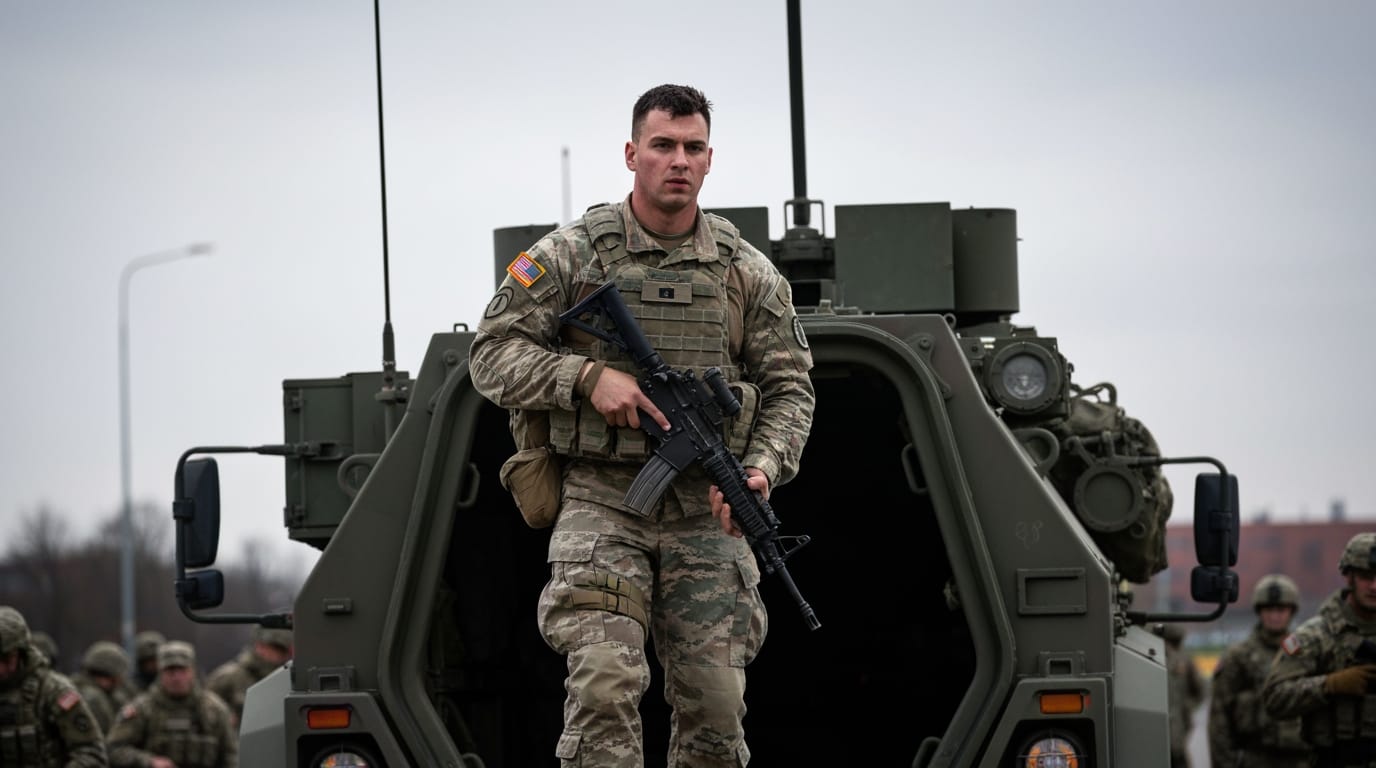
WASHINGTON – The Pentagon has abruptly halted the planned deployment of thousands of U.S. troops to Poland, canceling a key armored brigade rotation in a move directly linked to the Trump administration's ordered drawdown of 5,000 personnel from Germany. The decision has sparked bipartisan criticism in the U.S. Congress and raised questions among NATO allies about the coherence of American defense strategy in Europe.
The unexpected directive means approximately 4,000 troops from the Army's 2nd Armored Brigade Combat Team, 1st Cavalry Division, who were already preparing for or en route to Poland, are no longer deploying. This action comes as part of a broader European military reshuffling that will see overall U.S. troop levels on the continent return to figures observed before Russia's full-scale invasion of Ukraine in 2022. While Polish officials have sought to downplay the impact on their national security, the move underscores a significant shift in the U.S. military posture in Europe, signaling a renewed emphasis on allies taking greater responsibility for their conventional defense.
German Pullout Ignites European Concern
The immediate catalyst for the halted Poland deployment was the Trump administration's earlier decision to reduce the U.S. military footprint in Germany by 5,000 troops. This directive, issued at the beginning of May, stemmed from escalating tensions between President Donald Trump and German Chancellor Friedrich Merz. The rift deepened following Chancellor Merz's public remarks questioning Washington's handling of the ongoing Iran war, which President Trump reportedly viewed as "inappropriate and unhelpful".
U.S. officials indicated the troop reductions in Germany are intended to push European allies to increase their defense spending and assume more responsibility for the continent's security. The Pentagon confirmed that Defense Secretary Pete Hegseth signed a memo directing the Joint Chiefs of Staff to execute the troop reduction, which also included the cancellation of a long-range rocket and missile battalion deployment to Germany. This realignment was not part of a strategic review but rather a response to political disagreements, according to some analysts.
Poland's Ambitions and Alliance Dynamics
Poland, a staunch U.S. ally and a key player on NATO's eastern flank, had actively sought an increased U.S. military presence. In November 2020, President Andrzej Duda ratified the U.S.-Polish Enhanced Defense Cooperation Agreement (EDCA), an accord designed to facilitate greater defense cooperation and potentially increase the number of rotational U.S. troops from 4,500 to at least 5,500. The EDCA also provided for the expansion of military infrastructure to accommodate up to 20,000 U.S. soldiers in the event of a threat.
Despite these efforts and ongoing bilateral cooperation, the abrupt cancellation of the armored brigade deployment caught some Polish officials by surprise. While Polish Minister without Portfolio Tomasz Siemoniak insisted the decision "does not apply to Poland" directly and is linked to broader European realignment, the fact remains that anticipated additional forces will not arrive. Warsaw had been considered a potential destination for some of the troops leaving Germany, making the current halt a stark contrast to previous expectations.
NATO's Position and Congressional Backlash
NATO officials, speaking anonymously in line with regulations, stated that the U.S. decision to cancel the rotational deployment to Poland would not impact NATO's overall deterrence and defense plans. They emphasized that such rotational forces are not part of NATO's formal deterrence and defense planning structure. However, some analysts and lawmakers voiced concerns that these uncommunicated and sudden decisions could erode trust within the alliance and send an unfavorable signal to Russia.
The lack of consultation and notification to Congress regarding the Poland deployment cancellation drew sharp criticism from both Democratic and Republican lawmakers. Representative Joe Courtney, a Democrat, described the decision as sending a "horrible message" to allies, particularly given Poland's significant defense spending. Republican Representative Mike Rogers also expressed dissatisfaction, warning of potential congressional action if minimum troop levels in Europe were compromised without proper consultation.
A Shifting Global Defense Landscape
The Pentagon's actions represent a larger strategic pivot, aiming to reduce the U.S. long-term military role in Europe and reallocate resources to other regions, notably the Indo-Pacific. This strategic realignment is part of an ongoing effort to reshape America's global defense posture, expecting European nations to shoulder a greater share of conventional defense responsibilities.
This reevaluation of U.S. military presence in Europe is not unprecedented; previous administrations have also sought to adjust troop levels on the continent. However, the current administration's approach, characterized by sudden announcements and a perceived lack of consultation with allies, has fueled uncertainty and concern among European partners. The moves underscore a complex geopolitical environment where U.S. domestic priorities and evolving international challenges continue to reshape alliance dynamics.
The halt in troop deployments to Poland, following the directive to reduce forces in Germany, highlights a broader recalibration of American military engagement in Europe. While U.S. officials maintain that the changes will not diminish commitment to NATO, the methods and motivations behind these decisions have undoubtedly created a ripple of concern across the transatlantic alliance. The coming months will likely see continued scrutiny of these realignments and their long-term implications for European security and the cohesion of NATO.


