Merkel Dismisses 'Male-Killing' Label as 'Absurd,' Sheds Light on Gendered Political Scrutiny
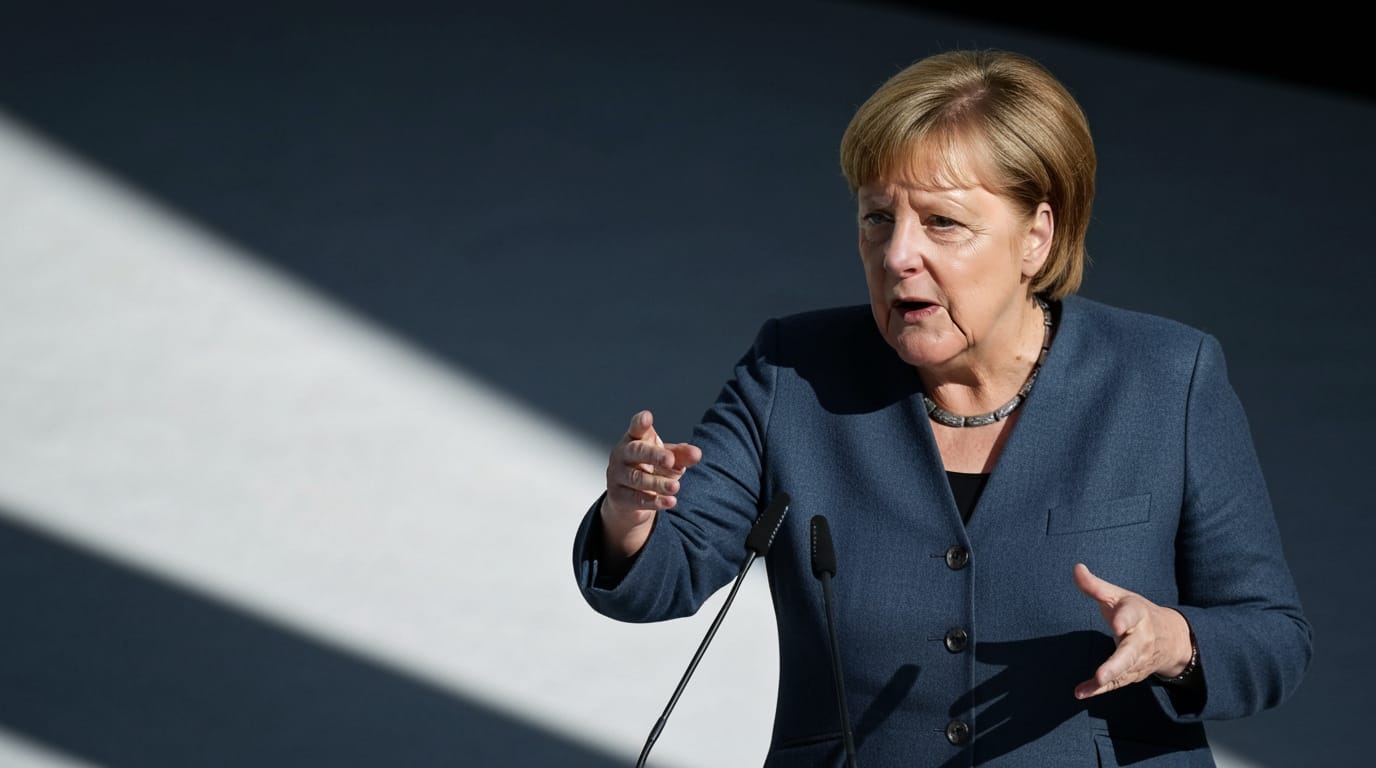
BERLIN – Former German Chancellor Angela Merkel has vehemently rejected the persistent "male-killing" (Männermordende Merkel) label that shadowed parts of her political career, describing the accusation as "absurd" and indicative of a historical lack of experience with women in top-tier political competition. Her recent remarks, made during a rare post-chancellorship interview, offer a retrospective on the unique gendered criticisms faced by powerful female leaders.
Merkel, who served an unprecedented four terms as Chancellor from 2005 to 2021, contended that the notion of her systematically sidelining male rivals was a mischaracterization. She drew a parallel to men routinely displacing other men in the pursuit of power, suggesting that such actions are only deemed "male-killing" when a woman achieves similar success. Her comments provide a pointed reflection on the narrative often constructed around female ambition in male-dominated arenas.
The Genesis of a Gendered Epithet
The "male-killing" epithet reportedly emerged during Merkel's ascendance within the Christian Democratic Union (CDU), her political party. This label gained traction as several prominent male figures, who were once rivals or mentors, saw their political influence wane or careers conclude during her rise to power. Notably, the term has been linked to the political fate of figures such as former Chancellor Helmut Kohl, under whom Merkel served, and Wolfgang Schäuble, another influential conservative who later became her finance minister. Merkel's public distancing from Kohl amid a party donation scandal in 1999 is frequently cited as a pivotal moment that cemented the perception of her strategic political maneuvering. The label also resurfaced in the context of her early power struggles with current German Chancellor Friedrich Merz.
This characterization suggested that her success came at the deliberate expense of male colleagues, rather than through her own political acumen and ability to navigate complex party dynamics. It fostered a narrative that her decisions were rarely interpreted as her own autonomous choices but were instead framed in relation to the men around her.
Navigating a Male-Dominated Political Landscape
Merkel’s recent reflections also touched upon the specific challenges she encountered as a woman in German politics. She revealed that it was only after becoming Chancellor that she fully understood that being a woman presented greater obstacles within the CDU than her background as an East German. This insight suggests that while her East German heritage was a distinct element of her identity, gender played a more pervasive, and perhaps less openly acknowledged, role in shaping her political journey and the public's perception of her. The former Chancellor's remarks underscore the unique scrutiny and often gendered language applied to female leaders who achieve and consolidate power.
Her career, marked by a pragmatic and often understated leadership style, saw her navigate numerous domestic and international crises. Despite being referred to as "Mutti Merkel" (Mother Merkel), a term that evolved from a potentially derogatory label to one of affection and respect, she consistently maintained a guarded private life, revealing little about personal details during her tenure. This blend of perceived maternal care and steely political resolve often left commentators searching for frameworks to understand her distinct leadership.
Post-Chancellorship Reflections and Broader Implications
Now in retirement, Merkel, at 71, has begun to offer more personal insights into her past experiences and current life. She has expressed contentment with her decision to step down from politics voluntarily, finding advantages in a life free from the constant possibility of late-night political calls. Her comments regarding the "male-killing" label are part of these broader reflections, signaling a willingness to address and reframe aspects of her public image that she views as misrepresentations.
The discussion surrounding the "male-killing" label highlights a continuing discourse on gender, power, and perception in political leadership. It points to a lingering tendency to scrutinize female leaders through a lens that often differs from how male counterparts are evaluated. Merkel's rejection of the label not only defends her own legacy but also serves as a broader commentary on the path forward for women in high-stakes political environments, advocating for a more equitable assessment of ambition and success regardless of gender.
Ultimately, Merkel's dismissal of the "male-killing" accusation as "absurd" serves as a powerful statement against gendered double standards in politics. Her long and impactful career demonstrates that effective leadership transcends such narrow and often biased characterizations. By challenging this particular epithet, she reinforces the idea that a woman's rise to power, even if it involves overcoming male rivals, is a testament to her capabilities rather than a predatory act.


