Merz Charts Ambitious Course for Europe Ahead of Critical EU Summits
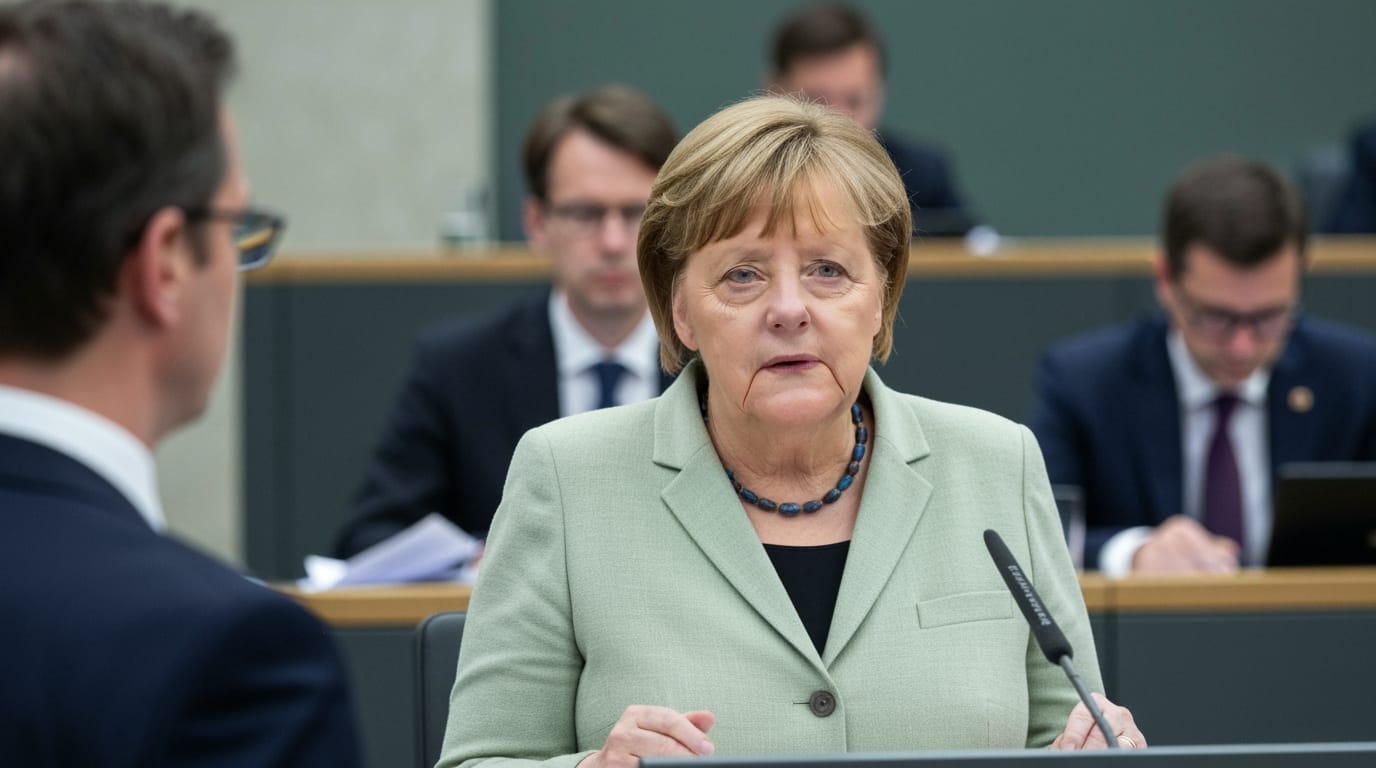
Berlin, Germany – As Europe navigates a complex geopolitical landscape, German Chancellor Friedrich Merz has consistently articulated a bold vision for the continent, urging lawmakers and European partners to embrace a more competitive, secure, and enlarged European Union. Through a series of addresses ahead of pivotal EU summits in recent months, Merz has underscored Germany's commitment to fostering a stronger, more unified Europe capable of asserting its influence on the global stage. His recent pronouncements have focused on accelerating EU enlargement, enhancing economic competitiveness, and bolstering independent European defense capabilities, signaling a proactive shift in Berlin’s approach to European leadership.
The Imperative of EU Enlargement: A Wider European Family
One of the most pressing issues addressed by Chancellor Merz has been the future of European Union enlargement, particularly concerning the Western Balkans. Speaking at the EU-Western Balkans summit in Tivat, Montenegro, on June 5, 2026, Merz emphasized that the EU must unequivocally demonstrate its readiness and capacity to welcome new members. This renewed impetus for expansion, he noted, is largely driven by the ongoing conflict in Ukraine, which has highlighted the strategic necessity of anchoring neighboring countries firmly within the European sphere to diminish external influences.
Merz pointed out a significant gap, noting that the EU had not admitted any new members in the past 13 years, a period he described as reflecting shortcomings within the Union itself. Six Western Balkan nations—Albania, Bosnia, Serbia, Montenegro, North Macedonia, and Kosovo—are currently aspiring to join the bloc, with Montenegro often cited as the leading candidate. To facilitate this process, Germany, in collaboration with France, has proposed innovative approaches, including simplifying accession conditions and offering prospective members early access to EU programs and the single market even before full membership. Furthermore, Merz introduced the concept of an "associate member" status for Ukraine, envisioning it as an interim step that would allow Ukrainian officials to participate in EU summits and ministerial meetings without full voting rights, paving the way for eventual complete integration. The Chancellor also delivered a clear message to Serbia, stressing the need for the nation to align its geopolitical orientation firmly with Europe, rather than pursuing a neutral stance between major global powers.
Reinvigorating Europe's Economic Engine: A Call for Competitiveness
Beyond enlargement, Chancellor Merz has consistently championed the need to revitalise Europe’s economic competitiveness. At the European Industry Summit in Antwerp on February 11, 2026, he made a strong case for a substantial reduction in regulatory burdens to stimulate economic growth. Merz urged for decisive actions to restore the EU's competitive edge, particularly in light of a widening growth disparity between the Union and economic powerhouses like the United States and China.
His address called for bolstering the Single Market and advocating for robust free trade agreements. Merz highlighted the importance of a "Made with Europe" strategy, advocating for the judicious application of rules that prioritize European products only in critical, strategic sectors and as a measure of last resort. He stressed that a thriving, competitive economy is fundamental to safeguarding Europe's sovereignty amidst current geopolitical complexities. This push for deregulation and industrial strategy forms a cornerstone of his administration's economic vision for the continent, aiming to prevent Europe from falling behind other global economic players.
Forging Strategic Autonomy: The Future of European Security
A significant thread running through Merz's recent addresses has been the urgent necessity for Europe to develop greater strategic autonomy, particularly in matters of defense and security. In a speech to his Christian Democratic Union (CDU) party on February 20, 2026, the German Chancellor asserted that Europe's freedom is intrinsically linked to its capacity for self-defense, highlighting that "strength – military as well as economic – is what counts" in the current global environment. He cautioned against neglecting security, which he argued could expose Europe to political leverage and coercion.
This emphasis on defense echoes his earlier remarks following his party's electoral victory in 2025, where he called for Europe to become more independent from the United States, a position that resonated with French President Emmanuel Macron’s long-standing advocacy for European strategic autonomy. Merz has indicated a willingness to address Germany’s constitutional debt brake, potentially allowing for increased defense spending to meet NATO's target of 3% or even 3.5% of GDP. He even ventured into discussions about extending nuclear security guarantees to Germany through collaborations with the United Kingdom and France, and expressed concerns about the contemporary relevance of NATO, suggesting that independent European defense capabilities might need to be established more swiftly. These statements signal a profound shift in German security policy, moving towards a more assertive and self-reliant European defense posture.
Germany's Renewed Role: Leading from the Front
Chancellor Merz's European policy agenda is underpinned by a desire for Germany to assume a more decisive leadership role within the EU. His ambition, articulated early in 2026, is to transform Germany into a leading actor, moving past the historical phenomenon of the "German vote," which often manifested as indecision or abstention in Brussels due to internal coalition divisions. His government has implemented new mechanisms in Berlin aimed at fostering greater coherence in Germany's European policymaking.
While this ambition has been met with expectations for clearer German leadership, it has also raised concerns among some member states wary of a potentially overly assertive "Germany-first" approach. Merz's strategy often involves leveraging the Franco-German partnership and other smaller, focused groups to advance his European agenda. In May 2025, upon assuming the chancellorship, Merz made it clear that external security would be a paramount concern for his administration, acknowledging the high expectations from other European leaders for greater German initiative. His commitment to establishing a National Security Council within the chancellery further underscores this dedication to a robust and unified foreign policy. His address to the German parliament on March 18, 2026, ahead of an EU summit focusing on crises in Iran and Ukraine, further highlighted Germany's role in advocating for unity, economic stability, and coordinated European responses to global challenges.
A United Front for a Challenging Future
Through a series of robust addresses and strategic engagements, Chancellor Friedrich Merz has laid out a comprehensive and forward-looking agenda for the European Union. His vision for a more expansive, economically dynamic, and militarily capable Europe reflects a recognition of the profound challenges and opportunities facing the continent. From advocating for accelerated enlargement and economic deregulation to championing greater strategic autonomy and a more assertive German leadership role, Merz's consistent message is one of unity, strength, and proactive engagement. As Europe continues to grapple with ongoing conflicts, economic pressures, and shifts in global power dynamics, the trajectory charted by Merz suggests a Germany keen on shaping a resilient and influential European future. His initiatives aim to ensure that the European Union remains a powerful and cohesive force, capable of defending its interests and values in an increasingly uncertain world.


