Merz Rallies European Allies for Unified NATO Stance Ahead of Critical Ankara Summit
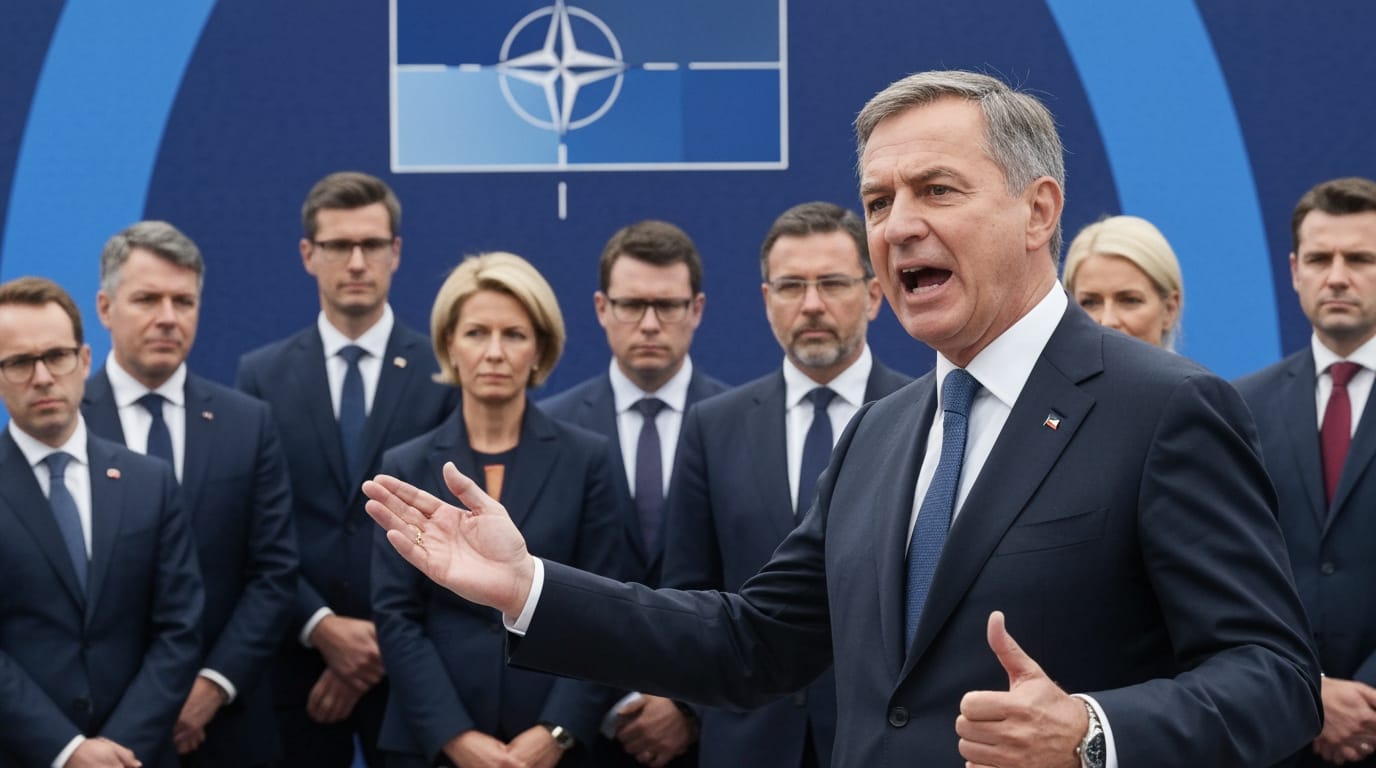
BERLIN – German Chancellor Friedrich Merz has convened a pivotal gathering of European NATO heavyweights in Berlin, orchestrating a concerted effort to forge a unified European front ahead of the alliance's crucial summit in Ankara next month. The high-stakes meeting, bringing together leaders from Germany, France, the United Kingdom, Italy, and Poland – collectively dubbed the "E5 group" – underscores a burgeoning European resolve to shoulder greater responsibility for continental defense while navigating increasingly complex transatlantic dynamics with the United States. As President Donald Trump continues to exert pressure on European allies regarding defense spending and commitment, Merz's initiative aims to project European solidarity and strategic coherence at a time of heightened global instability and a looming reassessment of the US military presence in Europe.
Forging a European Pillar Amid Transatlantic Shifts
The Berlin rendezvous, held this week, was designed to coordinate a common message and strategy for the July 7-8 NATO summit in Ankara. Chancellor Merz's proactive diplomacy reflects a strategic imperative for Europe to demonstrate its commitment to collective defense amidst growing concerns over the future scope of American engagement in European security. Reports indicate the discussions centered on assembling a package of proposals intended to showcase Europe's willingness to take on a more substantial role in its own defense. This push for a stronger "European pillar" within NATO comes as US Defense Secretary Pete Hegseth recently announced a comprehensive "NATO 3.0 review" of American military presence in Europe, signaling a shift towards European countries assuming primary responsibility for the continent's security.
The impetus for this coordinated effort extends beyond mere financial burden-sharing. Recent tensions, particularly disagreements over the US-led military campaign against Iran and efforts to secure maritime traffic through the Strait of Hormuz, have highlighted a divergence in strategic interests and a perceived lack of consultation from Washington. European leaders are acutely aware that a united stance is essential to mitigate potential unilateral US actions and ensure that European security concerns remain central to NATO's agenda. Merz himself emphasized the importance of strengthening European NATO nations, stating, "We know that we need to do more, and we are doing so."
Germany's Historic Defense Reorientation Takes Center Stage
At the heart of Merz's rallying cry is Germany's own profound reorientation of its defense policy, marking a historic departure from decades of underinvestment. Under Chancellor Merz's leadership, Germany is poised to become a formidable force within Europe, committed to transforming the Bundeswehr into the continent's strongest conventional army. A significant milestone was achieved in March 2025 when German lawmakers approved an amendment to the Basic Law, exempting defense spending exceeding 1% of GDP from the national debt brake. This pivotal change allows for an unlimited debt-based financing of defense expenditures, paving the way for unprecedented military investment.
Germany's commitment to increased defense spending is substantial. Berlin aims to raise its core defense spending to 3.5% of its Gross Domestic Product (GDP) by 2029, a notable increase from the 2.4% baseline in 2025. Additionally, Merz has proposed allocating an extra 1.5% of GDP towards defense-related infrastructure and national resilience, bringing Germany's long-term cumulative defense spending target to 5% of GDP. This ambitious target, which gained traction at the 2025 NATO summit in The Hague, far surpasses NATO's traditional 2% benchmark and directly addresses concerns about Russia's growing assertiveness in Europe. The Finance Minister, Lars Klingbeil, underscored this commitment, stating, "We will raise defense spending step by step so that we will reach a NATO quota of 3.5% in 2029." This fiscal dedication, amounting to nearly €650 billion over five years, is not merely a response to US pressure but a recognition that "Russia, above all, is actively and aggressively threatening security and freedom across Europe," Merz asserted.
Navigating Internal European Dynamics and Future Security Architectures
While presenting a united front to external partners, the E5 discussions also highlighted internal European complexities and differing visions for future security architectures. One key point of contention revolved around who should represent Europe in potential negotiations with Russia concerning Ukraine and broader security arrangements. Germany, France, and the United Kingdom, traditionally forming the "E3" group for diplomatic efforts, favored this format, arguing it aligns with Ukrainian President Volodymyr Zelenskyy's preference. However, Italy advocated for equal participation, suggesting European Council President António Costa as a potential compromise figure. Poland, bordering Russia and representing Eastern European interests, also expressed reluctance to be excluded from any process shaping the continent's security. These discussions underscore the ongoing challenge of achieving full consensus on European leadership within foreign policy and security matters.
Beyond diplomatic representation, the E5 leaders also delved into practical mechanisms for strengthening European defense capabilities. Key agenda items included optimizing rising defense budgets by reducing duplication in arms procurement and fostering greater cooperation on major defense programs. The aim is to create more efficient and integrated European military forces, capable of acting autonomously when necessary, thereby enhancing NATO's overall strength. This push for interoperability and streamlined defense spending is crucial for European nations to collectively meet the heightened defense targets and address the security gaps that might emerge from a recalibrated US military footprint.
The Ankara Summit: A Defining Moment for NATO's Future
The upcoming NATO summit in Ankara, scheduled for July 7-8, is poised to be a defining moment for the alliance. The issues debated in Berlin—defense spending, burden-sharing, European self-reliance, support for Ukraine, and transatlantic relations—will dominate the agenda. Chancellor Merz's pre-summit efforts are designed to ensure that Europe arrives in Ankara not as a collection of individual nations, but as a cohesive force ready to assert its commitment and capabilities. The presence of NATO Secretary General Mark Rutte, expected to join the Berlin gathering remotely from Washington where he is meeting President Trump, further emphasizes the critical link between European preparations and direct engagement with the US administration.
European leaders aim to present concrete progress on increased defense spending, highlighted by Germany's ambitious targets and the collective 20% boost in defense spending among European allies and Canada in 2025. This collective commitment serves as a powerful signal to the United States that Europe is serious about its defense obligations and prepared to share the burden more equitably. The outcomes of the Ankara summit will likely set the course for NATO's evolution in the coming years, shaping its response to Russia's continued aggression, the ongoing support for Ukraine, and the very nature of the transatlantic bond in a multipolar world.
Conclusion: A New Era of European Defense Responsibility
Chancellor Friedrich Merz's energetic rallying of European NATO allies represents a significant moment in the continent's post-Cold War security trajectory. Driven by a renewed sense of urgency regarding Russia's threats and the shifting dynamics of US foreign policy, European nations, led by Germany, are actively forging a more robust and unified defense posture. The Berlin E5 meeting serves as a clear indication that Europe is determined to speak with a stronger, more coordinated voice, not only to reaffirm its commitment to NATO but also to actively shape its future. While challenges remain in reconciling diverse national interests and achieving full strategic alignment, the imperative of collective security in an increasingly volatile world is propelling European leaders towards unprecedented levels of cooperation and responsibility. The Ankara summit will be a critical test of this renewed European resolve, with long-lasting implications for the transatlantic alliance and global stability.


