Moderate Earthquake Jolts Egypt, Tremors Felt Across Region

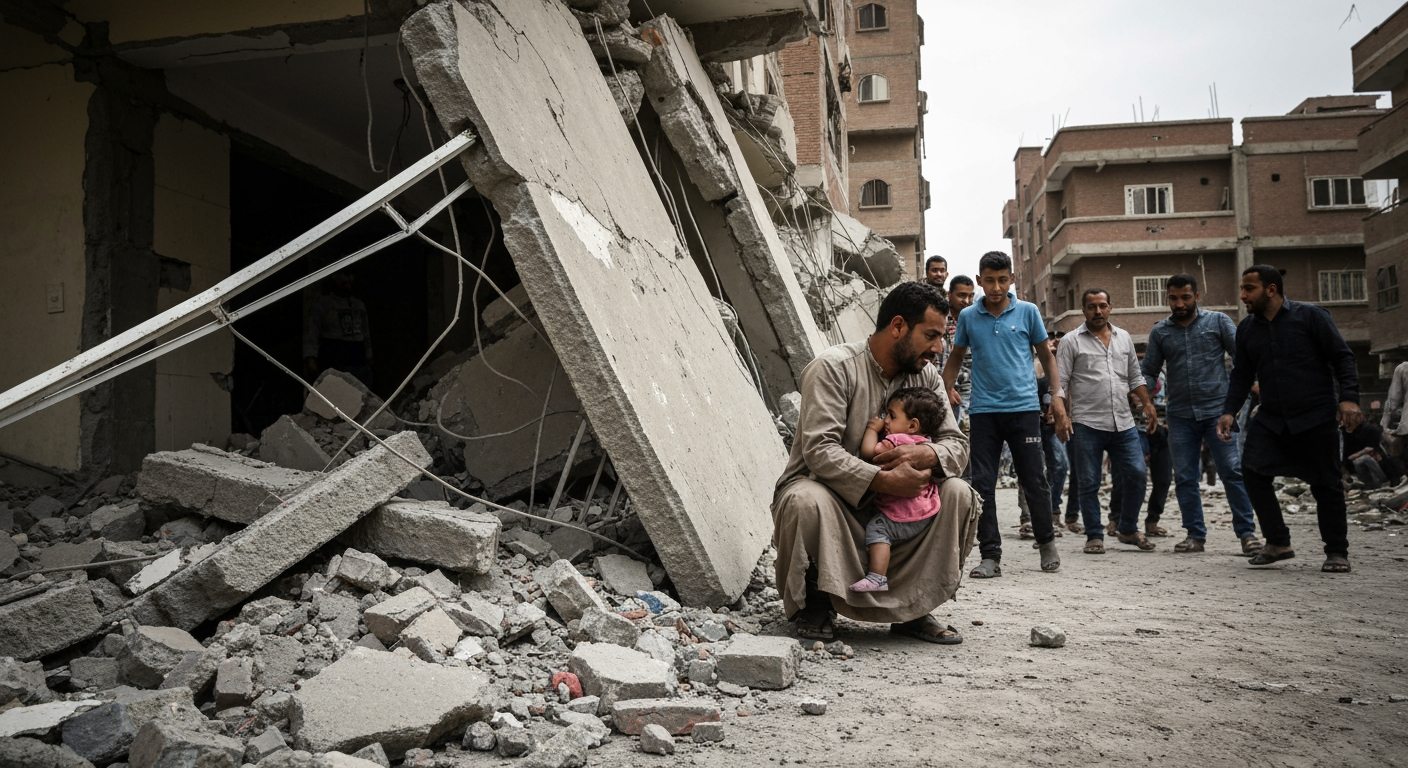
An earthquake with a magnitude widely reported between 5.3 and 5.5 struck northeastern Egypt early Monday, August 3, 2026, sending tremors through densely populated areas including the capital Cairo and extending across southern and central Israel. The shallow quake, centered north of the city of Suez, prompted immediate activation of emergency response plans across Egypt, though initial reports confirmed no casualties or significant damage, providing a sense of relief amidst widespread alarm.
The Earth Trembles: Details of the Seismic Event
The seismic event occurred around 3:00 AM local time (00:00 GMT), originating approximately 38 to 41 kilometers (24 to 25 miles) north of Suez. Varying reports from geological agencies placed the earthquake's magnitude slightly differently: the German Research Centre for Geosciences (GFZ) recorded it at 5.4, while Egypt's National Research Institute of Astronomy and Geophysics initially estimated 5.2 before revising it to 5.5. The United States Geological Survey (USGS) reported a 5.0 magnitude, revising an earlier reading. Regardless of the slight variations, the consensus points to a moderate earthquake capable of being widely felt. The shallow depth of the quake, measured at 10 kilometers (6 miles), contributed significantly to the widespread perception of its intensity across the region. Residents from Cairo to El-Arish, near the Gaza Strip border, reported being awakened by the shaking, with some describing their homes visibly moving. The tremors also extended beyond Egypt's borders, felt distinctly in southern and central Israel, as well as the Dead Sea area, where some mobile devices triggered emergency alerts seconds before the shaking began.
Swift Response and Initial Assessments
In the immediate aftermath, Egyptian authorities swiftly mobilized emergency protocols. Health Minister Khaled Abdel Ghaffar ordered emergency response plans activated nationwide, directing ambulance services to maintain "maximum levels of preparedness." The Egyptian Red Crescent confirmed it had initiated its emergency response in the governorates affected by the quake. Crucially, official statements from both the health ministry and the Red Crescent indicated no immediate reports of casualties or significant damage to infrastructure. Public advisories were issued, urging residents to exercise caution and avoid older or dilapidated buildings, particularly common in some of Cairo's working-class neighborhoods, as a precautionary measure. The lack of severe consequences is a testament to both the earthquake's moderate strength and potentially improved building standards in newer constructions, though the risk posed by older structures remains a concern.
Egypt's Place in a Seismically Active Zone
While intense earthquakes are not a daily occurrence in Egypt, the country is situated within a region of notable seismic activity, making such events expected, albeit infrequently. Geologically, Egypt lies close to the active plate boundaries associated with the Great Rift Valley system, which includes the Red Sea and the Gulf of Aqaba. The seismic hazard is particularly pronounced in areas around the southern end of the Gulf of Suez, the northern Red Sea, and the Gulf of Aqaba, where the African and Arabian plates interact. These tectonic forces occasionally result in earthquakes that can be felt across the country. Historically, Egypt has experienced more devastating seismic events. The most tragic modern earthquake occurred in October 1992, a magnitude 5.8 quake near Cairo that claimed over 500 lives and caused widespread destruction. More recently, tremors from the powerful earthquakes that struck Turkey and Syria in February 2023 were also felt in parts of northern Egypt, including Alexandria, underscoring the interconnectedness of seismic activity in the broader Eastern Mediterranean region.
Enhancing Resilience and Future Preparedness
The recent quake serves as a reminder of the ongoing need for seismic preparedness and robust emergency response mechanisms in Egypt. The activation of emergency plans and the swift assessment for damage highlight a proactive approach by authorities. While no major structural failures were reported this time, the vulnerability of older buildings remains a concern, prompting calls for adherence to building codes and potential retrofitting efforts. The fact that some Android users received earthquake warnings on their phones seconds before the shaking began also points to the increasing role of technology in early detection and public notification, offering crucial moments for people to seek safety. Continuous monitoring by institutions like the National Research Institute of Astronomy and Geophysics is vital for understanding seismic patterns and mitigating future risks. Public awareness campaigns on earthquake safety procedures also play a crucial role in enhancing community resilience.
The early Monday earthquake, though moderate, effectively tested Egypt's preparedness and the resilience of its infrastructure. With no casualties reported and minimal disruption, the nation appears to have weathered this seismic event well. However, the underlying geological realities of the region necessitate ongoing vigilance, investment in robust infrastructure, and continuous public education to ensure that Egypt remains resilient in the face of future seismic challenges.
Related Articles


Ratko Mladić, "Butcher of Bosnia" and Convicted War Criminal, Dies at 84
THE HAGUE, Netherlands – Ratko Mladić, the former Bosnian Serb military commander known as the "Butcher of Bosnia" and convicted of genocide, war crimes, and crimes against humanity, has died at the age of 84. Serbian...


Long-Awaited 9/11 Mastermind Trial Set for 2028, Decades After Attacks
GUANTANAMO BAY, Cuba – Nearly a quarter-century after the devastating terror attacks of September 11, 2001, a military judge has finally set a trial date for Khalid Sheikh Mohammed, the alleged mastermind behind the...