Myanmar's Drug Trade Surges Amidst Civil War, Global Concerns Mount
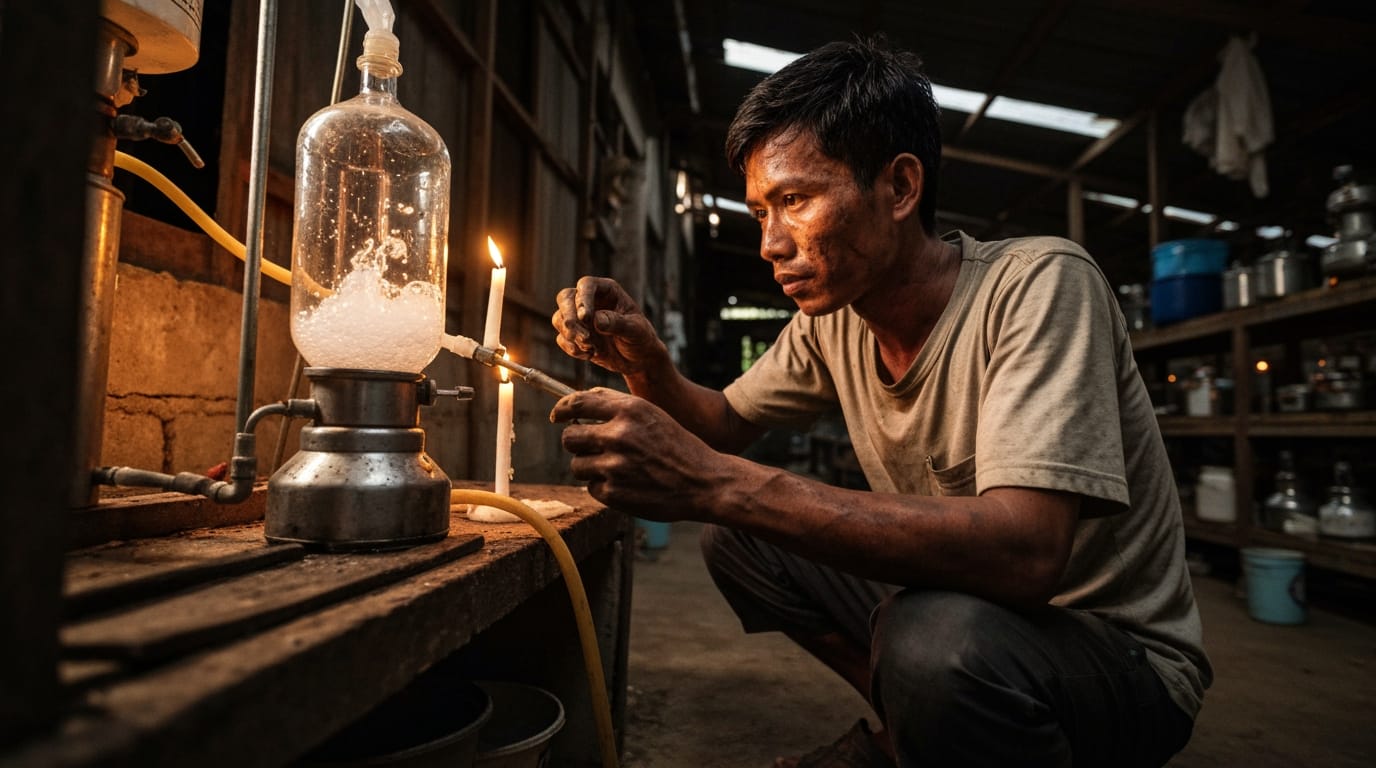
BANGKOK, Thailand – Myanmar, already grappling with a devastating civil war following the 2021 military coup, has witnessed an alarming and unprecedented boom in illicit drug production, cementing its position as a global epicenter for both opium and methamphetamine. The United Nations Office on Drugs and Crime (UNODC) reports a significant surge in cultivation, fueled by economic collapse, widespread poverty, and a breakdown in governance, with severe implications for regional stability and global drug markets.
The country's internal conflict has created a fertile ground for transnational criminal organizations and armed groups, transforming remote border regions into vast drug-producing zones. The escalating crisis is not only financing a protracted civil war but also driving humanitarian suffering and expanding the reach of dangerous narcotics across Asia and beyond.
Opium's Unprecedented Rise: The New Golden Age
Opium poppy cultivation in Myanmar has reached its highest level in a decade, expanding by 17% in the past year alone to an estimated 53,100 hectares in 2025. This dramatic increase follows a sharp decline in Afghanistan's opium production after the Taliban's 2021 ban, effectively positioning Myanmar as the world's leading source of illicit opium. The areas under cultivation have steadily grown since the 2021 coup, from 30,160 hectares in 2021 to 40,070 in 2022, and 47,130 in 2023.
This resurgence is intrinsically linked to the dire economic circumstances gripping Myanmar. Rural communities, facing profound poverty, displacement, and a collapsed formal economy, are increasingly turning to opium poppy as a vital cash crop for survival. The price of fresh opium has more than doubled since 2019, now fetching around $329 per kilogram, making it an irresistible alternative to traditional farming for struggling farmers.
Shan State remains the primary hub for opium production, accounting for 88% of Myanmar's total poppy-cultivated areas. However, the UNODC's 2025 survey noted significant increases in cultivation in other regions, including eastern Shan State (up 32%), Chin State (26%), Kayah (Karenni) State (21%), and for the first time, detected cultivation in northern Sagaing Region near the Indian border. This geographical spread indicates a deepening entrenchment of the illicit economy across conflict-affected areas. While intensified fighting has at times marginally reduced average opium yields due to disruptions, the sheer expansion of cultivated land has consistently pushed overall production upwards.
The Synthetic Scourge: Methamphetamine Dominance Unchecked
Beyond opium, Myanmar continues to be the world's largest producer of methamphetamine, with production and trafficking reaching "unprecedented levels" in the Golden Triangle region—the notorious border area where Myanmar, Thailand, and Laos converge. The political instability and weak governance since the 2021 coup have allowed armed groups and criminal networks to operate with near impunity, facilitating a significant expansion of synthetic drug manufacturing.
Methamphetamine, commonly available as "yaba" tablets and higher-purity "crystal meth," is attractive to producers due to its industrial-scale manufacturing process, which is less labor-intensive than opium. The UNODC reported record seizures of methamphetamine in East and Southeast Asia in 2024, totaling 236 tons, a 24% increase from 2023. Despite these record interdictions, experts caution that this represents only a fraction of the actual volume reaching markets, highlighting the immense scale of production. Shan State remains the epicenter for this industrial-scale synthetic drug production.
Conflict and Illicit Economies: A Destabilizing Nexus
The civil war in Myanmar and the resulting economic devastation are not merely coincidental factors in the drug boom; they are its primary drivers. The military government and various ethnic armed groups are deeply entangled in the illicit drug trade, leveraging its immense profits to fund their operations and sustain the conflict. The estimated value of Myanmar's opium economy alone ranges between $641 million and $1.05 billion, constituting approximately 0.9% to 1.4% of the country's GDP in 2024.
This "crime-conflict nexus" means that the drug trade has become a central and deeply entrenched element of Myanmar's political economy. The lack of state control in many border regions, combined with the desperation of local populations, creates an environment ripe for illicit activities. Furthermore, the conflict limits the government's ability to carry out drug eradication efforts, which have seen a substantial decrease since the coup.
Far-Reaching Consequences: Regional and Global Spillover
The escalating drug production in Myanmar has profound and far-reaching consequences, extending beyond its borders to destabilize neighboring countries and even impact global drug routes. Methamphetamine, primarily from Shan State, floods markets across East and Southeast Asia, increasingly finding its way into South Asia, particularly Northeast India. New maritime trafficking routes are also emerging, linking Myanmar to countries like Malaysia, Indonesia, and the Philippines, with Sabah in Malaysia serving as a growing transit hub. The Philippines, for instance, has experienced significant surges in crystal methamphetamine use originating from the Golden Triangle.
Of particular concern to international observers is the potential for Myanmar-sourced heroin to fill the void created by Afghanistan's production decline, potentially reshaping global heroin supply chains. There are already emerging signs of heroin from Myanmar entering European markets, a route previously dominated by Afghan supply. This shift underscores the interconnectedness of global drug markets and the ripple effects of instability in one region.
A Looming Crisis Without End
The situation in Myanmar represents a critical moment for both the country and the wider international community. The deepening reliance on illicit economies to survive and fund conflict ensures that the drug trade remains firmly entrenched. Without viable alternative livelihoods and a comprehensive resolution to the ongoing civil war, the cycle of dependency and instability is poised to intensify.
The humanitarian crisis, marked by millions displaced and widespread suffering, exacerbates the problem, pushing more people into the illicit drug economy. Addressing Myanmar's burgeoning drug production requires not only enhanced law enforcement efforts but also a concerted international push for peace, economic development, and humanitarian assistance to break the destructive nexus between conflict and crime that currently grips the nation. The unchecked expansion of this illicit industry threatens to undermine regional security for years to come.