Narendra Modi Achieves Historic Milestone as India's Longest-Serving Elected Prime Minister
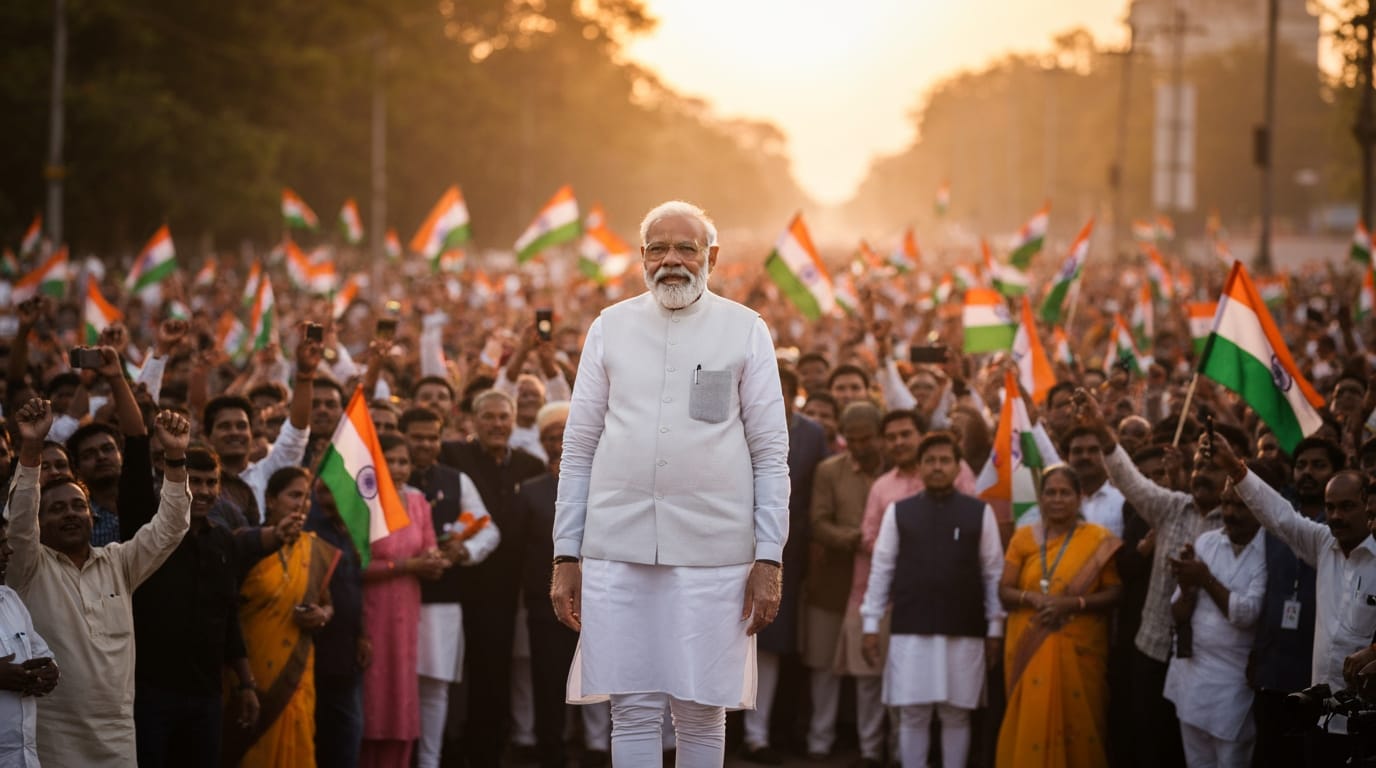
New Delhi, India – Narendra Modi today cemented his place in India's political annals, becoming the longest-serving elected Prime Minister of the nation. As of June 10, 2026, Modi's continuous tenure has reached 4,399 days, surpassing the record previously held by India's first Prime Minister, Jawaharlal Nehru, whose elected term spanned 4,398 days. This achievement underscores a remarkable period of sustained leadership in the world's largest democracy, characterized by ambitious reforms, significant economic shifts, and a redefined global posture for India.
Modi, who first assumed office on May 26, 2014, has now successfully led the Bharatiya Janata Party (BJP) and its allies through three consecutive general elections, a feat matched only by Nehru himself. His uninterrupted time at the helm reflects a profound connection with a significant segment of the electorate and a period of transformative governance that has reshaped India's internal landscape and international engagement. The milestone arrived as the nation grapples with both the opportunities and complexities inherent in a rapidly evolving global order and its own internal dynamics.
A Legacy of Durability: Surpassing a Founding Father
The distinction between "elected" and overall longest-serving Prime Minister is crucial to understanding today's milestone. While Jawaharlal Nehru holds the record for the overall longest tenure, serving 16 years and 286 days from August 15, 1947, his initial period was as interim Prime Minister before India's first general elections. Nehru's elected premiership began on May 13, 1952, following the inaugural general elections, making his elected term the benchmark that Prime Minister Modi has now exceeded. This particular record highlights not just longevity in power, but a consistent mandate from the Indian populace through successive electoral cycles.
Prime Minister Modi's journey began with a decisive victory in 2014, leading the BJP to a single-party majority for the first time in three decades. He secured an even larger mandate in 2019, further consolidating his power. The 2024 general elections, while seeing the BJP lose its outright majority, still resulted in a third consecutive term for Modi, albeit at the head of a coalition government, the National Democratic Alliance (NDA). This consistent electoral success in a nation as vast and diverse as India speaks volumes about his political acumen and public appeal. Prior to this, in July 2025, Modi had already surpassed Indira Gandhi's record as the second-longest continuously serving Prime Minister.
Decades of Transformation: Economic and Social Initiatives
Under Prime Minister Modi's leadership, India has embarked on an ambitious trajectory of economic and social development. His administration has overseen a period where India has strengthened its position as one of the world's fastest-growing major economies. Key initiatives have focused on digital transformation, with a rapid expansion of digital public infrastructure, aiming to bring governance and services closer to the common citizen.
Large-scale infrastructure development, spanning roads, railways, and ports, has been a cornerstone of his economic vision, designed to boost connectivity and foster economic growth. Welfare delivery mechanisms have seen significant improvements, with efforts to ensure that government programs reach beneficiaries more directly and efficiently. Official data indicates that nearly 250 million Indians have been lifted out of multidimensional poverty during his tenure, signifying broad-based socio-economic progress across the nation. Furthermore, the government has actively pursued and concluded major trade agreements with leading economies, enhancing India's global economic integration.
Navigating Internal Dynamics and Global Aspirations
While lauded for his developmental agenda, Prime Minister Modi's long tenure has also been marked by intense scrutiny and significant challenges. His premiership has faced criticism regarding what some observers describe as "democratic backsliding," citing concerns over the weakening of democratic institutions, individual rights, and freedom of expression. The government's approach has been characterized by a centralization of power, which has, at times, led to heightened tensions and even resignations among senior administrative officials. The BJP's strong ideological stance, often rooted in Hindu nationalism, has also drawn both fervent support and considerable opposition, shaping the country's social and political discourse.
On the international stage, Modi has positioned India as a more influential voice on global issues, including development, technology, climate action, and the priorities of the Global South. His foreign policy has actively sought to improve economic ties, bolster security partnerships, and deepen regional relations, indicating a robust and assertive diplomatic strategy. This dual focus on internal development and an elevated global role has defined India's trajectory under his leadership. The recent 2024 elections, which saw the BJP rely on coalition partners, present a new phase for his administration, requiring greater consensus-building in legislative efforts, particularly given the NDA's previous challenges in the Rajya Sabha where they often lacked a majority.
The Enduring Persona and Path Ahead
Narendra Modi's rise to power is a narrative often cited as an illustration of the opportunities within India's democratic system. Hailing from a humble socio-economic background and without the support of a political dynasty, his ascent to the highest elected office is considered a significant achievement. He is also notable as the first Prime Minister of India to be born after the nation gained independence in 1947. His consistent high approval ratings in independent global surveys have frequently positioned him among the world's most popular democratic leaders.
As Prime Minister Modi continues his historic third term, his administration faces the task of balancing accelerated development with inclusive growth, managing evolving geopolitical dynamics, and addressing internal societal challenges. His unprecedented longevity in office offers both stability and a continued focus on his long-term vision for India. The legacy of this extended period of leadership will undoubtedly be a subject of ongoing analysis, shaping perceptions of modern India's journey and its place in the 21st century.


