NATO Allies Seek Assurances Amidst Rising Trade Tensions and Shifting U.S. Security Policies
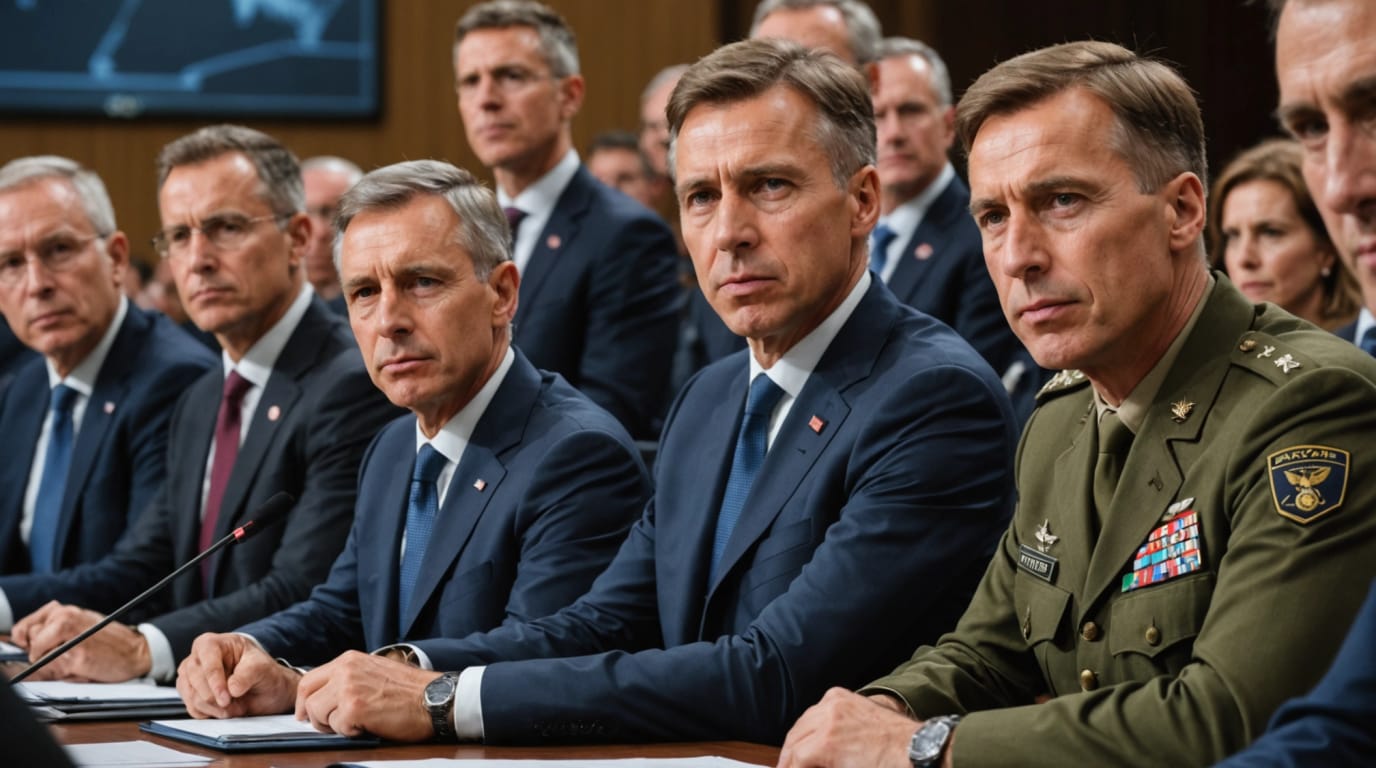
Brussels – As global uncertainties mount, NATO member states are seeking stronger assurances regarding collective defense and security commitments. These efforts come amid escalating trade disputes with the United States and growing concerns about the reliability of long-standing U.S. security guarantees under the current administration. The shifting geopolitical landscape is forcing European nations to re-evaluate their defense strategies and explore greater autonomy in security matters.
Concerns Over U.S. Commitment
Recent policy shifts in Washington have rattled many NATO allies. The imposition of tariffs on goods from allied nations, coupled with President Trump's rhetoric questioning the value of NATO, have fueled anxieties about the U.S.'s commitment to the transatlantic alliance. These concerns were further amplified after a tense exchange between President Trump and Ukrainian President Volodymyr Zelenskyy in Washington, leading to doubts about continued U.S. support for Ukraine.
Several European leaders have expressed worries about the potential for a more isolationist U.S. foreign policy. This concern is not new, but has become more acute. NATO Secretary-General Mark Rutte has publicly stated that European allies must increase their defense spending to more than 3% of their gross domestic product, with the Trump administration pushing for as much as 5%. This contrasts with the current NATO benchmark of at least 2%, which several European allies still fail to meet.
Bilateral Assurances and Defense Spending
In response to these uncertainties, some NATO members, particularly those on the eastern flank, are seeking bilateral security assurances from the United States. These nations, bordering Russia or its allies, feel particularly vulnerable and are looking for explicit guarantees of U.S. support in the event of aggression.
Poland and other eastern flank countries are investing heavily in U.S. weaponry to rapidly increase their defense capabilities. However, this approach has created some divisions within Europe, as other nations, like France, advocate for bolstering the EU defense industry. France is leading an effort to strengthen the European Defence Industrial Programme (EDIP), aiming to foster greater European self-reliance in defense matters.
Germany, along with other fiscally conservative states, has resisted calls for significant increases in defense spending, hindering the EDIP's progress. This divergence in approaches highlights the challenges in forging a unified European defense strategy.
The Push for European Defense Autonomy
The perceived wavering of U.S. commitment has spurred renewed discussions about European strategic autonomy. The idea is for the EU to develop its own military capabilities and reduce its dependence on the United States for security. This concept has gained traction in recent years, driven by a desire for Europe to play a more independent role in global affairs.
The EU is exploring various avenues to enhance its defense capabilities. These include increasing defense spending, pooling military resources, and fostering greater cooperation among European defense industries. The European Commission is also seeking to relax the bloc's debt rules to allow member states to invest more in defense.
One potential strategy involves placing more arms contracts with Ukraine's defense industry, integrating it into the European industrial network. Production costs in Ukraine are significantly lower, offering a relatively quick way to increase arms and ammunition supplies.
Implications for Ukraine
The shifting dynamics within NATO and the EU have significant implications for Ukraine. With the U.S. potentially reducing its support, Ukraine is seeking security guarantees from European nations. However, divisions within Europe over defense strategies and funding could undermine these efforts.
NATO membership for Ukraine remains a contentious issue. While some eastern European countries support offering Ukraine a clear path to membership, the United States and Germany are wary of any move that could escalate tensions with Russia.
The EU is exploring ways to provide financial and military assistance to Ukraine, but these efforts face challenges. Some member states are hesitant to commit significant resources, while others are concerned about the potential for corruption and misuse of funds.
Conclusion
The current geopolitical landscape presents both challenges and opportunities for NATO and its member states. While concerns about U.S. commitment and trade disputes have created anxieties, they have also spurred renewed efforts to strengthen European defense capabilities and foster greater strategic autonomy. The path forward will require navigating complex political dynamics, addressing budgetary constraints, and forging a unified vision for European security. The ability of NATO allies to adapt to these changing circumstances will be crucial in maintaining stability and deterring aggression in an increasingly uncertain world.


