NATO Jet Downs Suspected Ukrainian Drone Over Estonia in Precedent-Setting Interception
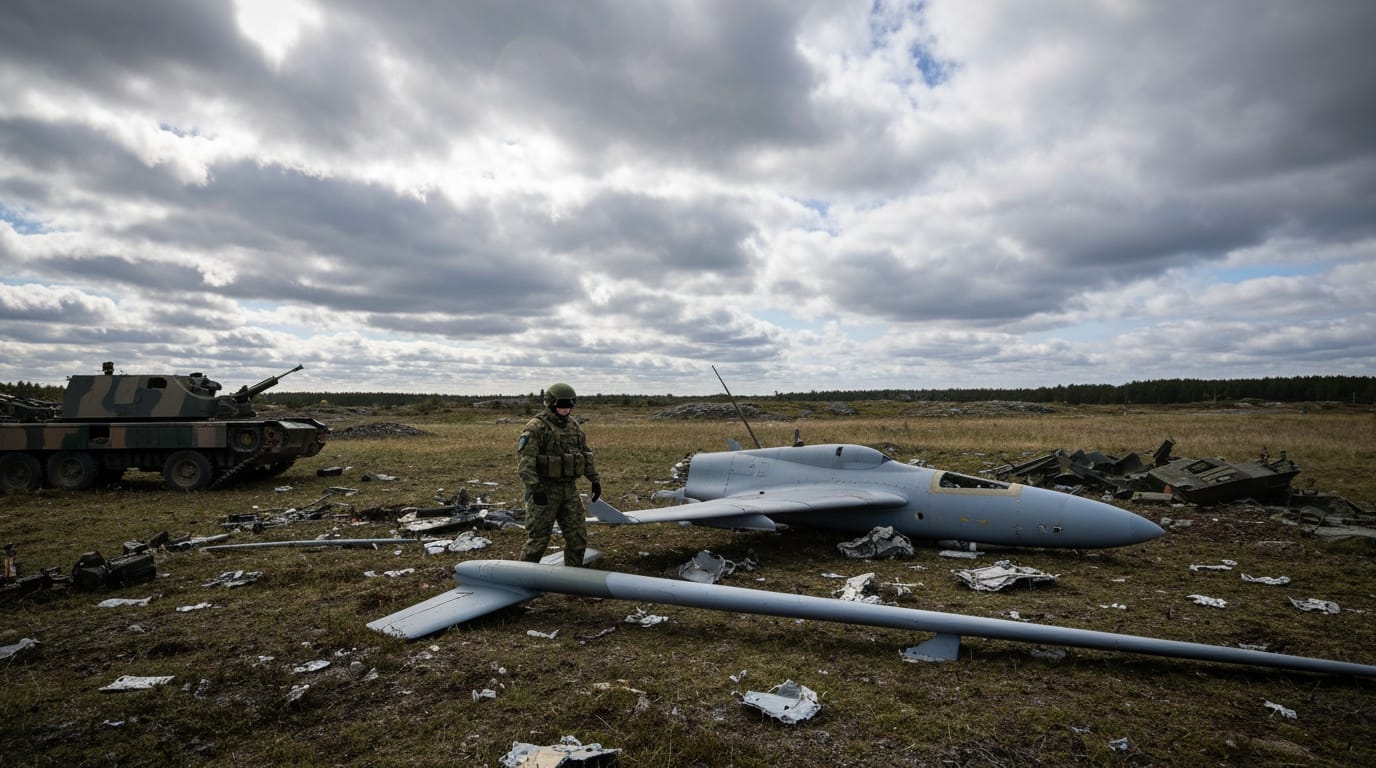
Tallinn, Estonia – May 19, 2026 – A NATO air policing jet today shot down a suspected Ukrainian drone that had violated Estonian airspace, marking the first time the alliance has taken kinetic action against an unmanned aerial vehicle over a Baltic state. The incident, occurring amidst heightened regional tensions and a surge in drone incursions, prompted an immediate apology from Kyiv and underscored the complexities of airspace management in the shadow of ongoing conflict.
The drone was intercepted and destroyed by a Romanian F-16 fighter jet operating as part of NATO’s Baltic Air Policing mission. Estonian officials quickly attributed the drone to Ukraine, suggesting it was likely targeting Russian territory but had been diverted, possibly by electronic warfare, and strayed into allied airspace. This unprecedented event highlights the growing challenges posed by drone technology in modern warfare and raises critical questions about regional security, the defensive posture of NATO, and the potential for miscalculation in an already volatile geopolitical landscape.
The Dramatic Interception Over Estonian Skies
The incident unfolded shortly after midday local time when Estonian radar systems detected an unidentified unmanned aerial vehicle (UAV) entering the country's airspace. The drone, suspected to be of Ukrainian origin, had been tracked as it transited Latvian airspace before continuing northward into Estonia. Latvian military authorities had previously issued an alert, coordinating with NATO air policing assets as the drone progressed.
A Romanian F-16, part of the NATO mission and stationed at Šiauliai Air Base in Lithuania, was scrambled to intercept the intruder. Following visual identification, and in adherence to established air defense procedures, the jet fired a single missile, downing the drone at approximately 12:14 PM local time. The suspected Ukrainian drone crashed into a marshy area between Lake Võrtsjärv and Põltsamaa in central Estonia, near Kablaküla village. No civilian casualties or property damage were reported. Estonian Defense Minister Hanno Pevkur confirmed the shootdown, emphasizing that it was the first instance of kinetic force being used against a drone over Estonian territory. The Estonian Internal Security Service has launched a criminal investigation to ascertain the drone's exact flight path, purpose, and the circumstances leading to its incursion. Authorities have also warned residents not to touch any potential debris.
A Troubling Pattern: Drone Incursions in NATO Airspace
This incident marks a significant escalation in a series of drone overflights that have plagued NATO member states bordering Russia and Ukraine. While this was the first kinetic downing by NATO air policing forces in the Baltic region, suspected Ukrainian drones have strayed into the airspace of Finland, Latvia, and Lithuania multiple times in recent months. These incursions have ranged from drones crashing into a power plant chimney in Estonia to others falling into lakes in Lithuania. Just last week, Latvia experienced political turmoil, including the resignation of its prime minister and defense minister, partly due to their handling of these persistent airspace violations.
NATO’s Baltic Air Policing mission, a continuous peacetime operation since 2004, is designed to safeguard the integrity of allied airspace. Allied air forces maintain a 24/7 readiness to intercept unidentified aircraft, a role that has taken on new urgency since Russia's full-scale invasion of Ukraine. The repeated drone incidents expose inherent challenges in detecting and responding to smaller, slower UAVs compared to traditional combat aircraft, prompting NATO to enhance its air policing capabilities.
Geopolitical Fallout and Accusations of Electronic Warfare
In the immediate aftermath, Ukraine's foreign ministry spokesperson, Heorhii Tykhyi, issued a public apology for the "unintended incidents," stating that Ukraine "apologize[s] to Estonia and all of our Baltic friends for such unintended incidents." Ukrainian Defense Minister Mykhailo Fedorov also reportedly offered an apology to his Estonian counterpart, Hanno Pevkur.
Kyiv, however, placed blame squarely on Russia, accusing Moscow of deliberately using electronic warfare (EW) measures to jam and redirect Ukrainian drones. Ukrainian officials stated that Russia is "redirecting Ukrainian drones into the Baltics with the use of its electronic warfare" and doing so "on purpose, together with intensified propaganda." Estonian Defense Minister Pevkur also acknowledged the likelihood of Russian jamming, suggesting the drone was aimed at targets in northwestern Russia but lost control. This theory aligns with previous assessments by Lithuanian officials regarding drone crashes in their territory.
Russia, conversely, has seized upon the drone incursions to advance its own narrative. The SVR, Russia's foreign intelligence agency, recently claimed without evidence that Latvia was planning to allow Ukraine to use its territory for drone attacks against Russia, a claim Latvia vehemently denied. Moscow has also used these incidents to issue veiled threats, stating that NATO membership "will not protect the accomplices of terrorists from just retribution." This pattern of misdirection and propaganda further complicates efforts to maintain regional stability and clarify responsibility.
Broader Implications for Regional Security and Future Warfare
The downing of the suspected Ukrainian drone marks a pivotal moment, establishing a new precedent for NATO’s engagement with unmanned threats in its airspace. Brigadier General Riivo Valge, Estonia's air force commander, noted that a residual threat remains for the Baltic states, cautioning that similar incidents could recur. This kinetic interception underscores NATO's readiness to defend its territorial integrity, even from unintended incursions stemming from the conflict in Ukraine.
The proliferation of drone technology, its increasing sophistication, and the widespread use of EW tactics by both sides in the Ukraine war present persistent challenges for air defense systems. The incident also highlights the complexities of international law concerning airspace violations by military drones, particularly when intent and control are ambiguous. While Ukraine has rapidly developed its drone capabilities for reconnaissance and strike operations against Russian targets, the potential for these systems to stray into allied territory remains a significant concern.
In response to the escalating drone activity, NATO announced its intention to further strengthen patrols in the region to mitigate future risks. The incident serves as a stark reminder of the volatile security environment along NATO's eastern flank and the constant vigilance required to prevent miscalculation or unintended escalation, even from seemingly minor incursions. As investigations continue, the international community watches closely for further details that could shed light on the exact nature of the drone and the full implications of its dramatic end over Estonian skies.


