NATO Unity Faces Stern Test as Trump Arrives at Ankara Summit
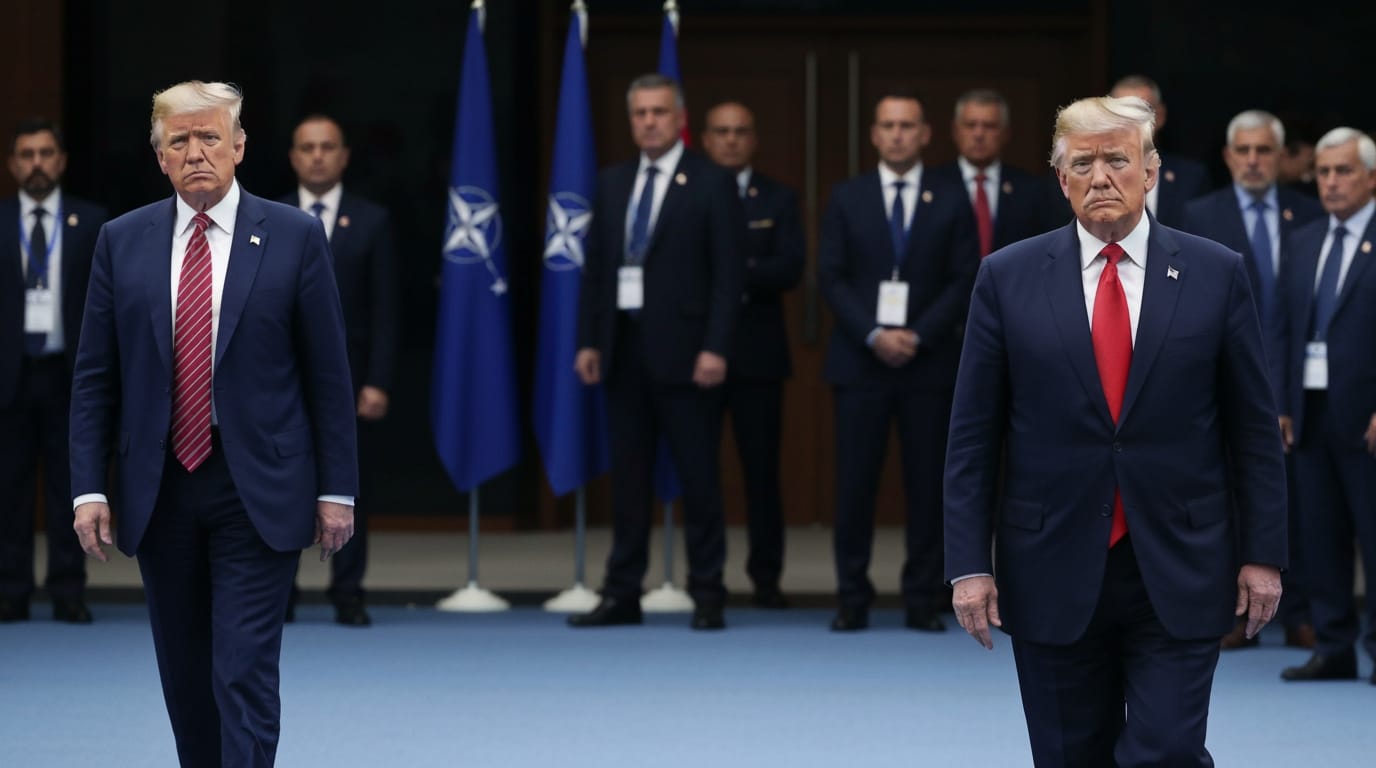
ANKARA, Turkey – As leaders from the North Atlantic Treaty Organization (NATO) convene in Ankara on July 7-8, a palpable tension hangs over the alliance, driven by U.S. President Donald Trump's long-standing skepticism and escalating demands for burden-sharing. The summit in the Turkish capital is poised to be a critical juncture, testing the cohesion of the 77-year-old transatlantic alliance amidst ongoing geopolitical shifts and the looming shadow of Russia's actions in Eastern Europe. President Trump's transactional approach to international relations and his pointed criticisms of member states' defense spending have set the stage for what many anticipate will be one of NATO's most challenging gatherings.
Trump's Unwavering Pressure on Alliance Spending
President Trump has consistently maintained that the United States carries a disproportionate financial burden within NATO, frequently labeling the relationship as "not reciprocal." His critiques, which date back to his first presidential campaign when he famously called NATO "obsolete," have intensified during his second term, pushing allies to drastically increase their defense contributions. Ahead of the Ankara summit, Trump reiterated his stance, characterizing the U.S. commitment to NATO as "ridiculous" given perceived imbalances in spending. He has pointed to figures indicating the U.S. vastly outspends its allies, seemingly citing NATO's 2025 expenditure data.
The previous year's NATO summit in The Hague saw most member states agree to an ambitious target: increasing defense spending to 5% of their Gross Domestic Product (GDP) by 2035, a significant jump from the earlier 2% goal. This commitment, hailed by the White House as a "monumental victory" for President Trump, was a direct result of his persistent pressure. However, while some European nations, particularly Nordic countries with robust fiscal health, have accelerated their spending, others like France and the United Kingdom have lagged. Analysts suggest that the Ankara summit will scrutinize not just budgetary pledges, but tangible advancements in defense capabilities, raising questions about whether President Trump will acknowledge the progress or continue to lambast allies for past shortcomings or insufficient support for U.S. operations, particularly concerning the conflict in Iran.
Turkey's Strategic Gambit and Bilateral Deals
The choice of Ankara as the summit's host provides a unique platform for Turkish President Recep Tayyip Erdoğan, who aims to leverage the event to enhance his international standing and reinforce his image domestically, especially amid internal political challenges. Erdoğan has positioned Turkey as an "indispensable ally," seeking to burnish his credentials as a global power broker. This goal is facilitated by a notably warm personal relationship between Erdoğan and Trump, with the U.S. President reportedly attending the summit largely due to Erdoğan's personal request, referring to the Turkish leader as "a hell of a leader" and a good friend.
A key element of the bilateral discussions in Ankara revolves around potential significant defense deals. There is widespread speculation that President Trump is preparing a substantial "gift bag" for Erdoğan, which could include the sale of F-35 fighter jets and F-110 jet engines. Such a move would mark a dramatic reversal of the 2019 decision to expel Turkey from the F-35 program following Ankara's controversial acquisition of Russian-made S-400 air defense systems. The U.S. had previously sanctioned Turkey and cited concerns that the S-400s could compromise the F-35's stealth capabilities and provide intelligence to Russia. Despite congressional opposition and existing U.S. laws prohibiting Turkey from operating the S-400 system while seeking F-35s, President Trump has indicated his willingness to "make him very happy" regarding these sales, underscoring the strong personal dynamic driving U.S.-Turkey relations within the alliance.
Cracks in the Transatlantic Foundation
Beyond the immediate financial demands and bilateral negotiations, President Trump's actions and rhetoric continue to foster deep anxiety among European allies regarding the long-term stability and very nature of NATO. Many fear abandonment by a U.S. president they perceive as unpredictable, especially in the face of a more assertive Russia. This concern is amplified by Washington's recent review of its military force posture in Europe, which could lead to further troop withdrawals and a scaling back of U.S. commitments, compelling Europe to assume greater responsibility for its own defense.
Another point of contention has been Trump's disappointment over what he views as insufficient support from European allies for U.S. military operations against Iran. He has criticized countries for restricting the use of their bases for American forces and for not becoming more actively involved in the conflict. This perceived lack of solidarity has fueled Trump's arguments for a recalibration of the transatlantic burden. While NATO Secretary General Mark Rutte has acknowledged that President Trump's leadership has inadvertently led to a "new NATO" with increased European military contributions, the question remains whether the U.S. President will accept this as a victory or continue to push for more, potentially undermining the very unity he seeks to strengthen. The discussion around the possible cancellation of future NATO summits, such as the one tentatively planned for Albania next year, further signals a potential shift in the U.S.'s enduring engagement with the alliance.
A Future Defined by Ankara's Outcomes
The Ankara summit is thus more than just a routine gathering; it represents a high-stakes moment for the North Atlantic Treaty Organization. The meeting will demonstrate whether the alliance can navigate the complex dynamics created by President Trump's leadership, reconcile divergent national interests, and reaffirm its collective defense commitments in a turbulent global landscape. The discussions will inevitably shape perceptions of NATO's strength, its capacity for collective action, and its relevance in a world grappling with persistent threats from Russia and new challenges in the Middle East.
Ultimately, the Ankara summit will reveal the extent to which NATO allies can meet the U.S.'s demands while preserving their own strategic autonomy and the fundamental principle of unity that has underpinned the alliance for decades. The outcomes will not only influence military strategy and defense spending but will also send a powerful message about the future trajectory of transatlantic relations and the enduring legacy of President Trump's impact on global security.


