Nepal's New Prime Minister Balendra Shah Faces Immediate Geopolitical Balancing Act Amidst India, China, and U.S. Scrutiny
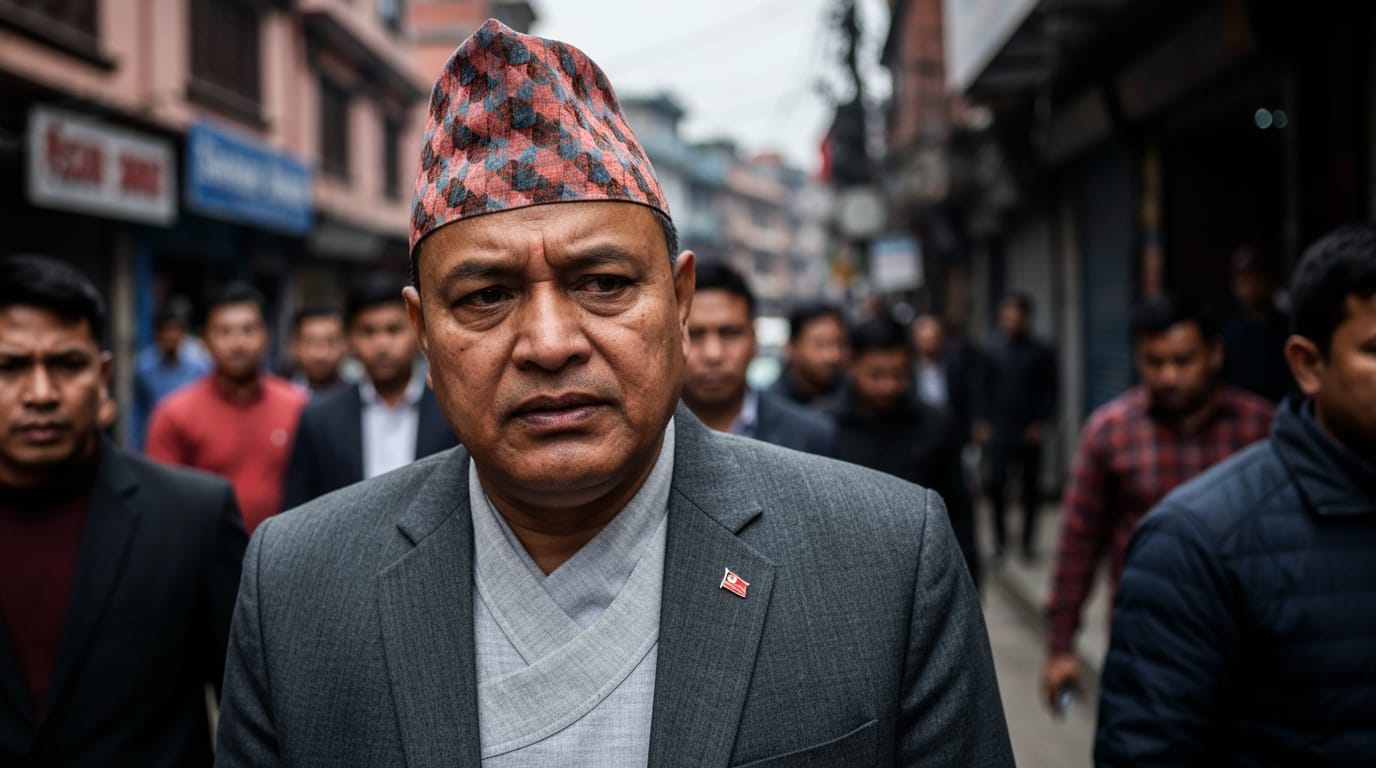
KATHMANDU – Nepal's political landscape has been significantly reshaped following the recent landslide victory of Balendra Shah, a former rapper and leader of the Rastriya Swatantra Party (RSP), who is set to assume the demanding role of Prime Minister. Shah's ascent, viewed as a triumph for a "Gen Z movement" and a mandate for change, thrusts him onto a complex international stage where Nepal must deftly navigate its relationships with powerful neighbors India and China, alongside the increasingly assertive presence of the United States. His administration inherits a delicate geopolitical balancing act, crucial for the landlocked Himalayan nation's economic stability and sovereign future.
A New Era Dawns with an Unprecedented Mandate
Balendra Shah, widely known as Balen, secured an overwhelming victory in the March 5 elections, defeating veteran politician and former Prime Minister K.P. Sharma Oli in the Jhapa-5 constituency with a significant margin of 68,348 votes to 18,724. This electoral outcome, described by a senior RSP leader as "the most beautiful endorsement of the gen Z movement," signifies a widespread desire for good governance and a departure from traditional political norms. Shah's rise, from a rapper to the nation's top political office, symbolizes a generational shift and a popular yearning for accountability and responsive leadership. His government is expected to prioritize these domestic aspirations, yet the critical challenge of foreign policy, particularly concerning the competing interests of India, China, and the U.S., looms large over his nascent premiership.
The Perennial Tightrope Between Two Giants: India and China
Nepal's foreign policy has historically been defined by its geography, nestled between two Asian powerhouses: India to the south and China to the north. For decades, Kathmandu has strived to maintain "equi-proximity" with both nations, a diplomatic strategy aimed at preventing undue influence from either side. India has long regarded Nepal as a natural ally, underpinned by deep historical, cultural, and religious ties, including an open border that facilitates extensive people-to-people contact and trade. However, this close relationship has also been marked by occasional friction, notably the 2015 Indian blockade, which fueled Nepali nationalism and prompted leaders like former Prime Minister Oli to pivot towards Beijing.
Under previous administrations, particularly during Oli's tenure, Nepal deepened its engagement with China, signing onto the Belt and Road Initiative (BRI) and securing access to four Chinese ports, thereby ending India's long-standing monopoly on transit access for the landlocked nation. This move, while largely symbolic at the time, represented a monumental step towards reducing Nepal's dependency on India and enhancing its strategic options. Meanwhile, other political figures, such as former Prime Minister Sher Bahadur Deuba, have been characterized as pursuing stronger ties with India and the United States, illustrating the internal political divisions regarding foreign policy alignment. The dynamic nature of Nepal's internal politics often sees alliances shift, influencing the country's leanings towards one power or another, presenting a constant challenge for any incoming government to maintain a balanced stance.
The Emerging Third Pillar: The United States' Growing Influence
The geopolitical equation for Nepal has become increasingly complex with the growing involvement of the United States. While traditionally focused on its immediate neighbors, Nepal now finds itself navigating the broader strategic competition between China and the U.S. This shift is particularly evident in the context of the U.S. Indo-Pacific Strategy, which seeks to counter China's expanding influence in the region. Nepal's engagement with the U.S., including discussions between Nepali Foreign Ministers and U.S. Secretaries of State, underscores this evolving dynamic.
Diplomatic overtures from Washington are now a common feature following political transitions in Kathmandu. For instance, following former Prime Minister Sushila Karki's assumption of office in September 2025, she received congratulatory calls from Indian Prime Minister Narendra Modi and held separate meetings with the Chinese and U.S. ambassadors on the same day. This confluence of diplomatic engagement highlights the intensified international interest in Nepal's political trajectory. Analysts suggest that recent political realignments in Nepal could benefit the United States and India, potentially impacting China's diplomatic sway in the Himalayan nation. The competition for influence translates into significant development aid, infrastructure projects, and security cooperation offers from all three global players, requiring Nepal's leadership to carefully weigh the benefits and potential pitfalls of each engagement.
Prime Minister Shah's Diplomatic Tightrope
For Prime Minister Balendra Shah, the immediate imperative will be to articulate a clear and consistent foreign policy that serves Nepal's national interests while navigating the competing demands of these global powers. His administration will need to leverage these external relationships for the country's economic growth and development, which were central promises of his election campaign. The challenge lies in securing much-needed investments and support without compromising Nepal's sovereignty or becoming a proxy in a larger geopolitical struggle.
The "equi-proximity" policy will face rigorous testing. Shah's government must carefully manage infrastructure projects, aid packages, and diplomatic engagements to ensure they genuinely contribute to Nepal's progress. Past experiences, such as the controversies surrounding the Millennium Challenge Corporation (MCC) compact with the U.S. or the implementation of BRI projects with China, serve as crucial lessons in balancing national aspirations with international partnerships. Maintaining transparent decision-making and adhering to a "Nepal-first" approach will be essential to retain public trust and secure a stable footing for his government. The global community will be watching closely to see how this new-generation leader manages to turn Nepal's challenging geography into a diplomatic advantage, rather than a vulnerability.
Conclusion: A Pivotal Moment for Nepali Diplomacy
As Prime Minister Balendra Shah embarks on his term, he faces not only the high expectations of a populace yearning for change but also the formidable task of steering Nepal through a complex geopolitical environment. His ability to maintain strategic autonomy, foster economic development, and preserve national interests amidst the intricate power dynamics between India, China, and the United States will define his legacy. The success of his administration hinges on a shrewd and pragmatic foreign policy that transforms Nepal's delicate position into an opportunity for growth and enhanced sovereignty, ensuring that the nation remains a sovereign actor on the world stage rather than merely a battleground for external influence.


