Netanyahu Rushes to Washington Amid High-Stakes Iran Nuclear Talks
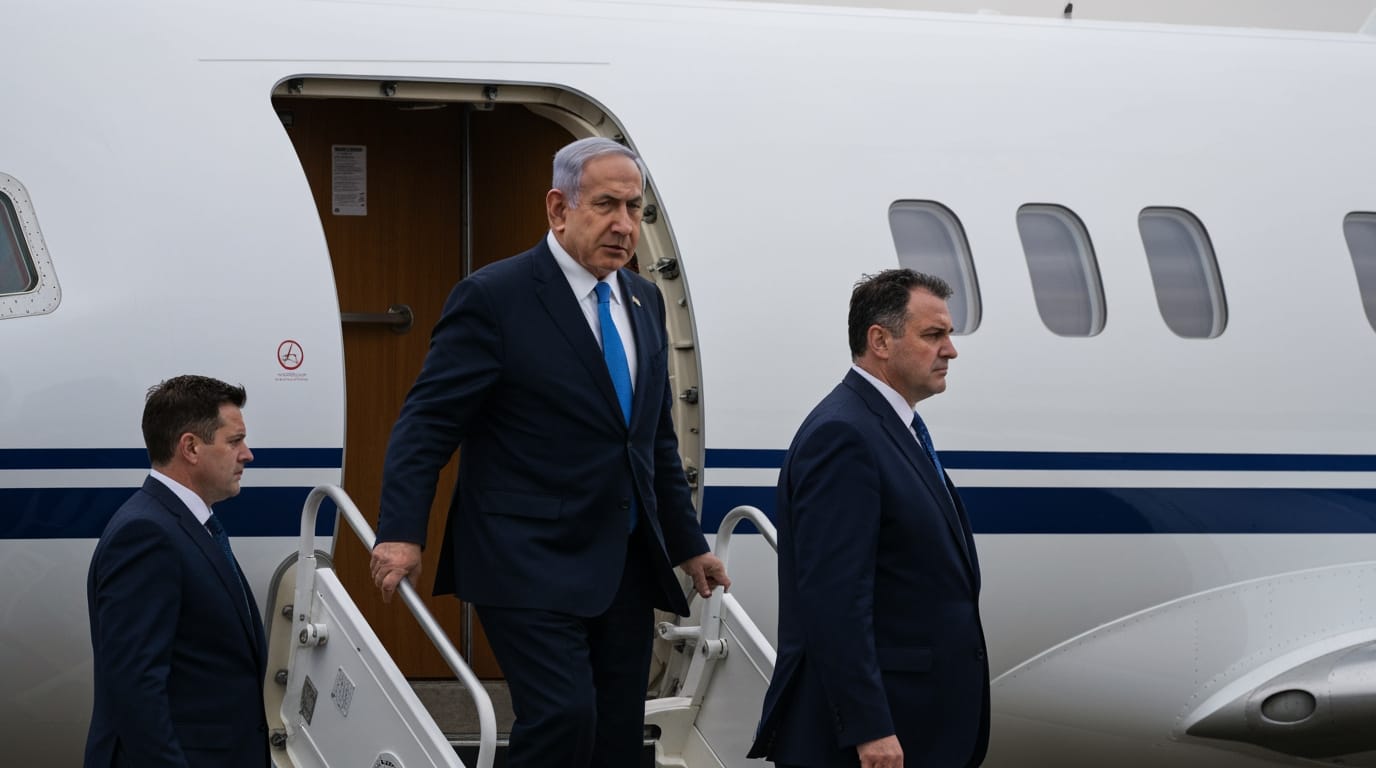
Washington D.C. — Israeli Prime Minister Benjamin Netanyahu has made an urgent trip to Washington, D.C., this week, signaling deep concern over the resumption of nuclear negotiations between the United States and Iran. His visit, expedited from its original February 18 schedule, underscores Israel's determination to shape the outcome of these critical talks, which Tel Aviv fears could fall short of dismantling Iran's broader military threats. Netanyahu is expected to meet with U.S. President Donald Trump on Wednesday, with the future of Iran's nuclear ambitions and regional stability dominating their agenda.
The Urgent Diplomatic Push
Prime Minister Netanyahu's decision to move up his visit reflects a growing sense of apprehension within Israel regarding the direction of the renewed U.S.-Iran diplomatic engagement. The Israeli premier aims to impress upon President Trump the necessity of expanding the scope of any potential agreement with Tehran. Israel's long-standing position dictates that negotiations must extend beyond mere nuclear enrichment limitations to include a complete halt to Iran's uranium enrichment, stringent restrictions on its ballistic missile program, and an end to its support for militant proxies across the Middle East. This stance stems from a profound fear that a "narrow agreement," focusing solely on the nuclear program, could leave Israel vulnerable to other Iranian threats, potentially constraining its ability to act independently or even leading to a direct confrontation with the U.S. over policy.
Sources close to Netanyahu indicate that the goal of this "maintenance trip" is to clarify Israel's positions directly to the American president, particularly in light of indirect talks between the U.S. and Iran that commenced last Friday in Oman. Israeli officials remain unconvinced that President Trump is fully committed to Israel's comprehensive demands, fueling a "deep uncertainty" about the American negotiating strategy. This unease is heightened by observations that Trump has often referred predominantly to the Iranian nuclear program, sometimes overlooking Iran's missile capabilities or its network of regional allies.
Resurfacing Diplomacy and Renewed Tensions
The backdrop to Netanyahu's visit is the recent resumption of indirect talks between the United States and Iran. U.S. envoys, including Steve Witkoff and Jared Kushner, met with Iranian Foreign Minister Abbas Araghchi in Oman last Friday, marking a significant, albeit tentative, step in diplomacy. President Trump described these initial discussions as "very good," signaling a potential pathway for further engagement. However, Iran's position remains resolute: while it has expressed willingness to discuss its nuclear program, it has consistently rejected any negotiations concerning its ballistic missile development or its backing of regional militant groups. Iranian officials maintain that their nuclear program is peaceful and exclusively for civilian purposes, despite continued violations of previous agreements. Some Iranian figures have floated the idea of diluting enriched uranium from 60% to 20% in exchange for comprehensive sanctions relief, a proposal that falls short of Israeli and some international demands for a complete halt.
The current diplomatic overtures occur amidst a notable U.S. military buildup in the region, a measure that some analysts suggest could be intended to exert pressure on Tehran. This military posture, however, has also been met with warnings from Iranian officials, who have threatened to target U.S. military bases in the region should any attack be launched against Iran.
A Tumultuous History: From JCPOA to Conflict
The current situation is deeply rooted in a turbulent history of U.S.-Iran relations, particularly concerning Iran's nuclear program. In 2018, the Trump administration unilaterally withdrew from the Joint Comprehensive Plan of Action (JCPOA), commonly known as the Iran nuclear deal, which had been negotiated by the Obama administration. This withdrawal, heavily encouraged by Israel, launched a "maximum pressure" campaign aimed at forcing Iran into a more comprehensive agreement that would also address its missile program and regional activities.
The period following the U.S. withdrawal saw escalating tensions. The Biden administration, upon taking office, initially sought to revive the JCPOA, but those efforts ultimately stalled amid ongoing regional instability and other international developments. A critical turning point occurred in June 2025, when a 60-day deadline set by President Trump for a new nuclear agreement expired without resolution. This breakdown in negotiations led to a full-scale, albeit brief, war between Israel and Iran, with the U.S. joining Israel in a 12-day series of strikes on Iranian military and nuclear sites. The International Atomic Energy Agency (IAEA) declared Iran in breach of its non-proliferation obligations in June 2025, further highlighting the program's advanced state. Widespread anti-government protests swept across Iran in late 2025, met with a severe crackdown by authorities, adding another layer of complexity to the domestic and international landscape.
Regional Stability and Global Implications
The implications of the current U.S.-Iran negotiations extend far beyond their immediate participants, impacting regional stability and global non-proliferation efforts. Israel views Iran's pursuit of nuclear capabilities, coupled with its advanced missile technology and extensive network of proxies, as an existential threat. Countries across the Middle East closely watch these developments, concerned about a potential arms race or increased regional destabilization.
The international community, including the IAEA, has consistently sought to monitor and curb Iran's nuclear activities. The failure of previous diplomatic attempts and the recent military confrontations underscore the difficulty in finding a mutually acceptable path forward. While some nations prioritize the immediate de-escalation of nuclear enrichment, others, like Israel, insist on a more holistic approach that addresses all facets of Iran's military capabilities and regional influence. The divergent perspectives make a comprehensive resolution exceptionally challenging.
An Uncertain Path Forward
As Prime Minister Netanyahu meets with President Trump, the diplomatic tightrope walk over Iran's nuclear program continues. The urgency of the Israeli leader's visit underscores the profound anxieties gripping the region, with the specter of a nuclear-armed Iran remaining a central concern. While the resumption of U.S.-Iran talks offers a glimmer of diplomatic hope, the significant gaps between the demands of the U.S. and Israel on one side, and Iran's unwavering positions on the other, present formidable obstacles. The outcome of these discussions will not only shape the trajectory of Iran's nuclear program but will also profoundly influence the delicate balance of power in the Middle East for years to come.


