Netanyahu Visits Hungary Amid ICC Arrest Warrant Controversy
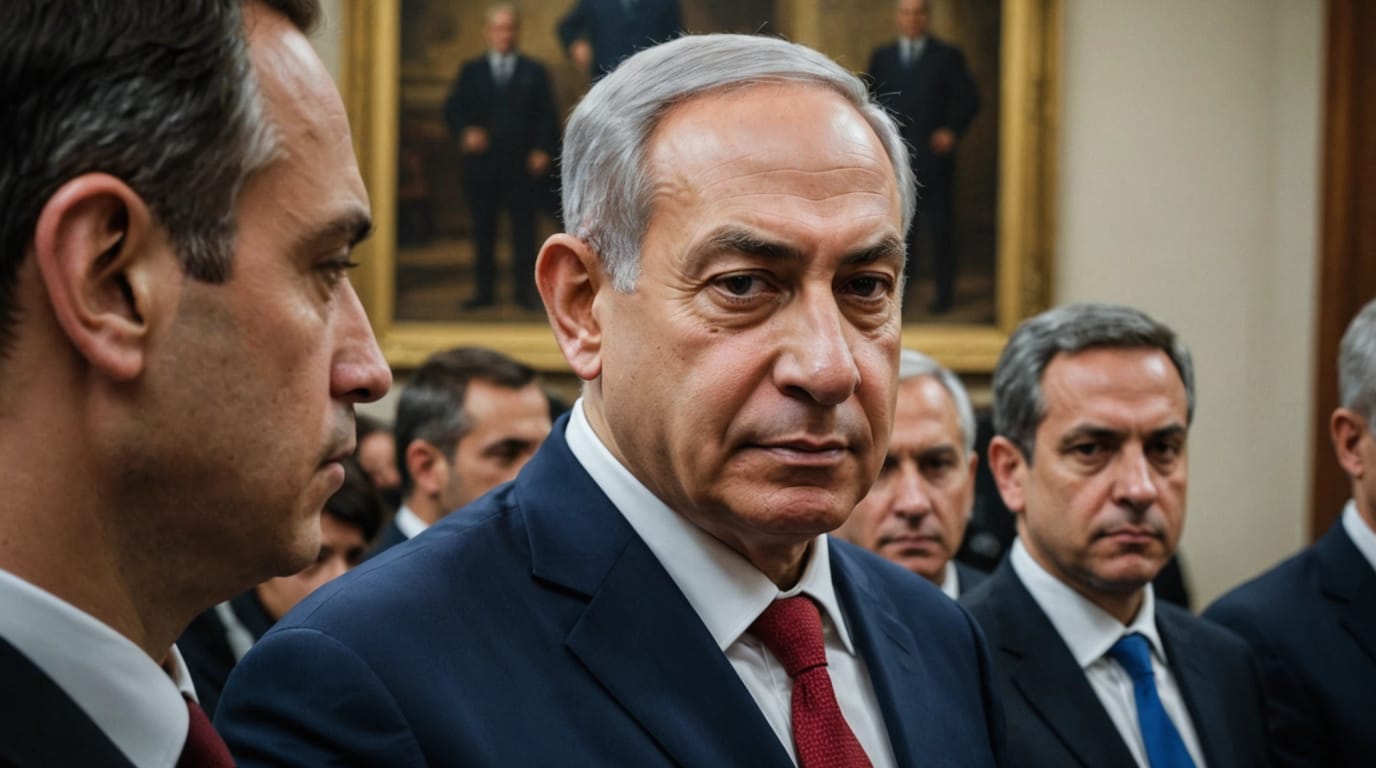
Israeli Prime Minister Benjamin Netanyahu is set to visit Hungary from April 2nd to April 6th, despite an outstanding arrest warrant issued by the International Criminal Court (ICC) for alleged war crimes and crimes against humanity in Gaza. The visit, at the invitation of Hungarian Prime Minister Viktor Orbán, has sparked international debate, raising questions about Hungary's obligations under international law and the implications for the ICC's authority.
Defiance of the ICC
The ICC issued arrest warrants in November 2024 for Netanyahu, his former Defense Minister Yoav Gallant, and Hamas leader Ibrahim Al-Masri, accusing them of war crimes and crimes against humanity related to the conflict in Gaza. The charges against Netanyahu and Gallant include "starvation as a method of warfare," intentionally targeting civilians, murder, persecution, and other inhumane acts. The ICC later terminated proceedings against Al-Masri following confirmation of his death.
Hungary is a member of the ICC and a signatory to the Rome Statute, which obligates member states to cooperate fully with the court, including arresting and surrendering individuals subject to arrest warrants. However, Orbán has publicly rejected the ICC's decision, calling it "outrageously impudent" and "cynical." He vowed to disregard the warrant and invited Netanyahu to Hungary, assuring him that the ICC ruling would have "no effect" there.
Hungary's Foreign Minister, Péter Szijjártó, has also criticized the ICC's move, calling it "shameful and absurd." He stated that it "discredited the institution" and confirmed it as "a politically motivated body," adding that such decisions would affect Hungary's future cooperation with the court.
Hungary's Justification
Hungary argues that it is not required to comply with the ICC's arrest warrant because it has not "promulgated" the relevant provisions of the Rome Statute into domestic law. This means that the ICC Statute has not been enacted as an Act of Parliament in Hungary.
However, legal experts argue that this justification violates Hungary's binding obligations under both the Rome Statute and general international law. Article 88 of the Rome Statute legally obligates states to ensure that their national legal framework enables full cooperation with the ICC, including the arrest and surrender of individuals subject to warrants.
The Euro-Med Human Rights Monitor has stated that Hungary's refusal to execute the ICC arrest warrant constitutes a serious breach of its obligations under the Rome Statute and may trigger formal action by the Assembly of States Parties, including condemnation, diplomatic repercussions, and measures to confront deliberate non-compliance.
International Reactions
Amnesty International has called on Hungary to arrest and surrender Netanyahu to the ICC upon his arrival. The organization's head of Global Research, Advocacy, and Policy, Erika Guevara-Rosas, stated that Netanyahu is an alleged war criminal, and any trip he takes to an ICC member state that does not end in his arrest would embolden Israel to commit further crimes against Palestinians.
Several other ICC member states, including France, Germany, and Italy, have also stated or suggested that they would not comply with the ICC's request to arrest Netanyahu if he traveled to their countries. The United States, which is not a member of the ICC, has sanctioned the court for issuing the arrest warrants.
The Dutch government, the host of the ICC in The Hague, has announced that Netanyahu would be arrested under the Rome Statute if he were to set foot on Dutch soil.
Strengthening Bilateral Ties
Netanyahu's visit to Hungary is expected to focus on deepening bilateral cooperation in defense, innovation, energy, and trade. Regional security and developments in the Middle East are also on the agenda.
Hungary has emerged as one of Israel's strongest allies in Europe, staunchly backing the Jewish state in international arenas as well as in the European Union and at NATO. The two countries have a close relationship, with strong ties between Netanyahu and Orbán, who has been in power since 2010.
Netanyahu and Orbán are also expected to discuss potential Hungarian support for U.S. President Donald Trump's controversial Gaza plan, which involves rebuilding the enclave and resettling its population elsewhere. Netanyahu is reportedly seeking to build a coalition of countries backing Trump's plan.
Domestic Concerns in Israel
Netanyahu's trip to Hungary comes as negotiations between Israel and Hamas continue over a potential hostage release deal. Families of the hostages are protesting, demanding that the government do more to secure their release. Some have expressed frustration that Netanyahu is traveling to Hungary instead of focusing on the hostage negotiations.
Netanyahu is also currently on trial for corruption in Israel. He informed the Jerusalem District Court that he would be traveling to Budapest from Wednesday through the weekend.
Implications and Conclusion
Netanyahu's visit to Hungary, despite the ICC arrest warrant, highlights the challenges the court faces in enforcing its decisions and the divisions within the international community regarding the Israeli-Palestinian conflict. Hungary's defiance of the ICC raises questions about the country's commitment to international law and its obligations as a member of the court.
The visit is likely to further strain relations between Hungary and other European Union member states that support the ICC's authority. It also underscores the close relationship between Netanyahu and Orbán, who have both faced criticism for their policies and rhetoric.
As Netanyahu arrives in Budapest, the world will be watching to see how Hungary handles its obligations under international law and what message the visit sends about the future of international justice. The visit also occurs as Maya Kadosh, Israel's new ambassador to Hungary, has arrived in Hungary, with the goal to place even greater emphasis on strengthening the friendly alliance between the two countries.