Netflix Bows Out of Warner Bros. Discovery Bid, Paramount Skydance Poised for Historic Acquisition
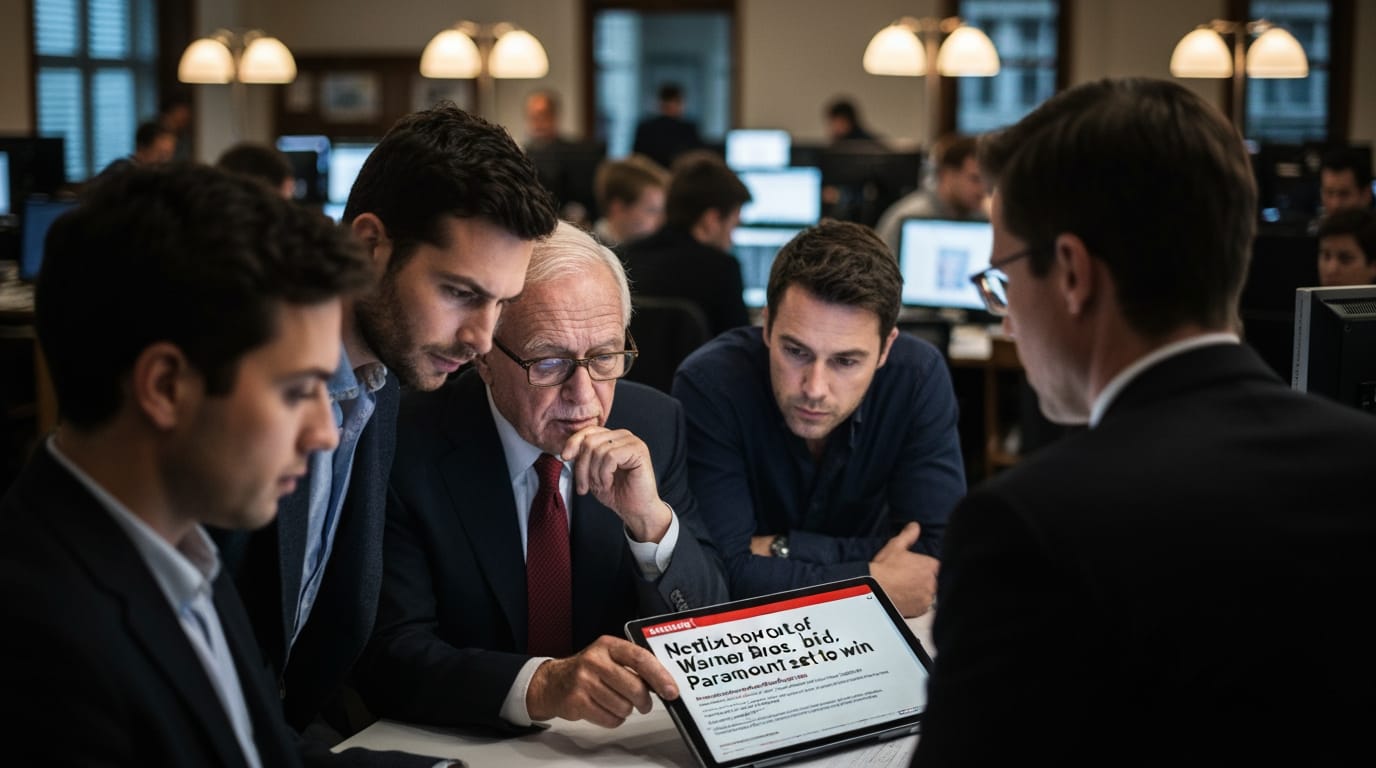
Hollywood braces for a seismic shift as Netflix withdraws its offer for Warner Bros. Discovery, clearing the path for Paramount Skydance to create a new media behemoth in an acquisition valued at over $110 billion. The dramatic turn of events, culminating in Netflix's decision on Thursday, February 26, 2026, marks a pivotal moment in the ongoing streaming wars, signaling a definitive victory for Paramount's aggressive all-cash strategy and a return to financial discipline for the streaming pioneer. The proposed merger between Paramount Skydance and Warner Bros. Discovery (WBD) promises to reshape the global entertainment landscape, consolidating vast content libraries, streaming platforms, and news operations under a single roof, but it also sets the stage for intense regulatory scrutiny and significant integration challenges.
The Climax of a Contentious Bidding War
Netflix officially announced its withdrawal from the race to acquire Warner Bros. Discovery's key assets, citing that the deal was "no longer financially attractive" at the elevated price required to match Paramount Skydance's revised offer. This decision came after WBD's board of directors declared Paramount Skydance's sweetened, all-cash bid to be a "superior proposal," triggering a four-business-day window for Netflix to counter or concede. Netflix Co-Chief Executives Ted Sarandos and Greg Peters emphasized the company's commitment to financial discipline, stating the transaction was always a "nice to have" at the right price, not a "must have" at any cost. Following the announcement, Netflix's shares reportedly jumped 10% in extended trading, indicating investor approval of its prudent approach. This stunning reversal hands Paramount Skydance a clear path to integrate Warner Bros. Entertainment, DC Comics/Studios, HBO Max, and a host of other iconic brands into its burgeoning empire.
A Battle of Strategic Philosophies
The contest for Warner Bros. Discovery, which emerged as an acquisition target in Fall 2025, has been a months-long saga defined by contrasting corporate strategies and fierce competition. Netflix initially secured an agreement with WBD on December 4, 2025, to acquire its streaming and studios division for an enterprise value of approximately $82.7 billion. This deal would have seen Netflix take ownership of Warner Bros.' film and television studios, HBO, and HBO Max, while WBD's Global Linear Networks, including CNN and TNT, would be spun off into a separate entity. This move represented a significant departure from Netflix's long-standing "builders, not buyers" ethos, signaling a strategic shift towards acquisition-led expansion to bolster its content library and market position.
However, Paramount Skydance, under the leadership of David Ellison and backed by his father, Oracle co-founder Larry Ellison, launched a persistent and increasingly aggressive "hostile takeover bid" for the entirety of WBD. Paramount argued its all-cash offer, initially $108.4 billion ($30 per share) in December 2025, was superior and would face fewer regulatory hurdles compared to Netflix's partial acquisition. The company also highlighted concerns that a Netflix-WBD merger could concentrate market power and diminish theatrical film distribution. Paramount's tenacity paid off when it increased its bid to $110.9 billion ($31 per share) on February 25, 2026, sweetening the offer with a substantial $7 billion regulatory termination fee and a $2.8 billion fee to cover WBD's obligation to Netflix if the deal fell through. This comprehensive all-cash proposal, financially backed by the Ellison family, Redbird Capital, Middle Eastern sovereign wealth funds, and extensive debt financing, ultimately swayed WBD's board.
The Dawn of a New Media Conglomerate
With Netflix's exit, Paramount Skydance is poised to create one of Hollywood's most formidable entertainment companies. The acquisition will unite two major film studios, Warner Bros. Pictures and Paramount Pictures, along with two significant streaming platforms, HBO Max and Paramount+. Furthermore, it will bring together prominent news operations like CNN and CBS, alongside a vast array of cable networks such as TNT, TBS, and Discovery Channel. This consolidation promises to yield a powerful new entity with an unparalleled content portfolio, ranging from DC Comics and Harry Potter franchises to the entire library of CBS and Paramount's iconic films and series.
A significant implication of this merger lies in the live sports landscape. The combination of TNT Sports and CBS Sports will create a formidable portfolio of sports rights, rivaling ESPN's offerings. This could include rights to the NFL, College Football Playoff, March Madness, MLB, NHL, and major golf tournaments, significantly enhancing Paramount's competitive edge in attracting and retaining subscribers through live event programming.
However, the path forward for the newly combined entity is not without substantial challenges. Warner Bros. Discovery has been grappling with a significant debt load, exceeding $43 billion, since its own merger in 2022. Paramount's acquisition will add billions more in debt, raising questions about the financial sustainability and integration risks of such a leveraged deal. Furthermore, the merger is anticipated to face rigorous antitrust scrutiny from the U.S. Department of Justice (DOJ), with some lawmakers already voicing concerns about potential anti-competitive impacts and political favoritism given the Ellison family's ties.
Reshaping the Entertainment Landscape
This latest development underscores the relentless drive towards consolidation in the streaming wars. As traditional media companies adapt to evolving consumer habits and the demanding economics of streaming, mergers and acquisitions are increasingly viewed as essential for scale, content acquisition, and market dominance. While Netflix prioritizes organic growth and returns to its core content investment strategy—planning to invest approximately $20 billion in films and series this year—Paramount is betting on aggressive expansion to accelerate its turnaround and build a "media company of the future."
The ripple effects of this deal are expected to be far-reaching, impacting everything from content creation and distribution models to the future of theatrical releases and consumer choice. With a combined entity possessing such vast resources, the pressure on smaller players in the media industry will intensify, potentially leading to further consolidation. The industry will now closely watch not only the regulatory approvals but also how Paramount plans to integrate such diverse and iconic assets, balancing legacy brands with the demands of a rapidly evolving digital landscape. The outcome of this historic acquisition will undoubtedly set a new precedent for how media empires are built and sustained in the 21st century.