Newark Mayor Imposes Curfew Following Escalating Protests at Delaney Hall
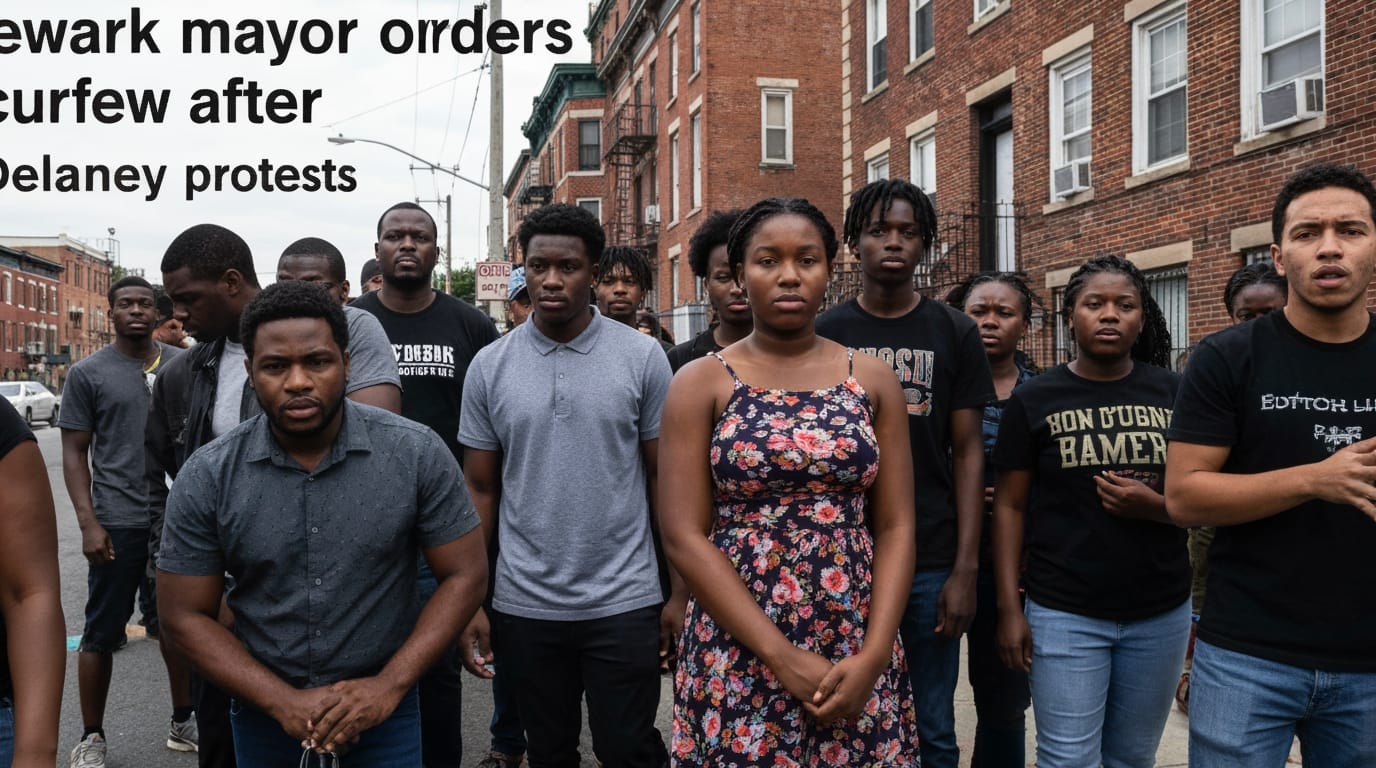
Newark, NJ – Citing escalating confrontations and a growing risk to public safety, Newark Mayor Ras Baraka has imposed an overnight curfew around the Delaney Hall immigration detention center, effective Sunday, May 31, 2026. The move comes after a weekend of intense clashes between protesters and law enforcement, fueled by a hunger and work strike by detainees inside the facility who allege dire living conditions and inadequate medical care. The curfew, which covers a half-mile radius around Delaney Hall, will be enforced nightly from 9 p.m. to 6 a.m. until further notice, marking a significant step in the city's response to weeks of mounting tension.
The decision to implement the curfew follows days of increasingly volatile demonstrations outside Delaney Hall. Protests, initially sparked by a detainee strike that entered its tenth day on Sunday, saw demonstrators confronting police in riot gear, struggling over barricades, and reports of some individuals in possession of weapons. Mayor Baraka emphasized the necessity of the order, stating that "immediate action is required to protect public safety" given the "escalating situation" and the need for police intervention.
The Spark of Discontent: Detainee Strike Ignites Protests
The unrest traces its roots to a hunger and work strike initiated by detainees within Delaney Hall, a facility operated by the private prison company GEO Group under a contract with U.S. Immigration and Customs Enforcement (ICE). Detainees voiced grave concerns, alleging poor living conditions and insufficient medical care within the 1,000-bed center. These grievances quickly resonated with advocacy groups and community members, who began organizing protests outside the facility in solidarity with the detainees.
Delaney Hall has long been a focal point in the broader debate surrounding immigration detention in New Jersey. Since its reopening as an immigration detention facility last year, it has drawn scrutiny and has been the site of previous confrontations between law enforcement and protesters, highlighting the deep-seated divisions over federal immigration policies and the role of private contractors in detention operations. The current detainee strike has amplified these concerns, turning the facility into a crucible for broader discussions about human rights, detention standards, and immigration reform.
A Weekend of Confrontation and Control
The weekend leading up to the curfew saw a dramatic escalation in the level of confrontation. On Friday, May 29, New Jersey State Police assumed responsibility for public safety operations around Delaney Hall, a measure announced by Governor Mikie Sherrill alongside Attorney General Jennifer Davenport. The goal was to de-escalate tensions that had been building between protesters and federal immigration agents, while simultaneously safeguarding both public safety and the fundamental right to protest. State Police established designated protest zones and traffic checkpoints in an effort to manage the demonstrations.
Despite these measures, Saturday night witnessed renewed clashes. Reports and social media footage depicted protesters overwhelming state police in certain areas, pushing down barricades, and testing the limits of the established protest zones. Law enforcement, including officers in riot gear and mounted units, worked to disperse crowds and clear roadways. Governor Sherrill issued a statement acknowledging that masked individuals had attacked barriers, thrown projectiles, used barriers as weapons, and set tires ablaze in the street. Multiple rounds of tear gas were reportedly deployed by police to control the crowds, resulting in a chaotic scene that continued into Sunday morning. This intense period of disorder and the threat it posed to the surrounding community ultimately prompted Mayor Baraka's decisive action.
Mayor Baraka's Decisive Action and Community Impact
Mayor Baraka’s announcement of the curfew came early Sunday, underscored by the arrests of multiple individuals and the discovery of weapons among some demonstrators. The specified half-mile curfew zone aims to create a buffer around Delaney Hall, limiting access during late-night and early-morning hours when confrontations have been most intense. Beyond the physical perimeter, Doremus Avenue, a key thoroughfare near the facility, has been closed to pedestrian traffic starting at midnight, with vehicle access strictly reserved for those with verified official business. The mayor's office stated that non-compliance with the curfew would lead to enforcement actions, ranging from warnings to removal from the area and the issuance of summonses or further legal action.
The imposition of a curfew has significant implications for both protesters and local residents. While authorities maintain it is a necessary step to restore order and protect lives, it inevitably restricts freedom of assembly, even if temporarily. The community surrounding Delaney Hall, already grappling with the disruptions caused by ongoing protests, faces additional restrictions on movement. The measure reflects the difficult balance local authorities must strike between upholding constitutional rights and ensuring the safety and tranquility of the city.
Conclusion: An Unfolding Narrative of Rights and Public Order
The curfew around Delaney Hall stands as a stark indicator of the deep and often conflicting issues at play: the rights of detainees, the right to protest, and the imperative for public order. The facility, a symbol of federal immigration policies, has become a microcosm of national debates, prompting local authorities to intervene with measures typically reserved for periods of significant civic unrest. While the curfew aims to quell the immediate confrontations, it does not address the underlying causes of the protests—the allegations of poor conditions within Delaney Hall and the broader concerns regarding immigration detention.
As Newark navigates this challenging period, the eyes of many remain on Delaney Hall. The ongoing detainee strike and the community's response underscore the enduring complexities of immigration issues and the often-volatile intersection of advocacy and law enforcement. The curfew, while a direct response to public safety concerns, is also a temporary solution to a persistent problem, leaving the long-term resolution of these fundamental issues yet to be determined.


