North Korea Claims Downing of South Korean Drone, Seoul Issues Swift Denial
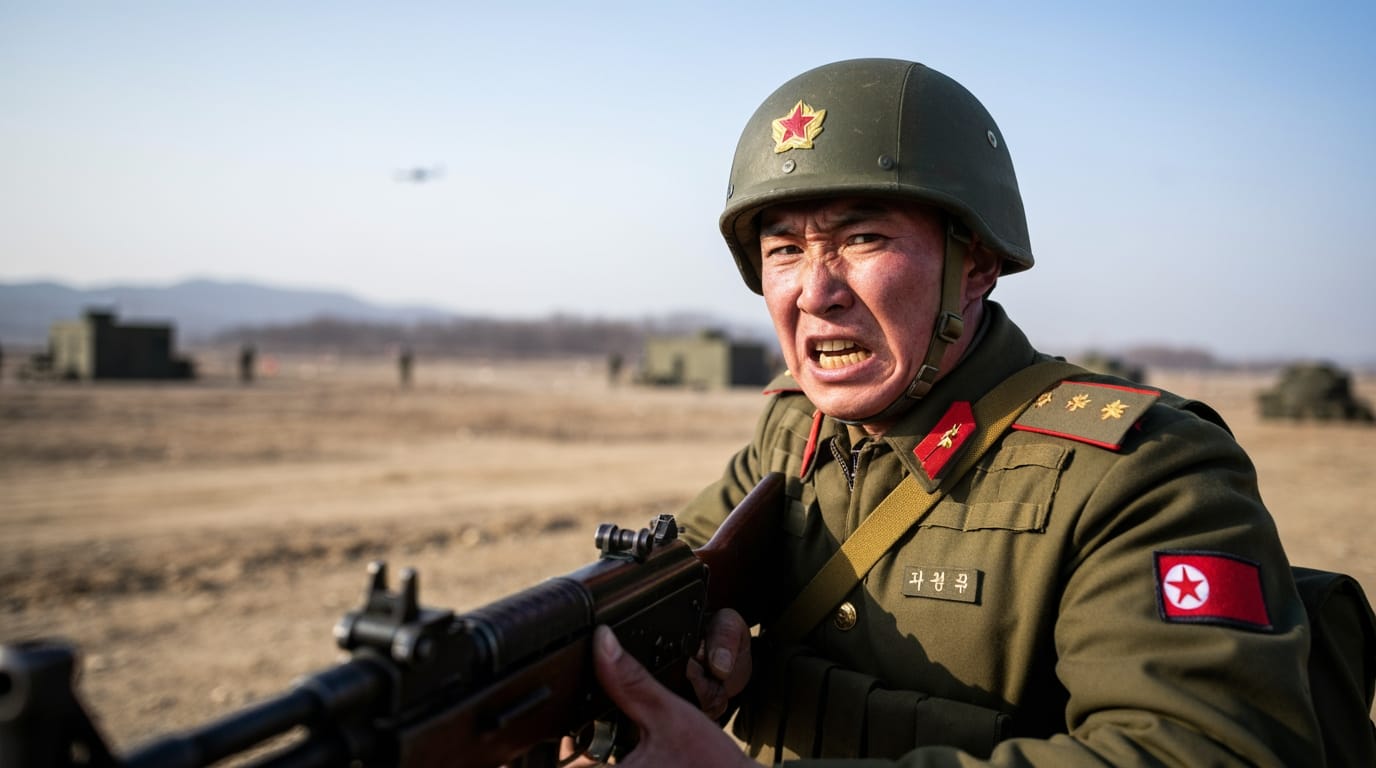
Pyongyang has ignited fresh tensions on the Korean Peninsula with a claim that its military successfully shot down a South Korean surveillance drone that allegedly infiltrated its airspace on two separate occasions, most recently on January 4. The accusation, broadcast through state media, asserts that the unmanned aerial vehicle was downed through electronic warfare means. However, Seoul has vehemently denied the allegations, calling them "completely untrue" and suggesting the wreckage displayed by North Korea does not correspond to any drone model operated by its military. The dispute escalates existing friction between the two Koreas, prompting South Korean President Lee Jae-myung to order a thorough investigation into the matter.
Pyongyang's Allegations of Airspace Violation
North Korea's state-run Korean Central News Agency (KCNA) reported on Saturday, January 10, that an "enemy drone" from South Korea had violated its airspace and was brought down. According to the claims, one incident occurred on September 27 of the previous year, when a drone reportedly took off from Paju City, Gyeonggi Province, South Korea, infiltrated the airspace over Pyeongsan County, North Hwanghae Province, and subsequently crashed in Jangpung County, Kaesong City, on its return journey. The more recent alleged incursion was on January 4, with North Korea stating a drone originating from Ganghwa County, Incheon, flew approximately 8 kilometers into its airspace before being struck down near Kaesong City by electronic warfare assets of its 2nd Corps.
Pyongyang further asserted that the downed drones were equipped with surveillance cameras and contained footage of "important targets" within North Korean territory, including border areas. KCNA released photographs purporting to show the wreckage of a drone, salvaged in pieces, alongside electronic components and aerial images of buildings that North Korea claimed the drone had captured. A spokesperson for the General Staff of the Korean People's Army accused South Korea of infringing on its sovereignty with these drone incursions, warning that Seoul would be forced to "pay a high price" for what it labeled as a provocation and "unpardonable hysteria". The North Korean statement described South Korea as its "most hostile" enemy and criticized its continued "provocations" despite pretending to seek communication.
Seoul's Resolute Denial and Call for Investigation
In a robust rejection of North Korea's claims, South Korea's Defense Minister Ahn Gyu-back swiftly dismissed the allegations as "completely untrue". Speaking on Saturday, Minister Ahn stated that the drone model shown in the photographs released by North Korea was not one operated by the South Korean military. He questioned the feasibility of such operations, particularly given recent domestic political circumstances, and emphasized that the Drone Operations Command, Ground Operations Command, and Marine Corps Command had not conducted any flight training or drone operations on the dates cited by Pyongyang.
Minister Ahn went further, proposing a joint investigation between the two Koreas to verify the facts, signaling Seoul's confidence in its denial. The Ministry of National Defense corroborated Ahn's remarks, affirming that the South Korean military had no record of operating unmanned aerial vehicles on the dates North Korea claimed. Following the North's accusations, South Korean President Lee Jae-myung ordered a thorough investigation into the matter, with relevant agencies currently confirming details. The Presidential Office of National Security also convened an operational coordination meeting to address North Korea's claims. South Korean officials have suggested that North Korea's public claims may serve an internal purpose, aiming to consolidate its regime or incite anxiety, rather than being grounded in fact.
A History of Cross-Border Incidents and Escalating Rhetoric
The current drone dispute unfolds against a backdrop of long-standing tensions and a history of cross-border incidents between North and South Korea. Both nations have previously accused each other of airspace violations involving unmanned aerial vehicles. In December 2022, five North Korean drones crossed into South Korean airspace, prompting the South to scramble fighter jets and helicopters, with one light attack aircraft crashing during takeoff. That incident, which marked the first North Korean drone intrusion in five years, led then-President Yoon Suk Yeol to accelerate the development of South Korean drones capable of spying on North Korean military facilities.
North Korea has, in recent years, significantly prioritized enhancing its own drone capabilities. Since 2023, Pyongyang has unveiled new reconnaissance and attack drones, including models like the Saetbyol-4 and Saetbyol-9, which bear resemblances to advanced Western counterparts. Leader Kim Jong Un has repeatedly stressed the development of artificial intelligence and drone technology as a "top priority" for modernizing North Korea's armed forces, reportedly overseeing tests of tactical strike drones. This focus on drone technology is believed by experts to be influenced by modern warfare experiences, such as the conflict in Ukraine, possibly aided by Russian military assistance.
Independent analysts have expressed skepticism regarding the drone wreckage presented by North Korea, suggesting the cheap, commercially available model is unlikely to have originated from South Korea's armed forces. They point out that the South Korean military possesses more advanced drones capable of transmitting live, high-resolution feeds, rendering an outdated model requiring physical retrieval of a memory card militarily illogical. Such incidents underscore the volatile nature of the inter-Korean border, where even unconfirmed claims can quickly contribute to a cycle of accusation and counter-accusation.
Heightened Tensions on the Peninsula
The latest exchange of drone allegations further strains already fragile relations between North and South Korea. The accusations from Pyongyang, coupled with its hostile rhetoric labeling Seoul as its "most hostile" enemy, signal a deepening divide and a potential precursor to further provocations. South Korea's firm denial and call for a joint investigation reflect its effort to counter what it perceives as baseless claims designed to justify North Korean aggression or sow discord.
With President Lee Jae-myung's administration having previously attempted conciliatory gestures that were rebuffed by Pyongyang, the current situation reinforces a period of heightened distrust and military posturing. The unverified claims of a downed drone, regardless of their veracity, serve to elevate the risk of miscalculation or unintended escalation along one of the world's most heavily fortified borders. As investigations continue, the international community remains watchful of developments that could destabilize regional security.


