North Korea Declares Nuclear Program 'Absolutely Non-Negotiable' Ahead of Xi Visit, Rebuffing Denuclearization Hopes
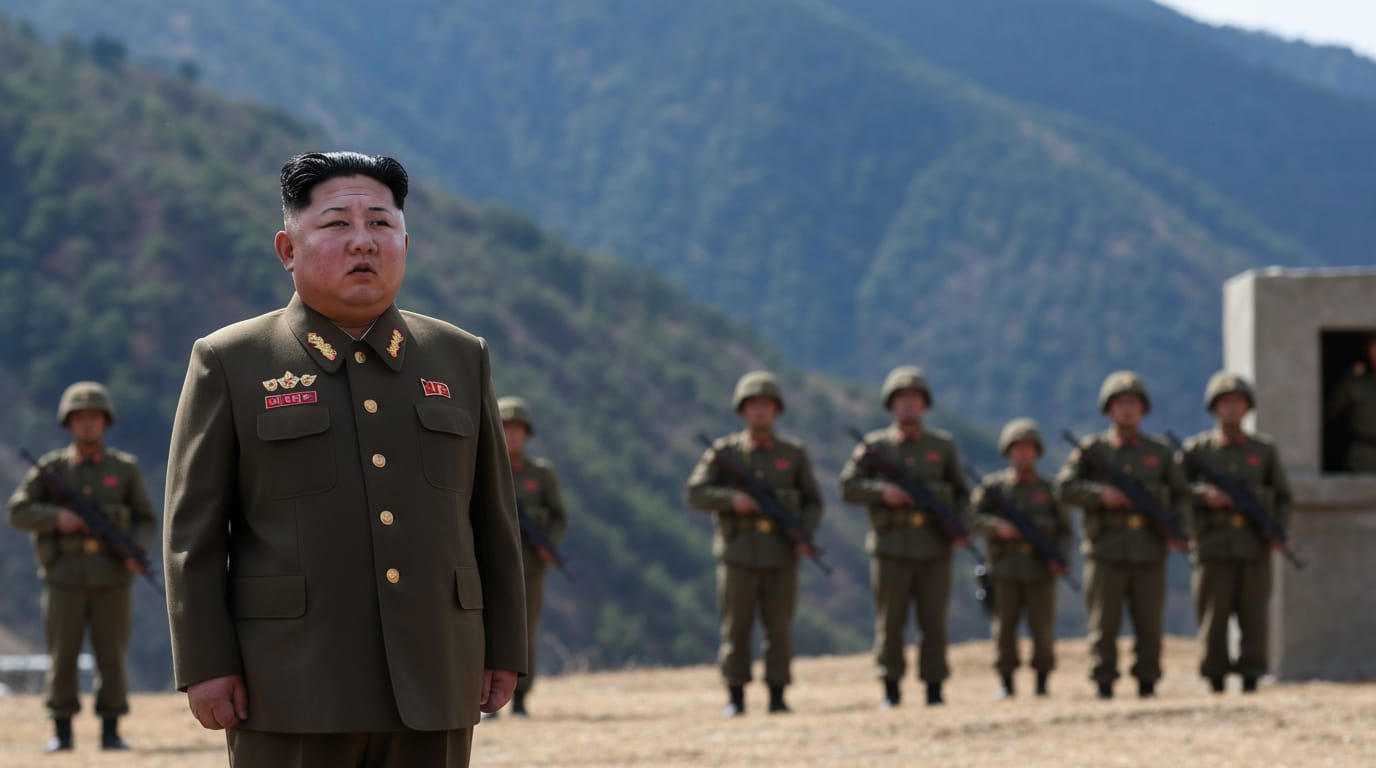
Pyongyang, North Korea – North Korea has once again firmly shut the door on any negotiations regarding its nuclear weapons program, with Kim Yo Jong, the influential sister of leader Kim Jong Un, declaring its status "absolutely non-negotiable" and "irreversible." This assertive stance comes just as Chinese President Xi Jinping prepares for a rare visit to Pyongyang, highlighting the isolated nation's unwavering commitment to its atomic arsenal and directly challenging international denuclearization efforts.
The Vehement Rejection and Diplomatic Tensions
Kim Yo Jong's statement, carried by state media on Sunday, leaves no room for doubt regarding North Korea's position. She explicitly stated that Pyongyang's nuclear weapons program is "absolutely non-negotiable" and that the country's nuclear status is an "irreversible course" that "will not tolerate any threats." The declaration was made with particular timing, coming ahead of Chinese President Xi Jinping's visit to North Korea, scheduled from Monday to Tuesday.
The powerful sister, who plays a key role in North Korean communications and foreign policy, used the opportunity to directly refute claims made by the United States. She dismissed Washington's assertion that U.S. President Donald Trump and President Xi had reaffirmed their shared goal of denuclearizing North Korea during their summit last month in Beijing, labeling such statements as "false information." Pyongyang further justified its unwavering commitment to strengthening its military capabilities by citing what it perceives as persistent military threats from hostile countries, specifically mentioning Washington's recent approval of a potential sale of Joint Direct Attack Munition (JDAM) precision bombs and related equipment to South Korea. This reiterates a long-held belief in Pyongyang that its nuclear arsenal is a necessary deterrent against external aggression.
A History of Nuclear Pursuit and Broken Pledges
North Korea's pursuit of nuclear capabilities dates back to the 1950s, originating with Soviet assistance for peaceful nuclear energy development. This foundation gradually evolved into a determined effort to develop nuclear weapons, with the establishment of key facilities such as the Yongbyon Nuclear Scientific Research Center. By the 1980s, North Korea was capable of producing weapons-grade plutonium.
Throughout the decades, the international community has engaged in various diplomatic initiatives aimed at halting Pyongyang's nuclear ambitions, largely without lasting success. North Korea initially joined the International Atomic Energy Agency (IAEA) in 1974 and the Nuclear Non-Proliferation Treaty (NPT) in 1985, reportedly under pressure from the Soviet Union. However, its compliance was often questioned, and Pyongyang eventually withdrew from the NPT in 2003, making it the only state to do so.
Significant diplomatic efforts, including the 1994 Agreed Framework and the multi-party Six-Party Talks initiated in 2003, sought to trade denuclearization for economic aid and security assurances. Despite periods of tentative progress, these negotiations ultimately broke down, often due to disagreements over verification and North Korea's continued development activities. From 2006 to 2017, North Korea conducted six underground nuclear tests, alongside the development of a diverse array of ballistic missiles, further cementing its status as a nuclear power.
Codified Ambition and Escalating Arsenal
The latest declaration by Kim Yo Jong aligns with a clear and consistent policy shift observed in Pyongyang in recent years. In a significant move in 2023, North Korea officially enshrined its nuclear status in its constitution, underscoring its long-term commitment to possessing nuclear weapons. This constitutional amendment followed leader Kim Jong Un's public renouncement of denuclearization in September 2022, effectively ending any pretense of negotiating away the country's nuclear arsenal.
Adding to these developments, Kim Jong Un has recently called for an "exponential" expansion of North Korea's atomic arsenal. This directive has been accompanied by concrete actions, including the unveiling of a new nuclear material production factory and an order to increase the country's missile production capacity by 2.5 times over the next five years. These steps underscore Pyongyang's determination to not only maintain but also significantly enhance its nuclear deterrent, which it views as essential for national security against perceived external threats.
China's Delicate Balancing Act and Regional Implications
Chinese President Xi Jinping's upcoming visit to Pyongyang marks his first in nearly seven years, highlighting the complex relationship between the two nations. China remains a vital source of political and economic support for North Korea, a nation that faces heavy international sanctions and diplomatic isolation. However, Pyongyang's explicit declaration of its nuclear program as non-negotiable places Beijing in a delicate position.
North Korea appears to be pursuing a dual-track strategy: demonstrating greater rhetorical support for China's positions on sensitive issues like Taiwan and Japan, while simultaneously making it unequivocally clear that its nuclear status is not up for discussion. This suggests that Pyongyang's primary objective from Xi's visit may be to secure Beijing's de facto acceptance of its nuclear weapons status.
For regional powers such as South Korea and Japan, along with the United States, North Korea's latest declaration deepens concerns about security and stability in Northeast Asia. The unwavering commitment to a nuclear arsenal, codified into law and actively expanding, presents a formidable challenge to global non-proliferation efforts and leaves little immediate prospect for a diplomatic resolution to the decades-long nuclear standoff.
Conclusion
North Korea's categorical statement that its nuclear program is "absolutely non-negotiable" underscores a profound and enduring challenge to international diplomacy and non-proliferation. Issued strategically ahead of Chinese President Xi Jinping's visit, the declaration not only rejects the premise of future denuclearization talks but also reaffirms Pyongyang's resolve to expand its atomic capabilities as a cornerstone of its national defense. As North Korea continues to advance its arsenal and enshrine its nuclear status, the international community faces a protracted diplomatic stalemate, with significant implications for regional stability and the broader global security landscape.


