North Korean Women's Soccer Club to Make Rare Visit to South Korea Amid Strained Relations
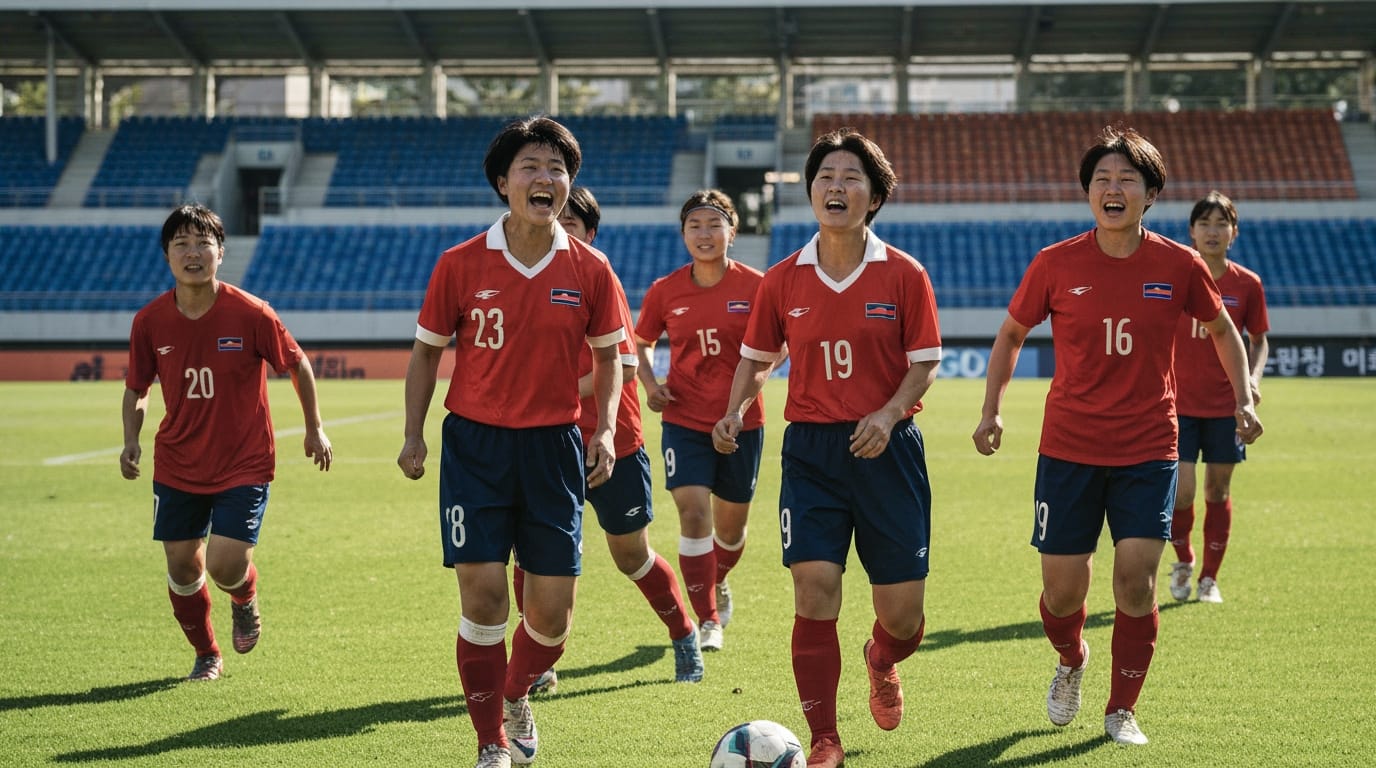
SEOUL – A women's soccer team from North Korea is poised to make a highly unusual visit to South Korea this month, marking a rare moment of engagement between the divided nations. The Pyongyang-based Naegohyang Women's FC is scheduled to compete against South Korea's Suwon FC Women in the semifinals of the Asian Football Confederation (AFC) Women's Champions League on May 20, in Suwon, south of Seoul. This sporting exchange comes at a time of heightened geopolitical tension and a near-complete freeze in inter-Korean dialogue, lending the match significant symbolic weight beyond the pitch.
A Sporting Bridge Amidst Diplomatic Divide
The impending visit, confirmed by Seoul's Unification Ministry on Monday, represents the first time a North Korean sports team will play in South Korea since 2018. The last instance of North Korean female soccer players competing in the South was during the 2014 Asian Games in Incheon. According to the ministry, the AFC notified South Korea's soccer body of Naegohyang's confirmed participation, following a notification from North Korean authorities detailing a 39-member delegation, comprising 27 players and 12 staff. Notably, North Korea's state media has remained silent on the upcoming trip, a common characteristic of Pyongyang's approach to inter-Korean exchanges. The losing team in the semi-final will depart for home on May 21, with no third-place playoff scheduled. The victor will advance to the final on May 23, where they will face either Australia's Melbourne City or Japan's Tokyo Verdy Beleza.
The scheduling of this match highlights a delicate intersection of sports and diplomacy, offering a fleeting glimpse of potential interaction amidst a deeply entrenched political stalemate. South Korea has expressed hope that such exchanges can contribute to easing tensions, even as official channels remain largely dormant. The logistics of hosting the North Korean delegation will require careful coordination, navigating the complexities of their presence on South Korean soil for what is anticipated to be a brief but impactful visit.
Recalling a History of On-Again, Off-Again Exchanges
Inter-Korean sports exchanges have historically served as both barometers and catalysts for diplomatic shifts, often dubbed "ping-pong diplomacy" for their ability to open doors when political avenues were closed. Prior to this upcoming match, North Korea last sent athletes to the South in December 2018 for a table tennis event. This followed a period of diplomatic thaw earlier that year, notably highlighted by North Korean athletes and a high-level delegation participating in the Winter Olympics hosted by Pyeongchang. These events, however, occurred during a distinct phase of engagement, which has since given way to a more confrontational stance from Pyongyang.
Looking further back, North Korea's national women's soccer team participated in the 2014 Asian Games in Incheon, marking their last appearance in the South for female soccer players. In July 2013, North Korea's women's team made a rare visit to Seoul for the East Asia Cup, engaging in matches against South Korea, Japan, and China. These historical precedents underscore the sporadic nature of such interactions, often dependent on the fluctuating political climate between the two Koreas. While analysts in the past suggested these friendly sports exchanges could improve relations, their impact has often been limited and temporary, with broader political tensions quickly reasserting themselves. The dream of fielding a joint team for international competitions, a topic of discussion between Pyongyang and Seoul, has yet to materialize.
Geopolitical Backdrop: A Thaw on the Field, Freeze Off It
The current context surrounding this rare soccer match is one of profound diplomatic stagnation. Since 2019, North Korean leader Kim Jong Un has largely suspended meaningful diplomacy with both Washington and Seoul. Instead, the regime has prioritized a domestic campaign aimed at eliminating the influence of South Korean culture and language among its population. This intensified ideological crackdown and a renewed focus on military development, including missile tests and bellicose rhetoric, have cast a long shadow over inter-Korean relations. The two Koreas technically remain at war, their 1950-1953 conflict having ended in an armistice rather than a peace treaty, making any cross-border interaction inherently sensitive and rare.
Against this backdrop, the Naegohyang Women's FC visit stands as an outlier, a brief moment where sporting competition overrides political estrangement. It is an event facilitated not by direct bilateral political overtures, but through the framework of an international sports federation, the AFC. This pathway bypasses the direct political negotiations that have proven so difficult in recent years, allowing for a limited, controlled interaction. The lack of reporting from North Korean state media on the trip reinforces the cautious, almost understated, approach Pyongyang often takes to such engagements, particularly when they involve direct contact with the South.
The Stakes on the Pitch and Beyond
From a purely sporting perspective, the match promises to be a compelling contest. North Korea's national women's team is recognized as a dominant force in Asian women's football, boasting multiple international titles in recent years. Their prowess extends to youth levels, with a notable victory in the FIFA U-17 Women's World Cup where they defeated the Netherlands 3-0 in the final just last November. While Naegohyang Women's FC is a club team, its participation in the AFC Women's Champions League semifinals indicates a high level of talent and competitiveness, likely drawing from the strong national system. Suwon FC Women, playing on home turf, will undoubtedly be looking to leverage local support in what is expected to be a challenging encounter.
Beyond the outcome of the match, the very act of competition carries significant, albeit subtle, implications. For players and staff from both sides, it offers a rare opportunity for human interaction that transcends political narratives. For spectators, it's a chance to witness sporting excellence and perhaps ponder the potential for greater understanding. In a region frequently marked by political brinkmanship, a shared love for sport, even for a short time, can highlight commonalities. The success of the event could, in theory, pave the way for further such exchanges, though the deeply entrenched nature of inter-Korean animosity suggests that any broader diplomatic thaw remains a distant prospect.
A Glimmer of Hope in a Divided Peninsula
The upcoming visit by North Korea's Naegohyang Women's FC to South Korea is more than just a football match; it is a meticulously choreographed event loaded with diplomatic undertones. While official inter-Korean dialogue remains frozen and tensions persist, the AFC Women's Champions League provides an unexpected, albeit narrow, avenue for contact. This rare sporting exchange serves as a potent reminder of the complex, often contradictory, relationship between the two Koreas. Whether this single match can serve as a small, symbolic step towards renewed engagement or simply remain an isolated incident in a landscape of division, remains to be seen. However, for a few days in May, the focus will shift from geopolitical sparring to the universal language of sport, offering a momentary glimpse of potential common ground on the Korean Peninsula.


