North Korea's Next Leader? Kim Jong Un's Daughter Now Seen as Likely Heir
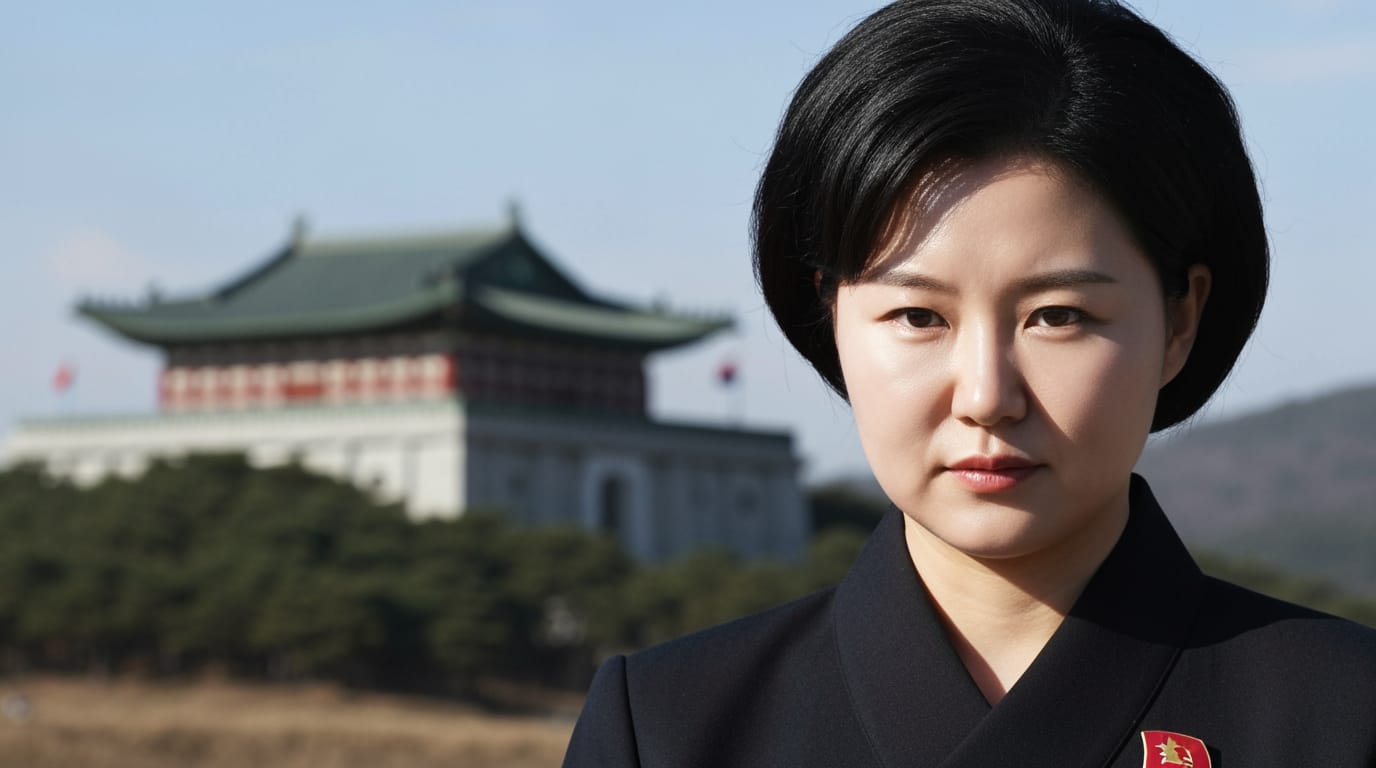
SEOUL – The secretive dynastic succession in North Korea appears to be taking a new, unprecedented turn with the increasing public prominence of Kim Jong Un's teenage daughter, Kim Ju Ae. South Korea's intelligence agency has now declared it "fair to view" her as her father's heir, marking the strongest assessment yet on the rising political status of a child who could extend the Kim family's rule into a fourth generation. This development signals a significant shift in the closely watched leadership of the reclusive nation, traditionally dominated by male figures.
Kim Ju Ae, believed to be around 13 years old, has been a consistent presence alongside her father at critical state events since late 2022. Her appearances, initially sparse, have steadily grown in frequency and symbolic weight, transitioning from merely a "beloved" child to one described with honorifics typically reserved for the highest echelons of North Korean leadership, such as "respected" and "great person of guidance." This calculated exposure suggests a deliberate strategy by Pyongyang to normalize her potential future role and solidify the "Paektu bloodline" as the sole legitimate source of power in the country.
The Emergence of a Potential Successor
Kim Ju Ae's public debut occurred in November 2022, when she accompanied her father to the test launch of an intercontinental ballistic missile (ICBM). This initial appearance, at an event highlighting North Korea's military prowess, immediately sparked international speculation about her future. Since then, her visibility has escalated dramatically. She has been seen at military parades, inspecting munitions factories, and even driving a tank during army training alongside her father. These carefully orchestrated public displays are interpreted by analysts as efforts to build her military credentials and to "dispel scepticism about a woman successor" within North Korea's deeply patriarchal society.
Her image has been meticulously crafted by state media, which has used increasingly elevated language to describe her. What began as "beloved" and "precious" daughter evolved to "respected" and, most recently, "great person of guidance" – a term previously applied to Kim Jong Un himself. Such appellations are significant indicators in North Korean political discourse, suggesting a deliberate grooming process far beyond that of a mere accompanying family member.
South Korean Intelligence and International Analysis
South Korea's National Intelligence Service (NIS) has progressively strengthened its assessment regarding Kim Ju Ae's succession prospects. Initially describing her as a "likely heir" in early 2024, the NIS indicated in February that she was nearing "successor-designate" status. The latest briefing to lawmakers on April 6 further solidified this view, stating it is now "fair to view" her as the designated successor, based on "credible intelligence." This strong pronouncement from a leading intelligence agency underscores the seriousness with which her public profile is being interpreted.
However, not all observers are in full agreement. Some experts caution against definitive conclusions, pointing out that Kim Jong Un, at 42, is relatively young and naming a successor prematurely could potentially weaken his grip on power. Furthermore, North Korea's male-centric culture presents inherent challenges for a female leader, a point even acknowledged by the NIS, which suggests the public appearances are partly designed to address such societal norms. The existence of other children, including a rumored elder son, also adds a layer of uncertainty to the succession narrative, as their roles and fates remain largely unknown.
The Kim Dynasty: A History of Hereditary Rule
North Korea has been ruled by the Kim family since its founding in 1948, establishing a unique hereditary dictatorship often referred to as the "Mount Paektu bloodline." Kim Il Sung, the nation's founder, was succeeded by his son Kim Jong Il, who in turn was followed by his son, the current leader Kim Jong Un. This dynastic succession, unprecedented in the communist world, has cultivated a pervasive personality cult that equates the Kim family with the state itself, making legitimacy inherently tied to ancestry rather than democratic principles or institutional mechanisms.
The process of grooming an heir within the Kim dynasty typically involves a long period of apprenticeship and carefully managed public appearances. Kim Jong Un, for instance, did not make his official debut until he was around 26, undergoing a process that ensured his loyalty and capability. The early and extensive public exposure of Kim Ju Ae, especially at such a young age, diverges from past precedents, raising questions about Kim Jong Un's motivations, potentially linked to his own health concerns or a desire to consolidate the succession narrative far in advance.
Implications and Challenges for a Female Leader
The prospect of Kim Ju Ae becoming North Korea's next leader carries profound implications, both domestically and internationally. Within North Korea, a female leader would challenge deeply entrenched cultural norms in a society where senior military and party leadership is overwhelmingly male. The regime's propaganda efforts seem aimed at overcoming this, portraying her not just as a successor but as an embodiment of the nation's military strength and a natural extension of the sacred bloodline.
For the international community, particularly South Korea, Japan, and the United States, a potential female leader from the Kim lineage would necessitate a re-evaluation of diplomatic and security strategies. While a female successor might present a different image, analysts suggest that the core authoritarian and nuclear-armed nature of the regime would likely remain unchanged. Kim Yo Jong, Kim Jong Un's sister, has already demonstrated that female figures within the leadership can exhibit a hardline stance. The focus for policymakers, therefore, remains less on the gender of the successor and more on the stability of the transition and its potential impact on regional security, including the risk of provocations.
The Unfolding Future
The unfolding narrative surrounding Kim Ju Ae's potential succession underscores the enduring complexities and opaqueness of North Korean politics. While South Korean intelligence now firmly believes she is being positioned as the heir, the exact trajectory of this unprecedented transition remains subject to the unpredictable dynamics of the reclusive state. The meticulous cultivation of her public image, particularly her association with military might, signals a regime determined to ensure the continuity of the Kim dynasty, even as it navigates the significant challenge of installing a young, female leader in a historically male-dominated system. The world watches keenly as Pyongyang choreographs the next chapter of its unique hereditary rule.


